A Pause in the Scenery – Strazik House by Gonzalez Olsina & Vega Arquitectos
Published
"Surrounded by the hush of the Andes and the geometry of the vineyard rows, the house invites stillness—a dwelling shaped not by ego, but by elemental harmony."
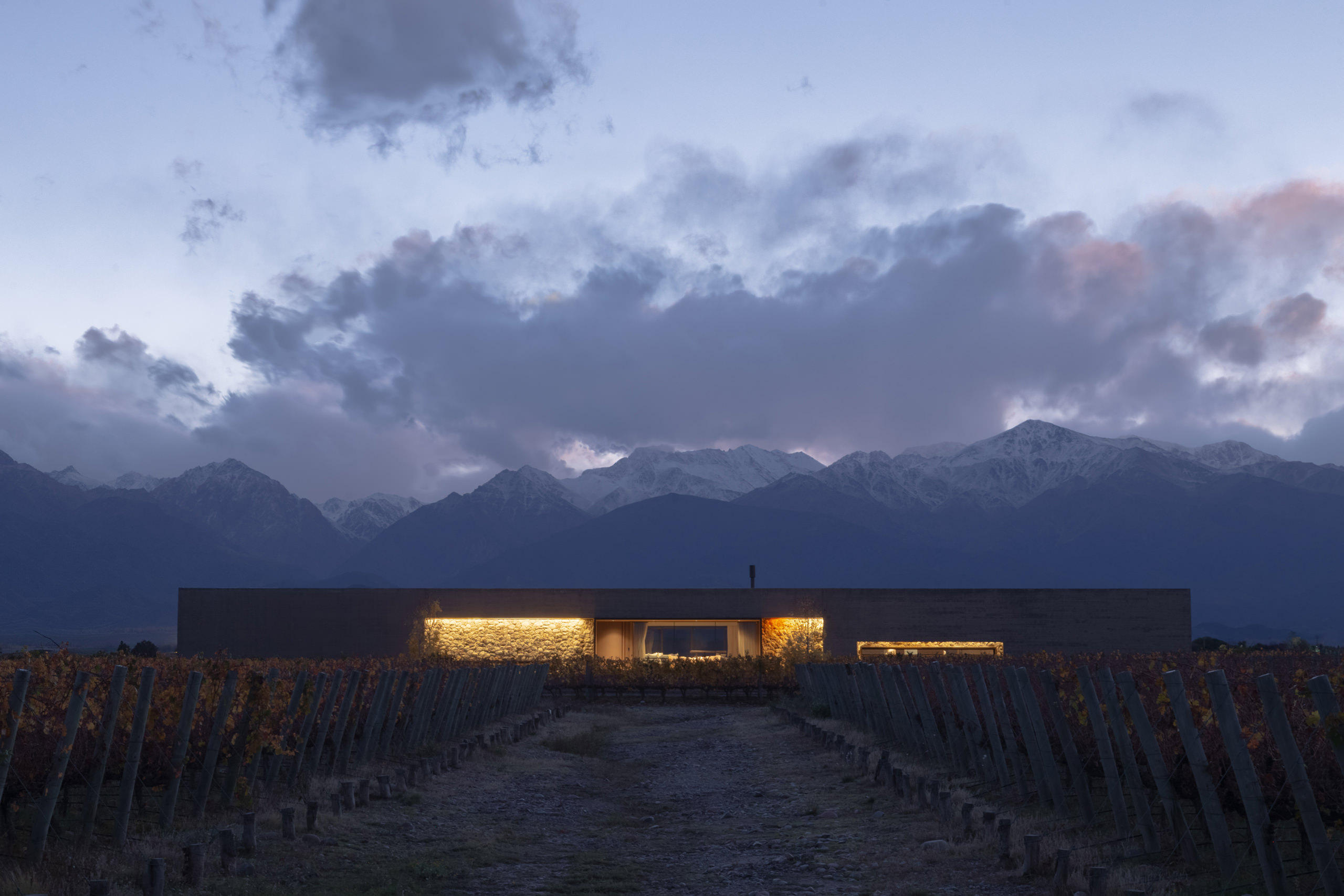
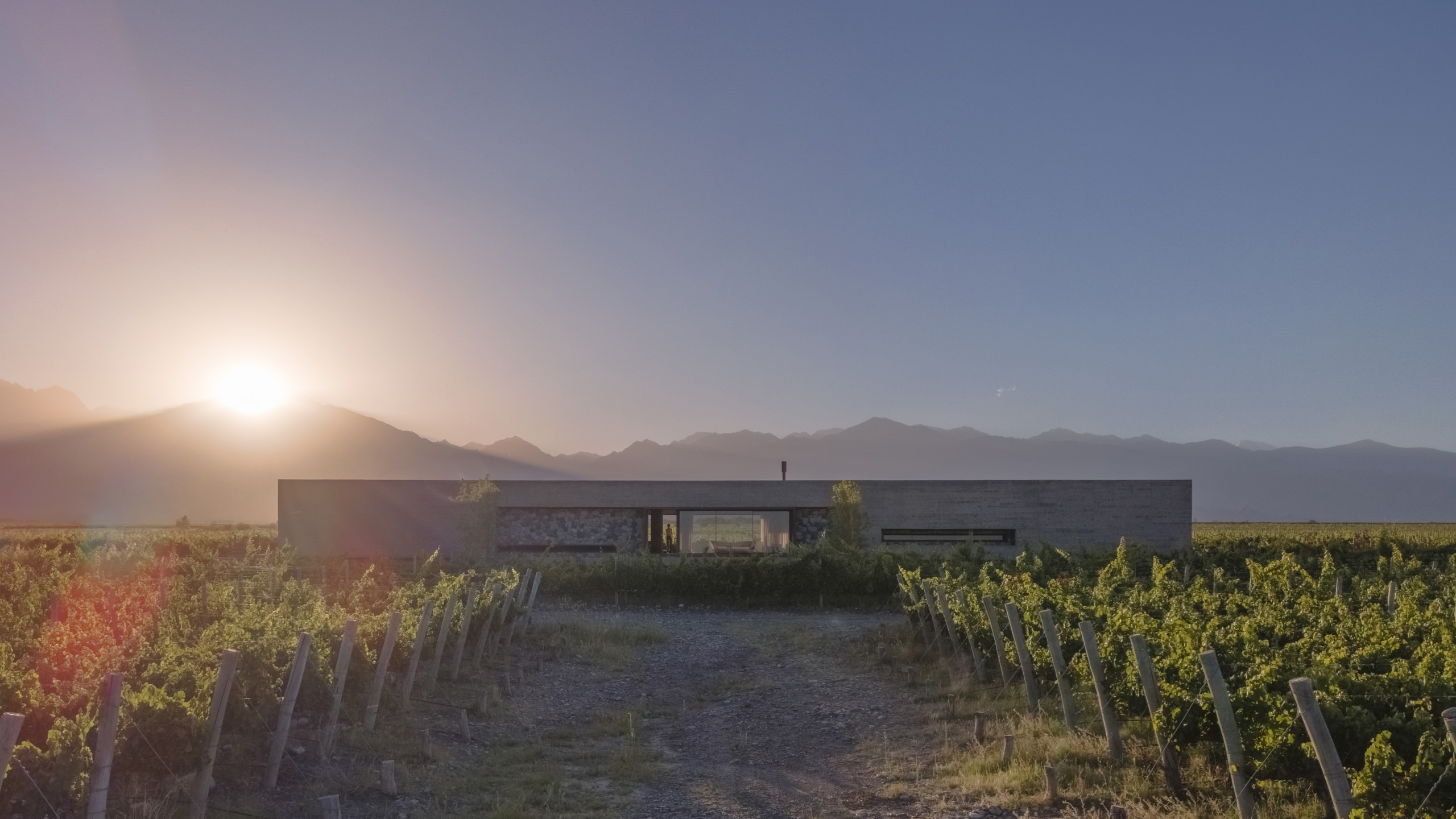
There is a rhythm to the Strazik House that aligns more with the turning of the seasons than with time itself. Resting at the foot of the Andes and enveloped by the quiet expanse of Uco Valley’s vineyards, the home embraces stillness and openness, becoming not just a place to live, but a place to be.
Set within a vast six-acre vineyard in The Vines of Mendoza, in the quiet locality of Los Chacayes, Tunuyán, Strazik House rises subtly from the ground—an understated insertion in one of Argentina’s most revered wine regions. Surrounded by the dramatic presence of the Andes and a landscape defined by silence, the house is both a dwelling and a declaration of respect for place. At an altitude where the sky meets vine-covered earth, the home reveals itself not through architectural bravado, but through restraint, harmony, and intent. For Scott, the client and a passionate devotee of viticulture, this was never just a residential project. It was an aspiration: to create a home within the vineyard, to live among the vines, and to offer his family and friends a place of refuge, reflection, and shared moments. This emotional connection to land and lifestyle became the guiding principle behind the brief. The architecture needed to embody this sense of belonging—to provide spaces that celebrated the ritual of everyday life, while offering continual visual and spatial dialogue with the surrounding landscape.
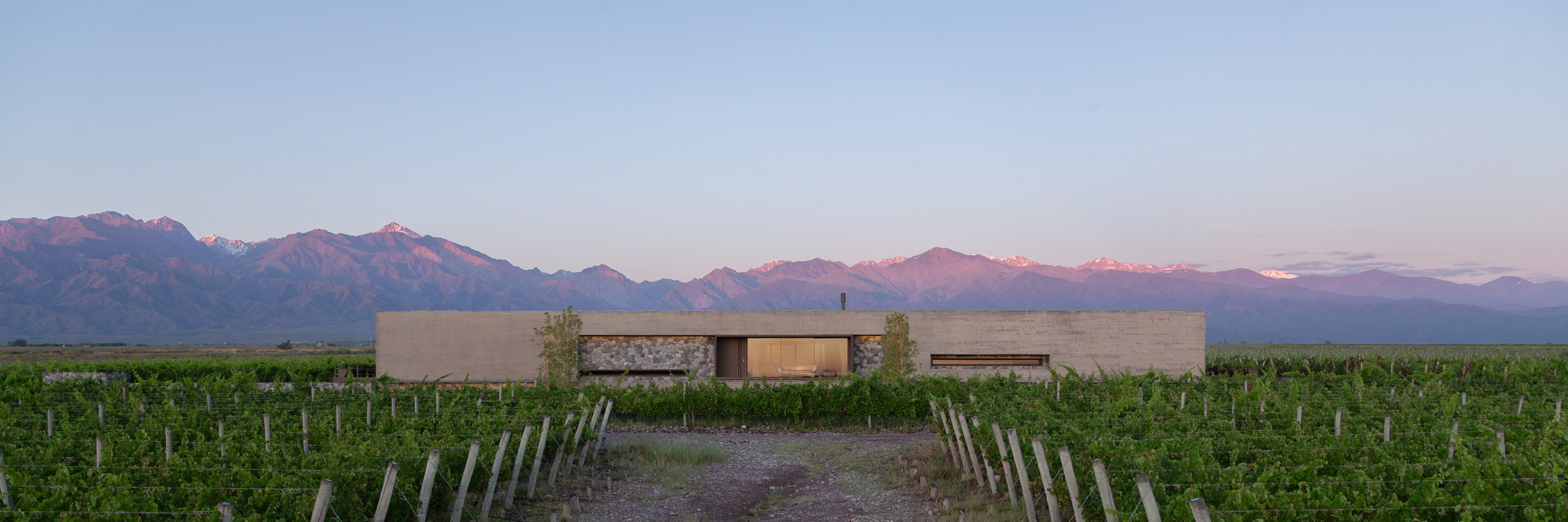
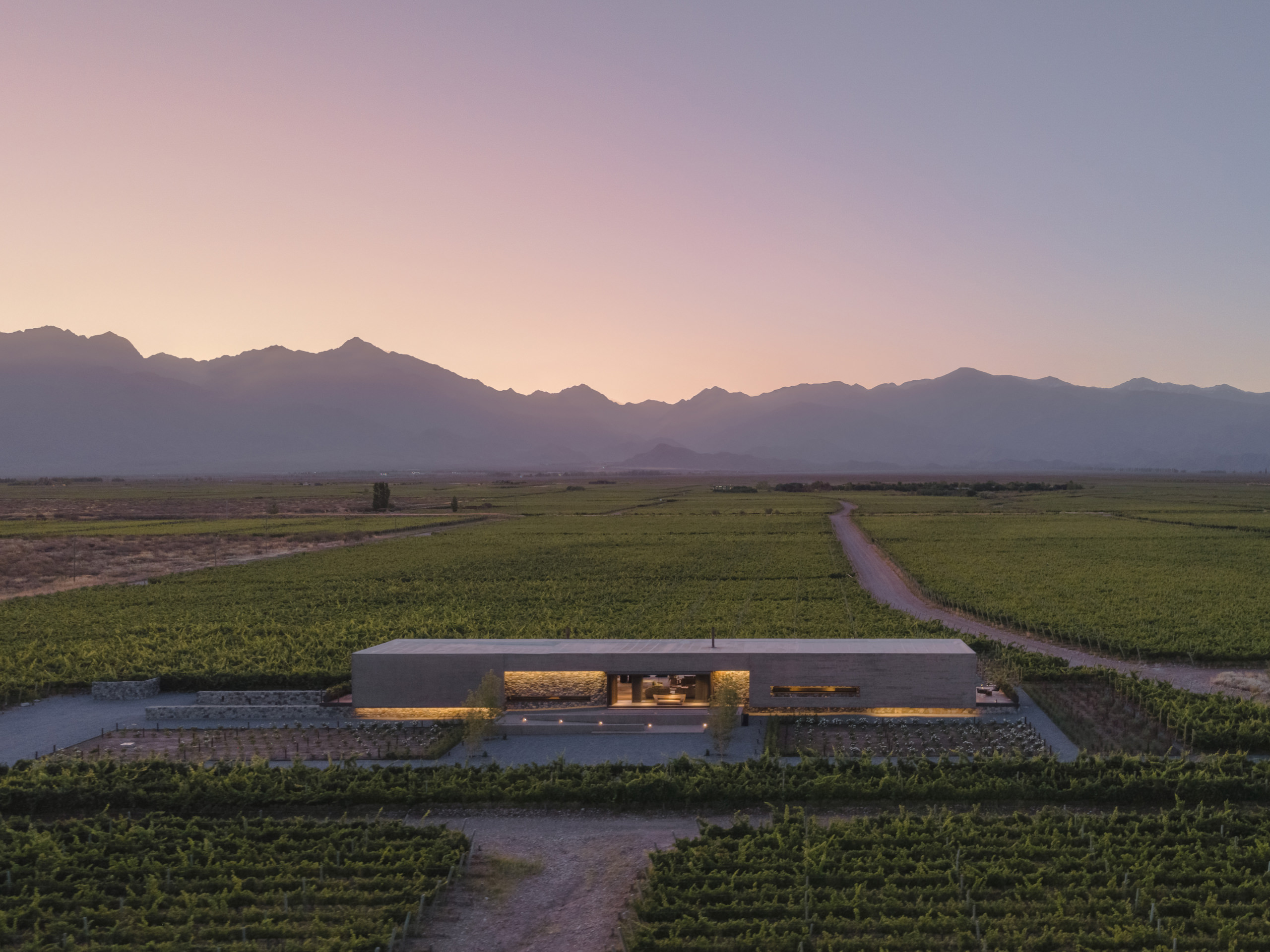
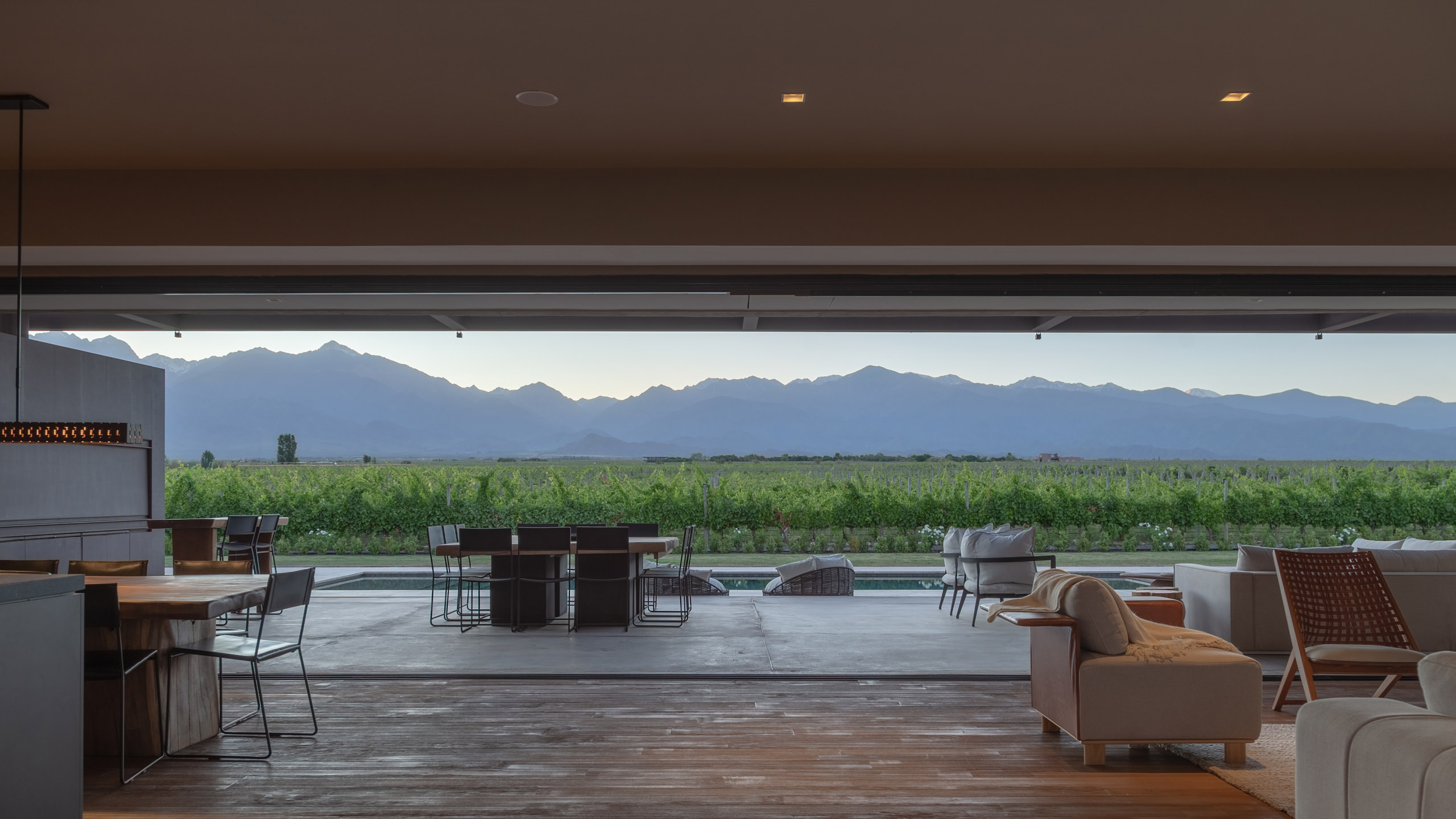
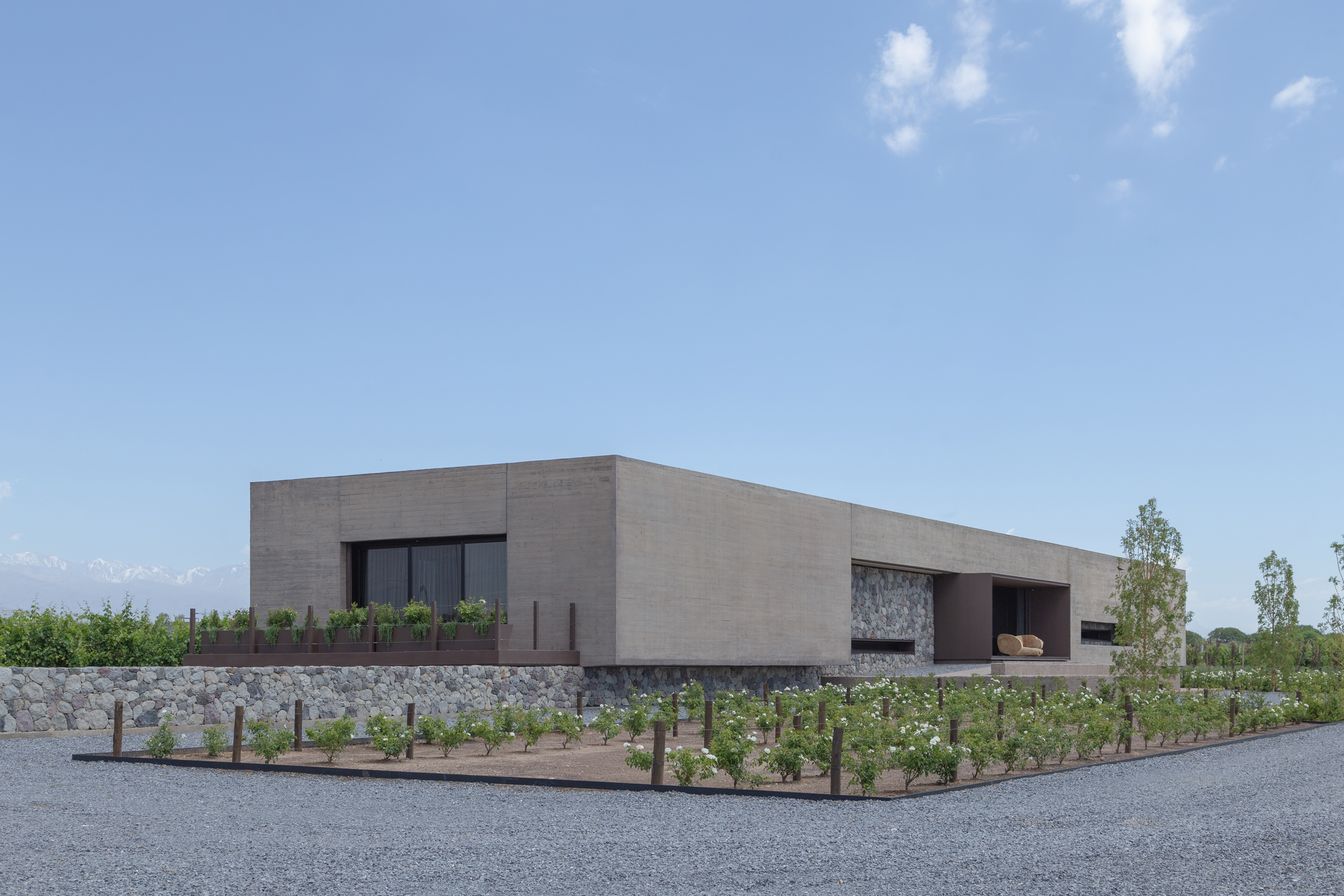
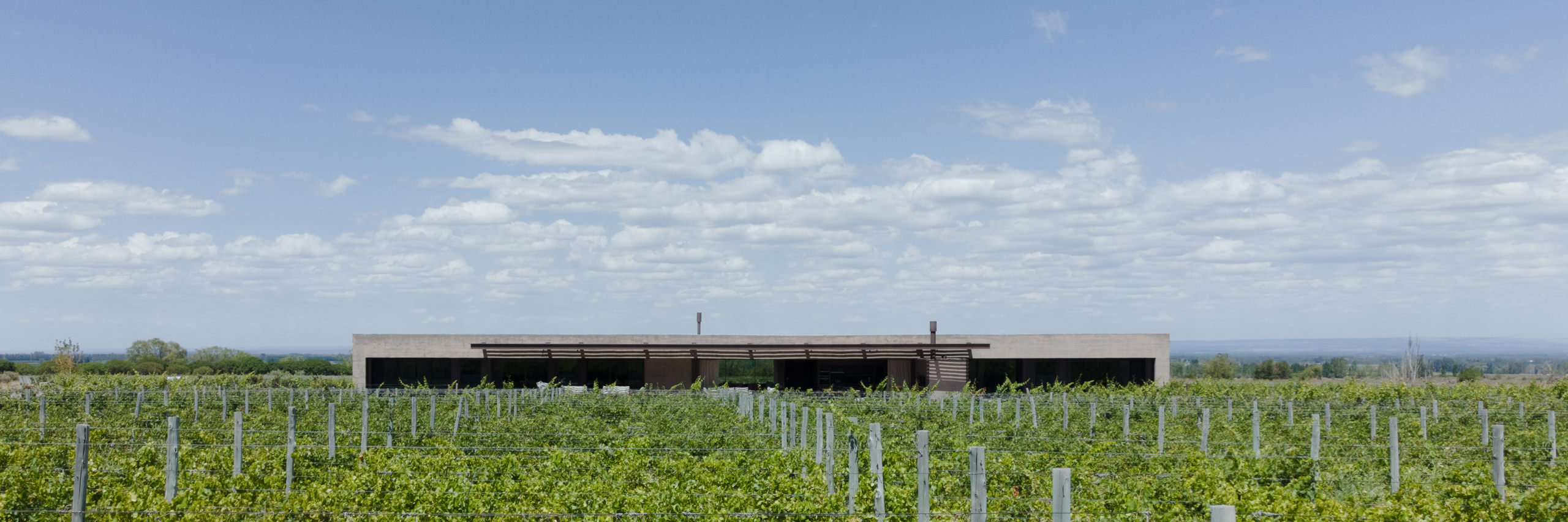
The response from Gonzalez Olsina & Vega Arquitectos is profoundly thoughtful. The house reads as a drawn line—an inhabited horizon—that mirrors the silent geometry of the Andes themselves. The design articulates a single, linear volume laid across the site, its form both literal and metaphysical. Through this gesture, the house integrates fully into the terrain, rather than standing apart from it. It does not claim the landscape; it joins it. This clarity in conception translates into a structure composed with three foundational principles: horizontal integration, platform mediation, and material continuity. These ideas are more than design strategies—they are philosophical positions. Horizontal integration not only defines the layout, where spaces unfold along a linear axis, but also governs the home’s attitude toward the land. A circulation spine on the eastern side links the program—open living, four bedrooms, a workspace, wine cellar, and terraces—while the west-facing orientation opens every space to the majesty of the Andes.
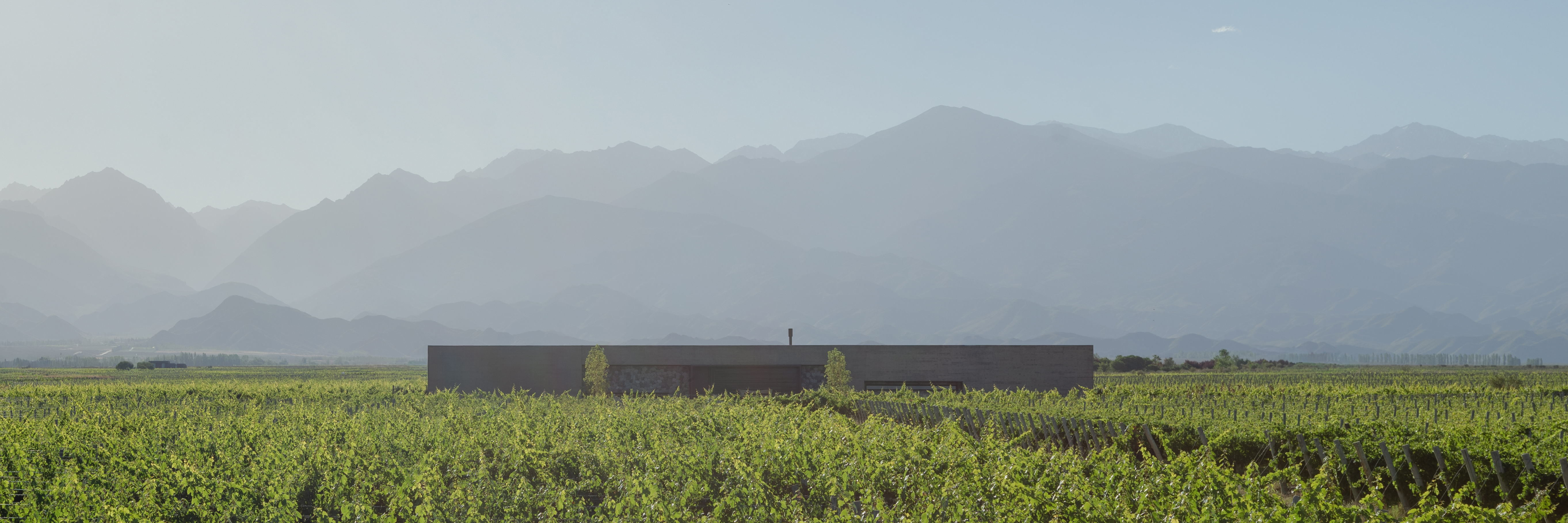
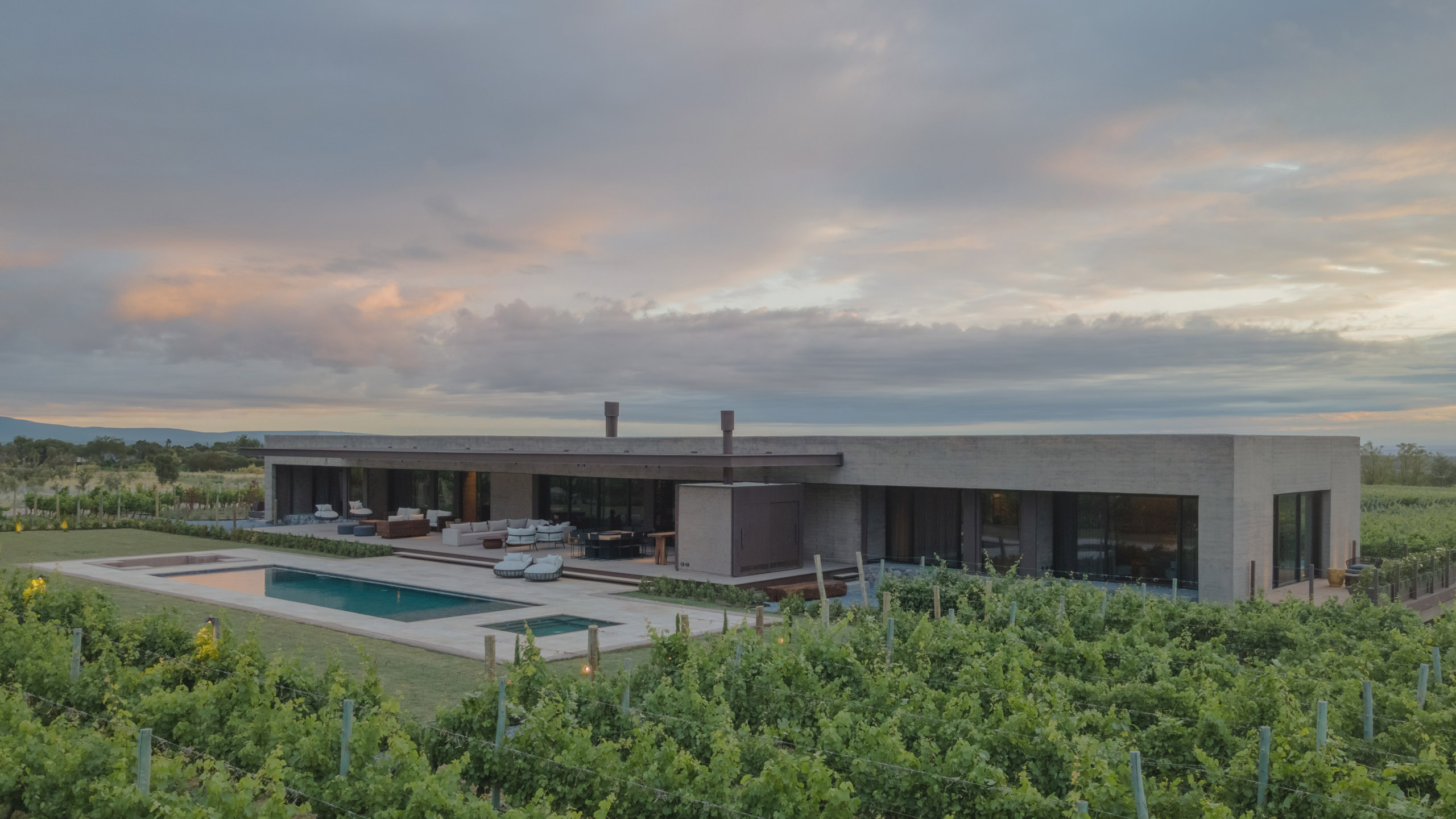
The platform on which the house sits plays a crucial mediating role. Slightly elevated, it gently detaches the home from the rawness of the vineyard while offering a raised vantage point—a reorientation of perspective. This shift in altitude is subtle but meaningful: it allows the gaze to lift beyond the immediate, drawing the distant into everyday experience. The home thus becomes a tool for viewing, for seeing, for connecting.
"Built from the mineral soul of the mountains, it is a line drawn in reverence—an architecture of quiet weight, enduring presence, and contemplative purpose."
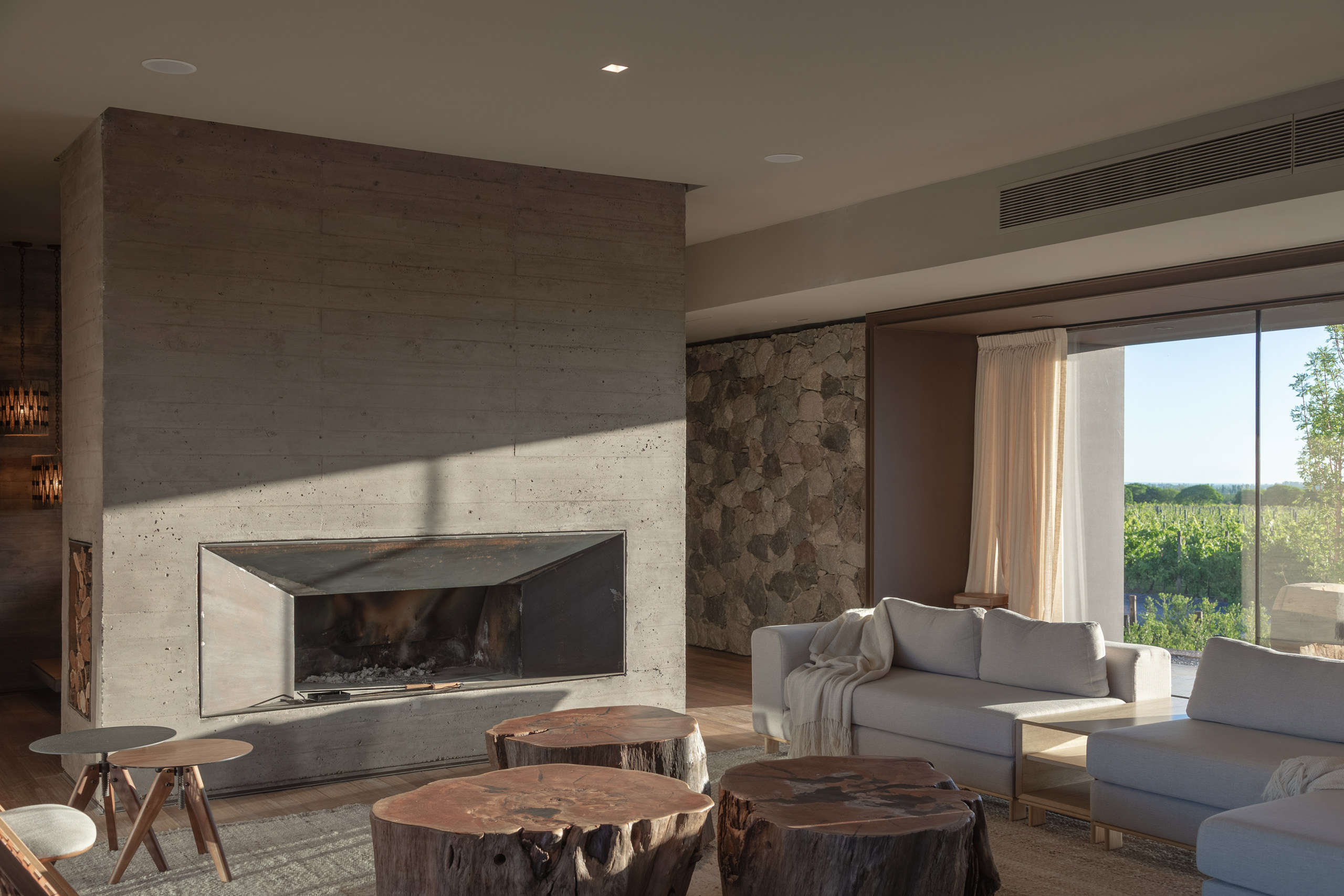
Perhaps the most evocative aspect of the project lies in its materiality. The house is built from the land—both figuratively and literally. Pigmented concrete and local stone come together to express a shared mineral identity with the mountains. The result is a structure that feels as though it was uncovered, not constructed. The concrete lends an elemental stillness and monumentality; the stone, with its textured irregularity, roots the building deeply to its context. There is no ornament here, only authenticity—an architecture that breathes in tandem with its environment.
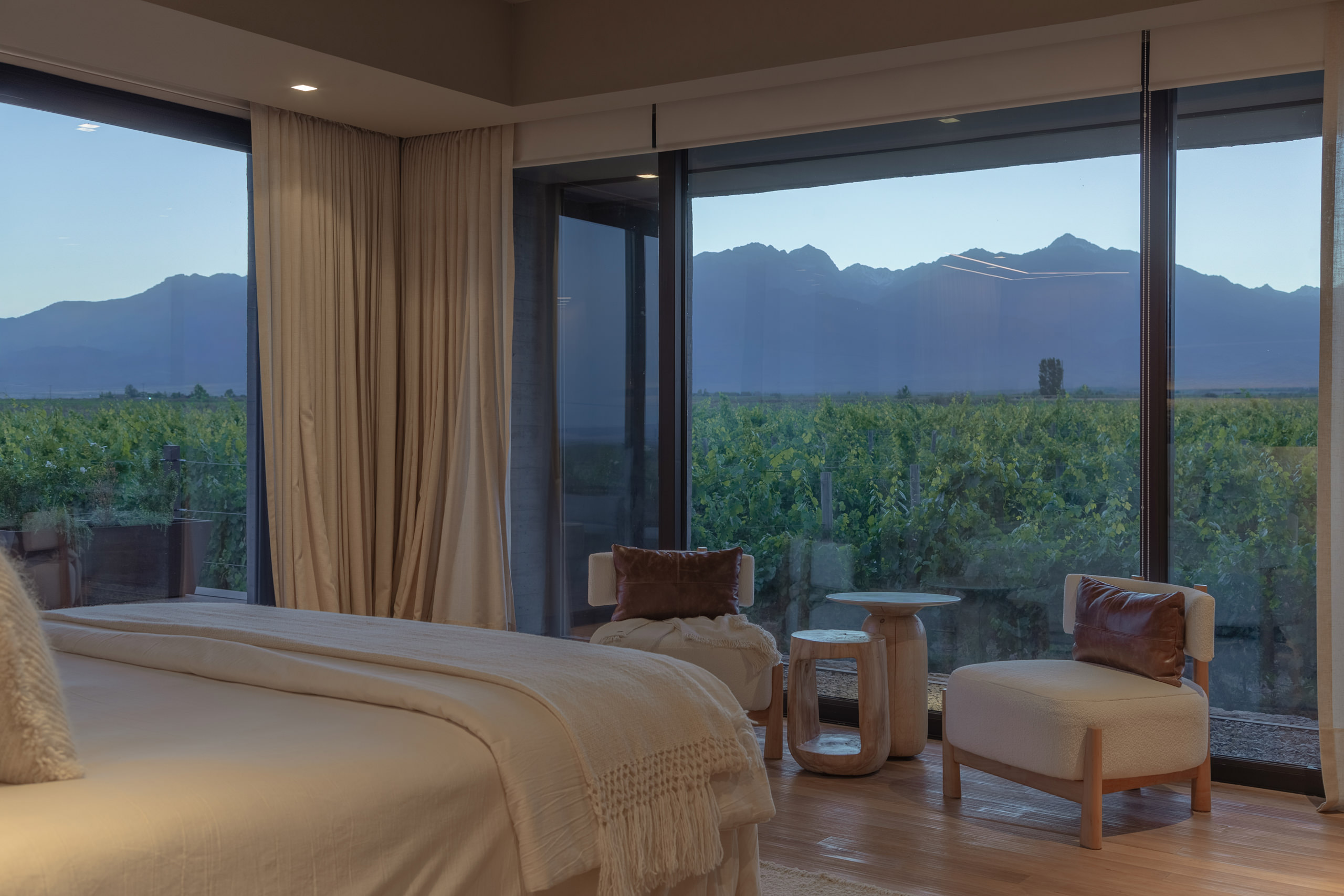
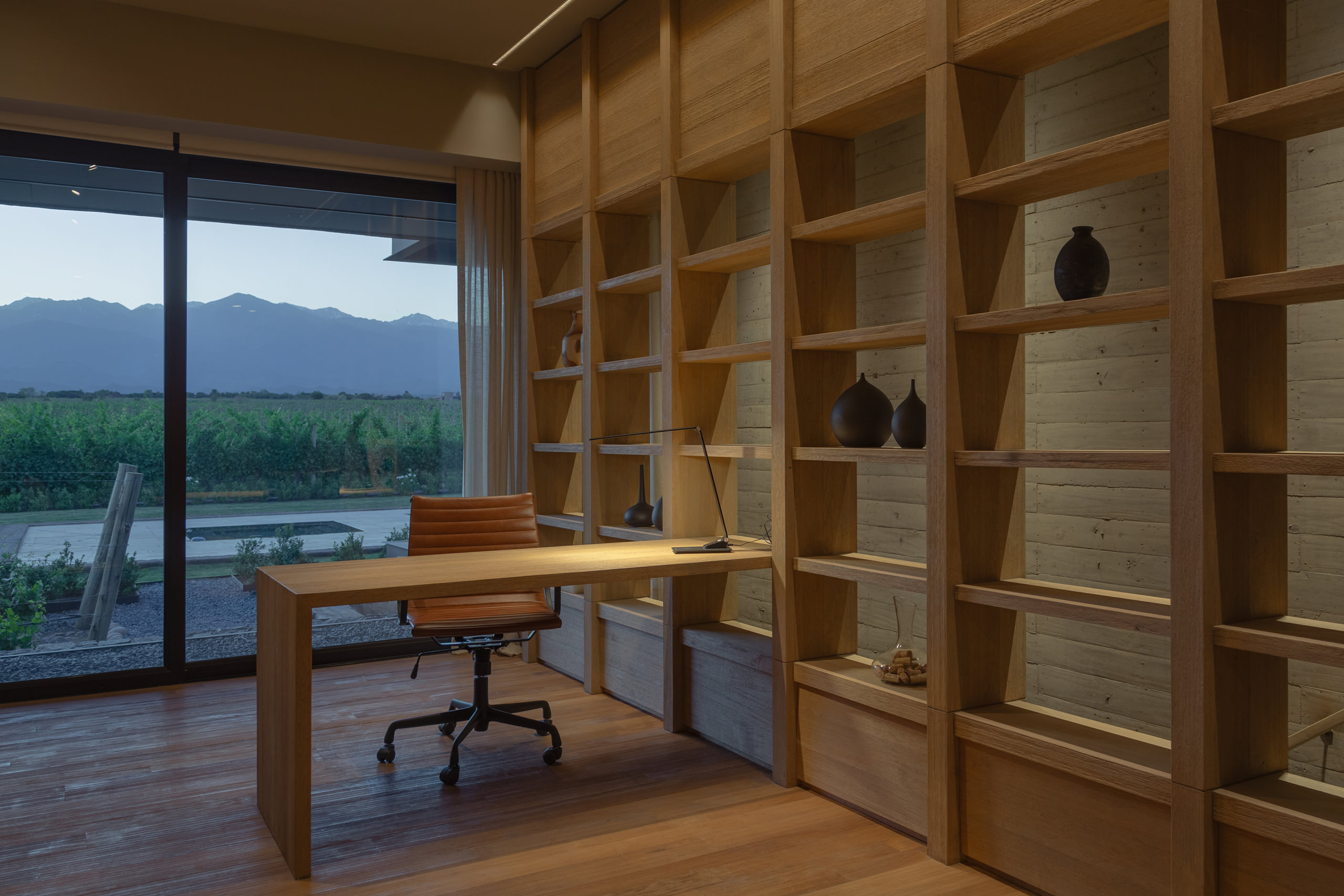
In plan and section, the home expresses a rigorous geometry guided by proportion and balance. Light and shadow become materials in their own right, shaping the experience of the interior as much as the walls themselves. The calibration between solid and void—between shelter and openness—is finely tuned. In doing so, the home becomes a vessel for silence. Every room is designed to frame a moment: the shifting light, the curve of the vine rows, the changing seasons. This spatial rhythm—sparse, deliberate—echoes the slowness of wine itself, a product of patience, care, and waiting.
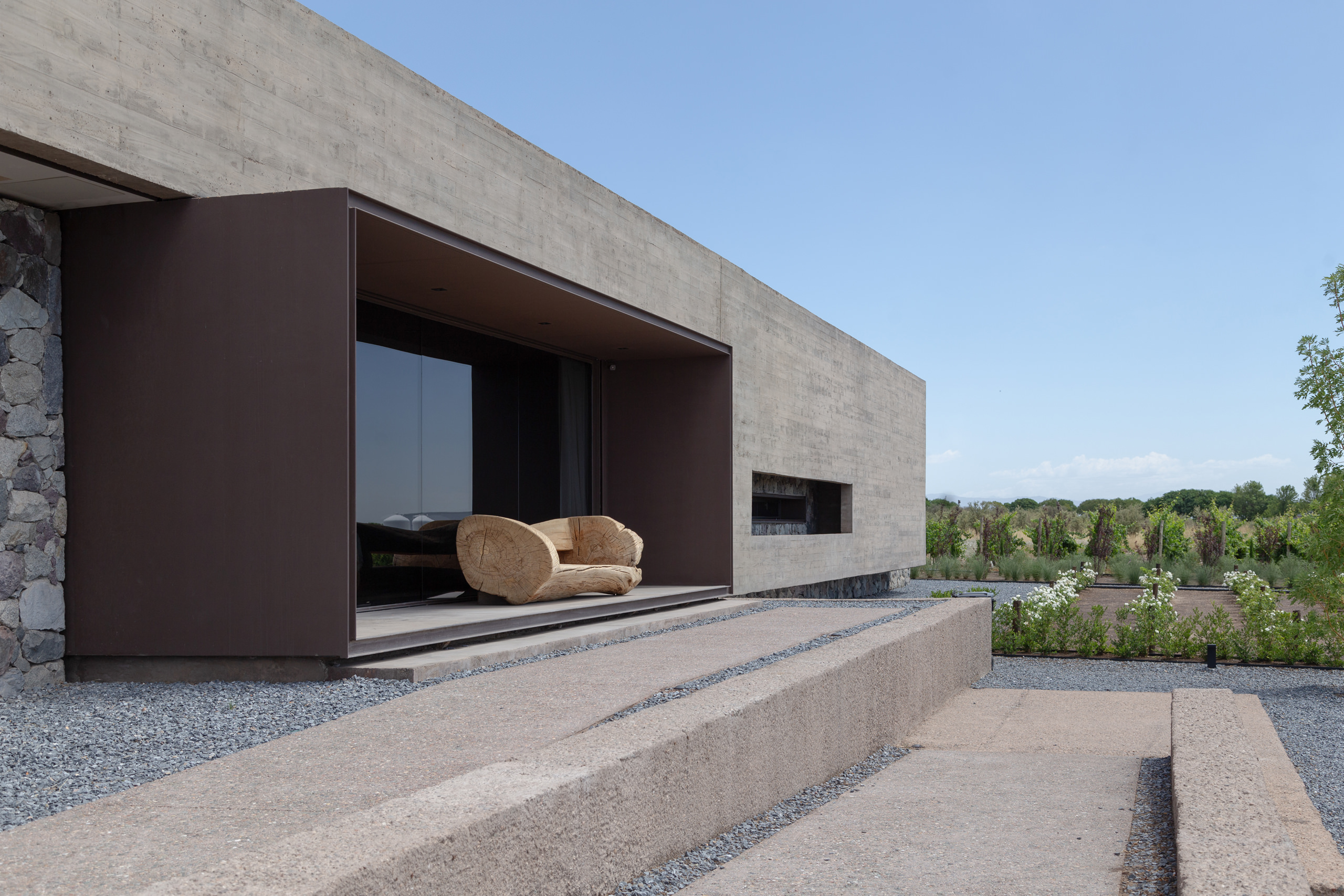
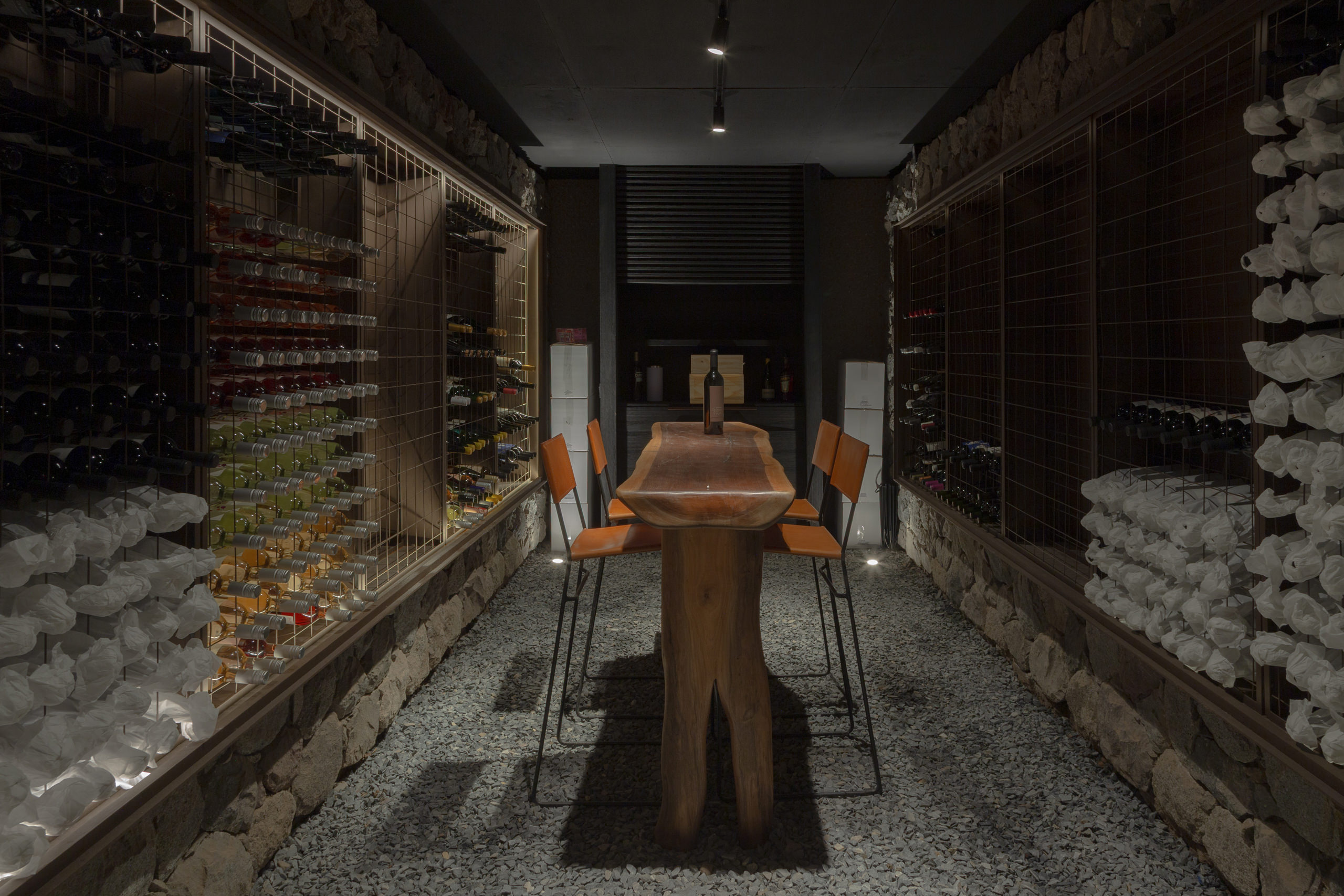
The wine cellar, a core part of the program, is more than functional; it is a sanctum. Positioned within the geometry of the home, it holds the dual weight of production and poetry. Here, the architecture moves beyond mere utility, embracing the cultural and symbolic richness of wine-making. As with the rest of the house, it speaks quietly, yet with intention. What ultimately defines Strazik House is its quietude. It resists spectacle, preferring to be experienced rather than observed. Its impact lies in the way it allows its inhabitants to slow down, to tune in to the rhythms of the land and themselves. In a world often overwhelmed by noise—visual and otherwise—this home is a whisper that carries weight. Its success is not just aesthetic or functional, but emotional.
More than a house, Strazik is a pause in the landscape. It is architecture as reverence, as alignment, as humility. Gonzalez Olsina & Vega Arquitectos have crafted a dwelling that does not age with trends, but rather with time itself. It is a home that honours the horizon, and in doing so, becomes part of it.