Memory and Material – The Calm Within by C2 Creative Concepts Interiors
"A home composed not as spectacle, but as a calm archive of memory, travel, and belonging"
In a city often associated with high-gloss surfaces, dramatic contrast, and polished spectacle, this Key Biscayne residence chooses a more graceful form of luxury. Designed by Camila Crispino of C2 Creative Concepts Interiors, the apartment feels less like a newly installed condominium and more like a coastal home that has slowly gathered meaning over time. Its power lies in restraint: soft light, tactile surfaces, warm wood, and the persistent presence of the water beyond the glass.
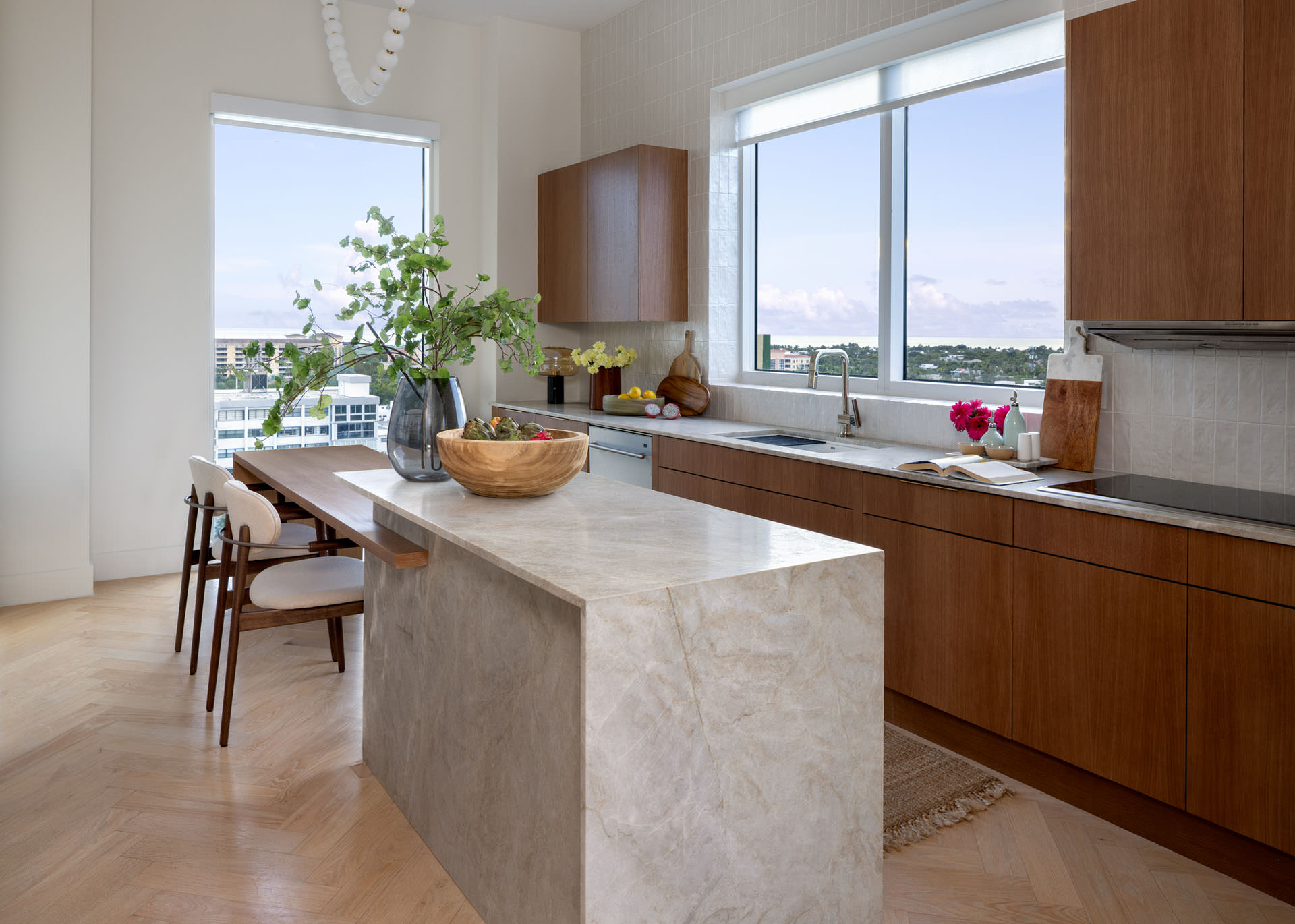
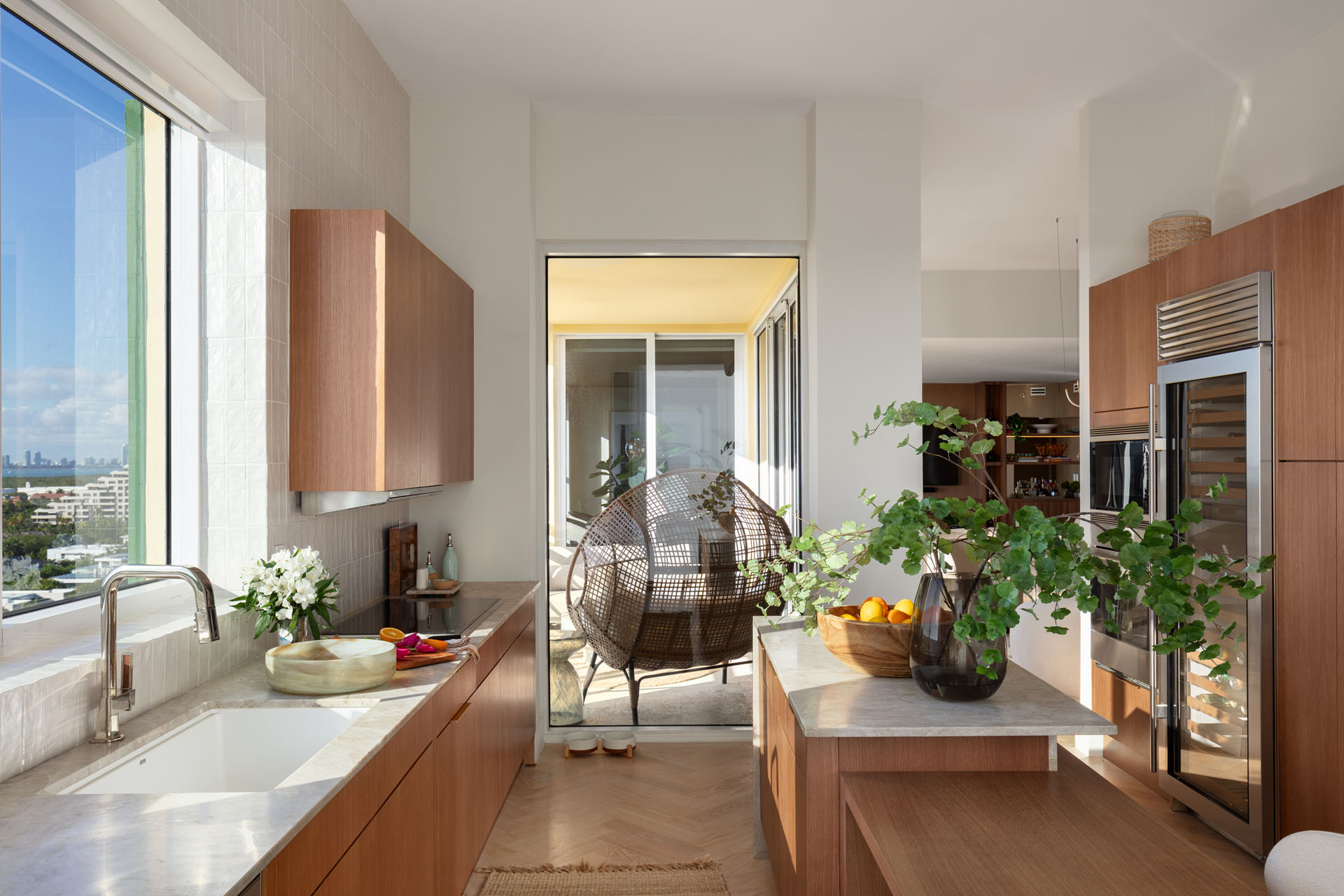
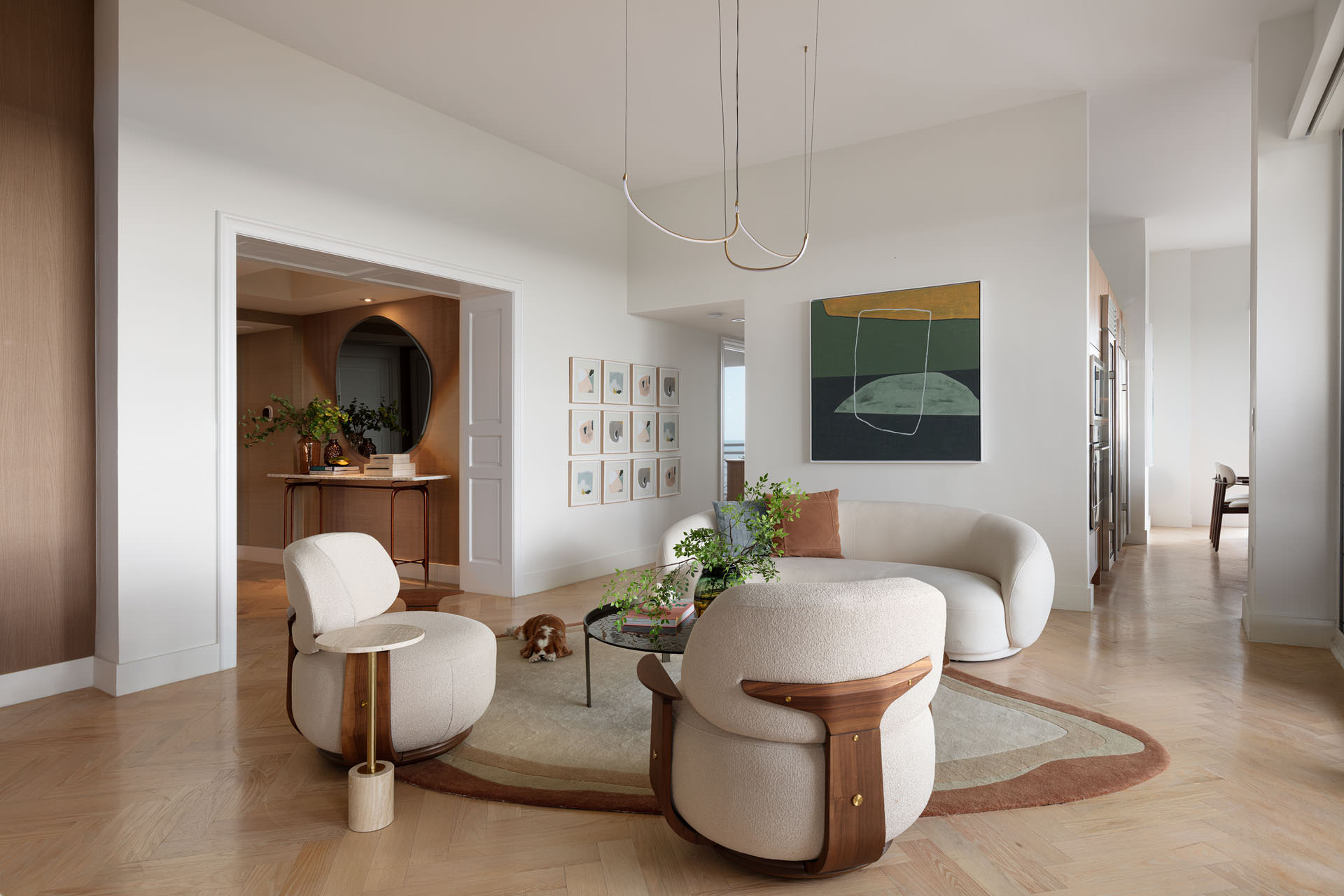
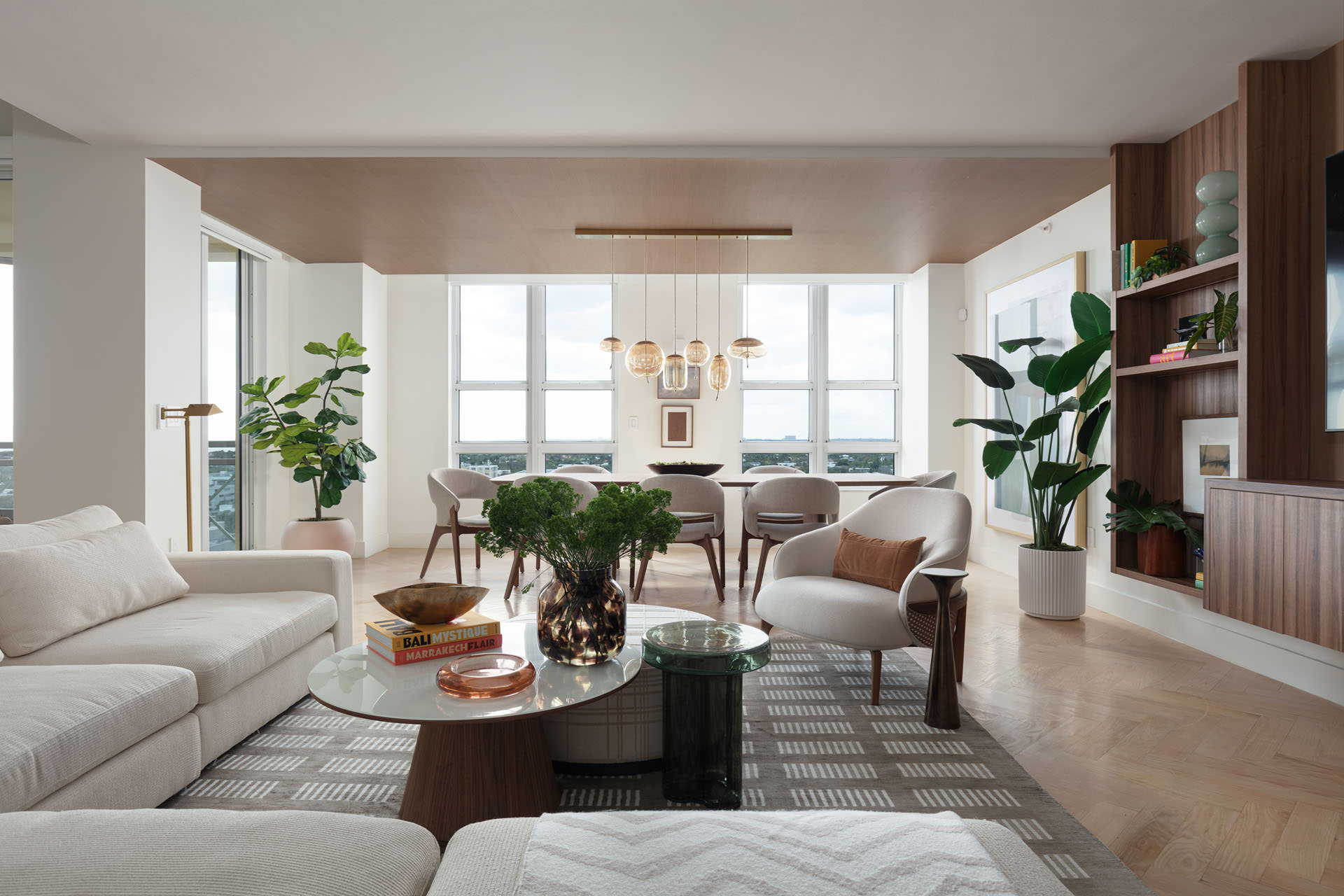
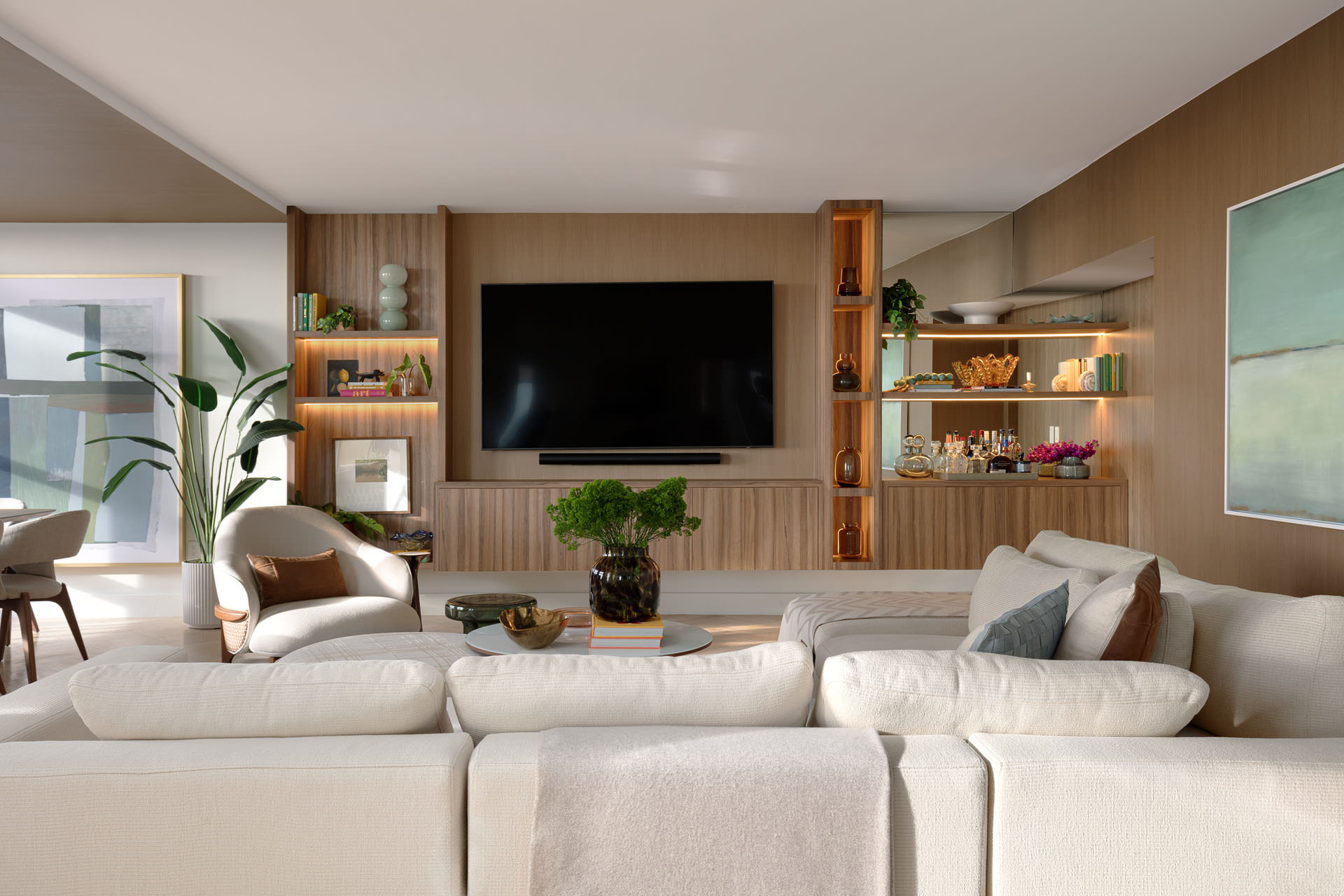
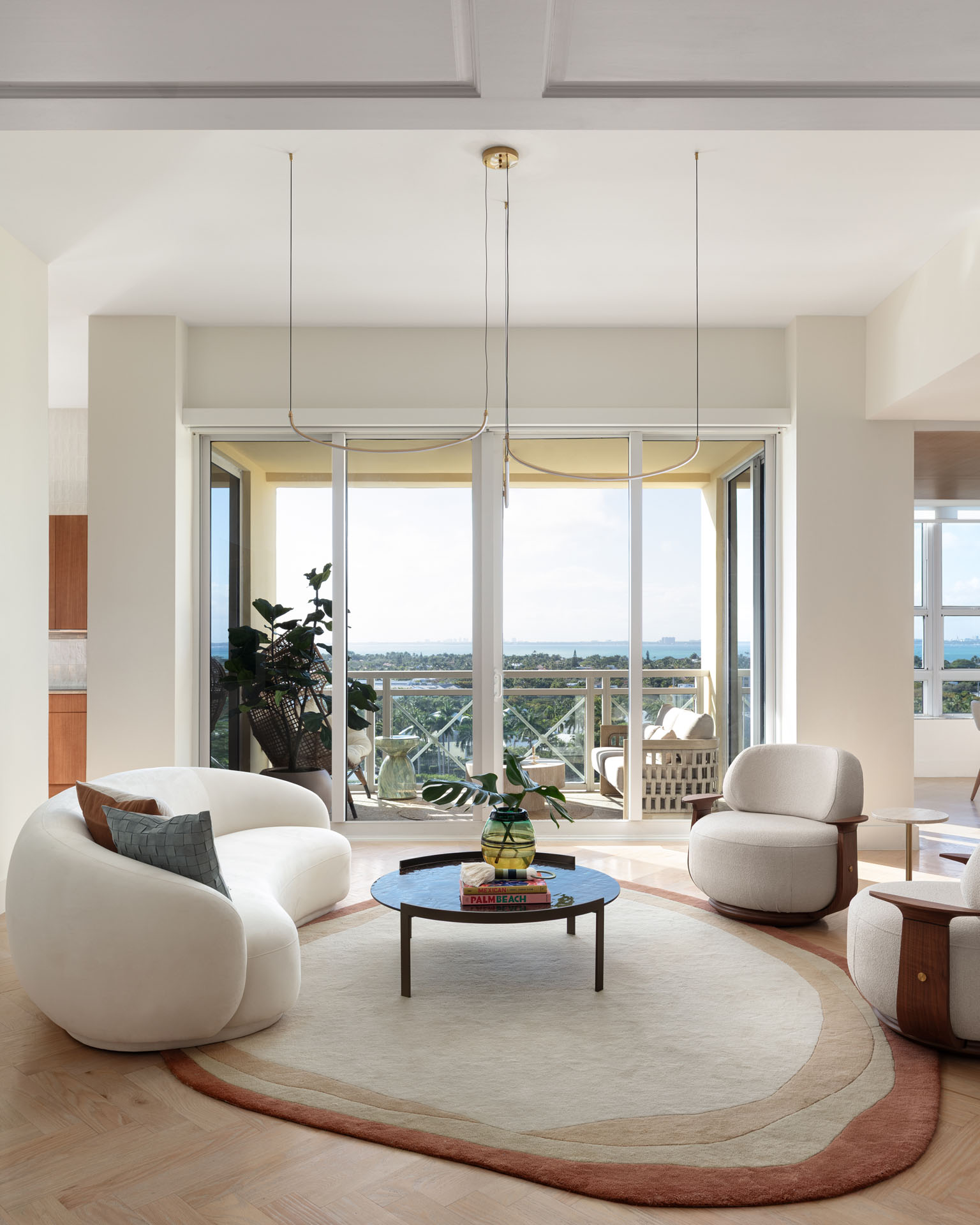
The project began with a client moving from Texas to Florida, searching not for a temporary escape, but for what Camila describes as a “forever home.” From the beginning, the brief was emotional as much as aesthetic. The client wanted a neutral, welcoming space that could receive family, grandchildren, and friends, while still feeling personal, settled, and serene. That request became the conceptual foundation for the entire interior. Key Biscayne, with its island pace, gated privacy, tropical greenery, and west-facing light, strongly informs the design. Camila understood that the views were not merely background scenery; they were part of the architecture of daily life. Seating is oriented toward the water, window treatments remain light and minimal, and the palette draws directly from the exterior world: sand, driftwood, soft sky, muted taupe, sun-warmed oak, and watery neutrals. The apartment’s expansive social areas are organized with open sightlines, yet Camila avoids the anonymity of one oversized room. Instead, she creates distinct gathering zones through furniture placement, lighting, texture, and curved silhouettes. The living room is anchored by a custom walnut entertainment wall with integrated floating shelving, giving the space both weight and refinement. A soft oversized sectional, organic lounge chairs, rounded tables, and large-scale contemporary artwork form an atmosphere that is calm but never flat. Contrast is deliberately quiet. Rather than relying on bold color, the room finds depth through bouclé, woven upholstery, natural fiber rugs, wood grain, and the subtle shift between rougher and smoother finishes. In the dining area, the mood becomes almost pavilion-like. Positioned directly in front of expansive windows, a walnut table and upholstered chairs sit beneath sculptural glass pendants, while a warm wood ceiling detail lowers the scale and creates intimacy against the openness of the view.
What distinguishes the project is its refusal to confuse luxury with severity. The kitchen, for example, avoids the showroom-like language often found in urban waterfront apartments. Warm wood cabinetry, light stone counters, integrated appliances, and handmade tiles create a residential softness that feels practical, sensory, and lived in. Camila notes that one of the project’s beauties was the decision not to erase everything, but to “respect the bones of the house” and work intelligently with what was already there. Through cosmetic interventions, clever material choices, and custom detailing, the apartment gained the feeling of a much deeper renovation. That attitude speaks to a broader and increasingly relevant design philosophy: interiors do not need to be stripped to become meaningful. In an era when many luxury residences can feel interchangeable, this project argues for layering, adaptation, and emotional specificity. Camila’s approach is not about matching every wood tone or enforcing one rigid style. It is about allowing related materials, varied textures, reflective surfaces, and organic forms to converse. The result is a home where the eye moves easily, where nothing feels overly staged, and where the client’s memories and travel pieces can belong without disrupting the larger composition.
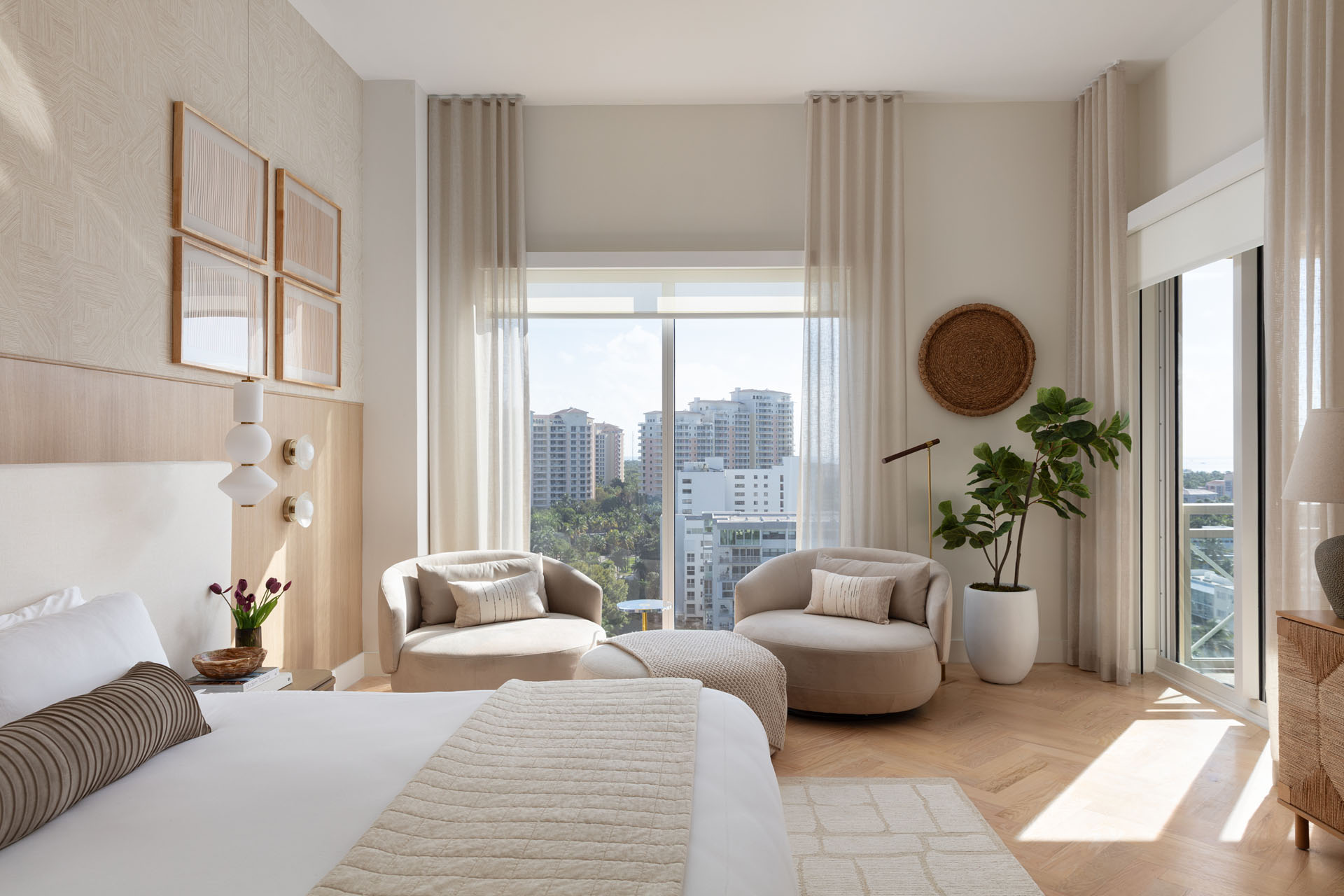
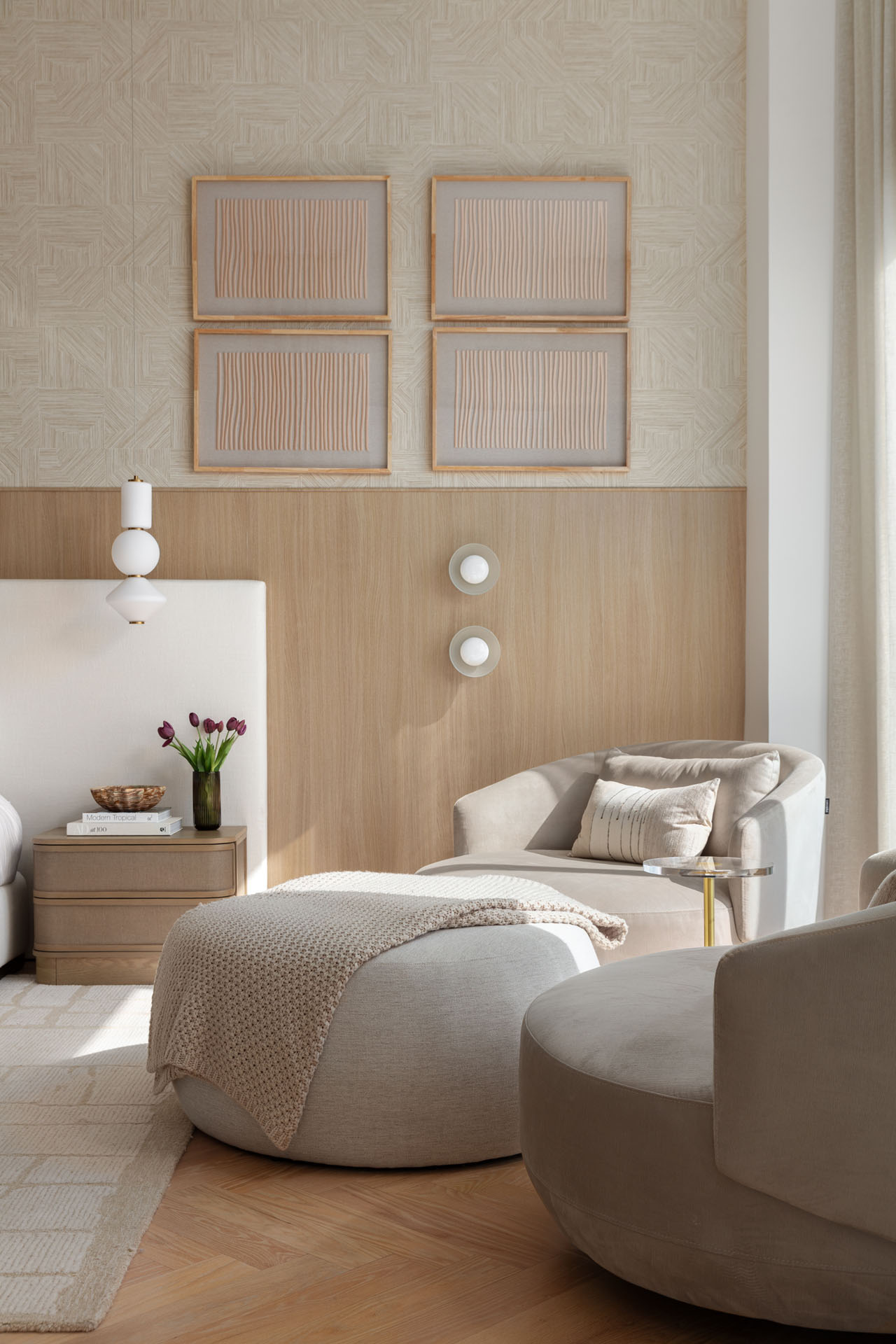
The primary bedroom sharpens the project’s boutique hospitality influence. An oversized upholstered headboard wall, symmetrical bedside moments, layered bedding, wall coverings, rugs, and tonal textiles create the sensation of a private resort suite. Yet the room avoids the impersonality of hotel design because it is grounded in the client’s own desire for rest, permanence, and retreat. Camila wanted the home to feel like a “forever vacation property,” a place where the client could feel blessed by the view and comforted by the atmosphere every day.
"A residence where island light, warm timber, and collected memories dissolve the boundaries between retreat and home"
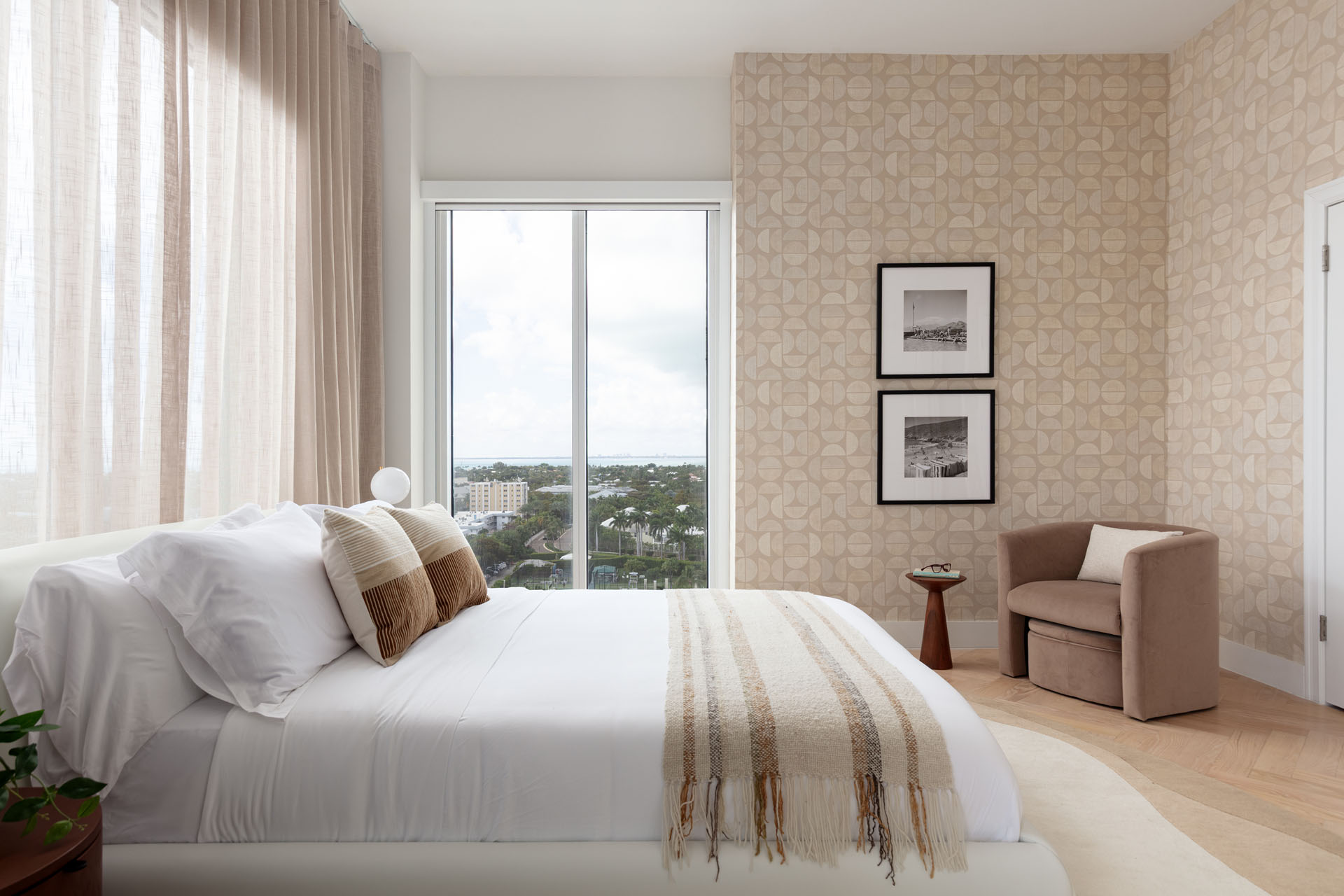
The guest bedroom carries the same design language with a slightly more relaxed personality. Patterned wallpaper, a curved accent chair, pale wood furniture, and resort-style ease make it feel prepared for long visits rather than occasional use. This is important: the home is not designed as a display of ownership, but as a setting for family life. The presence of grandchildren, guests, and shared meals is embedded in the planning of the social spaces, the generous seating arrangements, and the welcoming rhythm of the interiors.
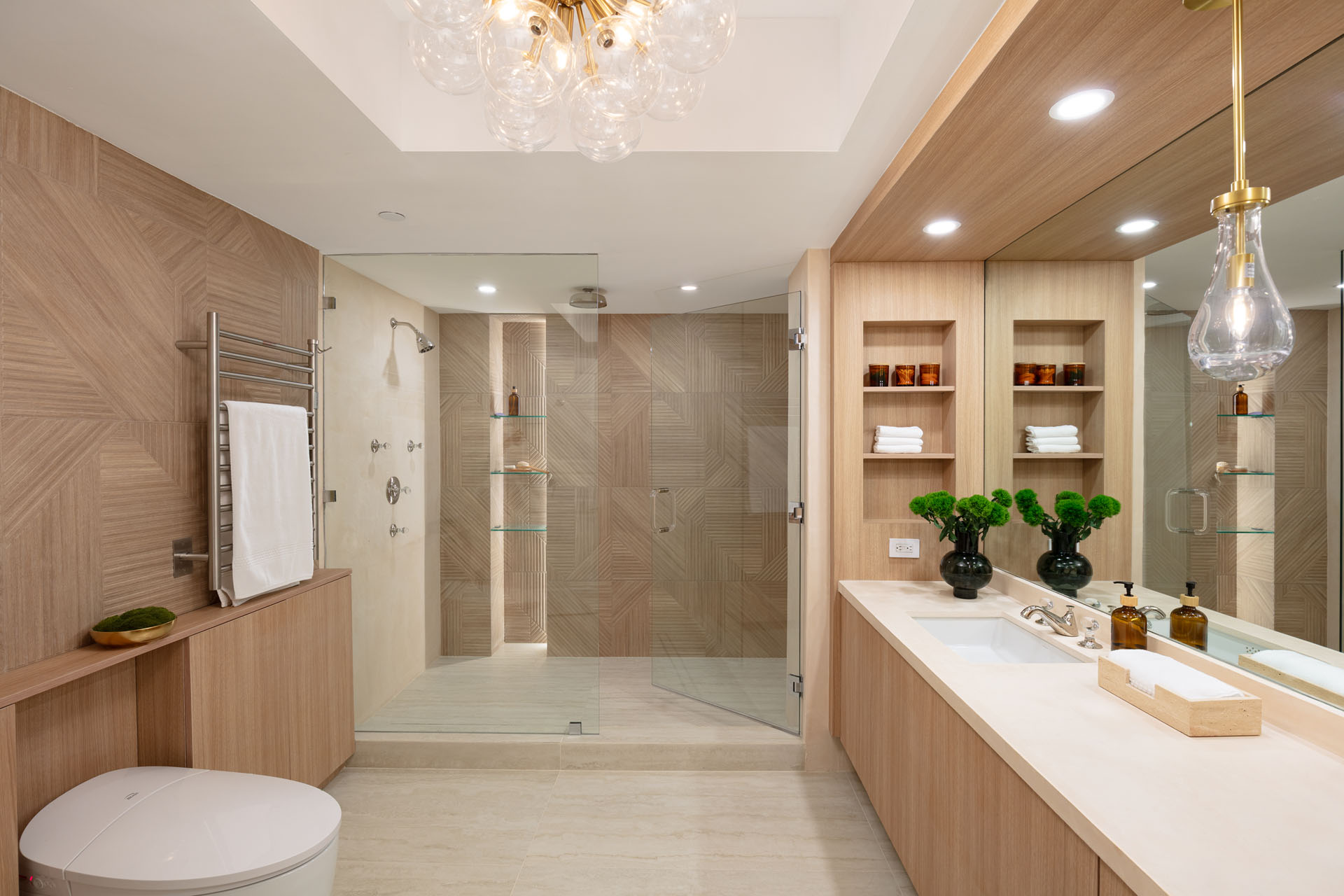
The bathrooms continue this hospitality sensibility with floating vanities, integrated millwork, large mirrors, warm wood paneling, decorative pendant lighting, and spa-inspired stone surfaces. These rooms extend the apartment’s material narrative rather than interrupting it. Wood, stone, linen, woven texture, brushed brass, and champagne-toned metal accents return in different intensities, creating continuity without repetition. Nothing feels cold, overly polished, or aggressively modern. The luxury is tactile and atmospheric.
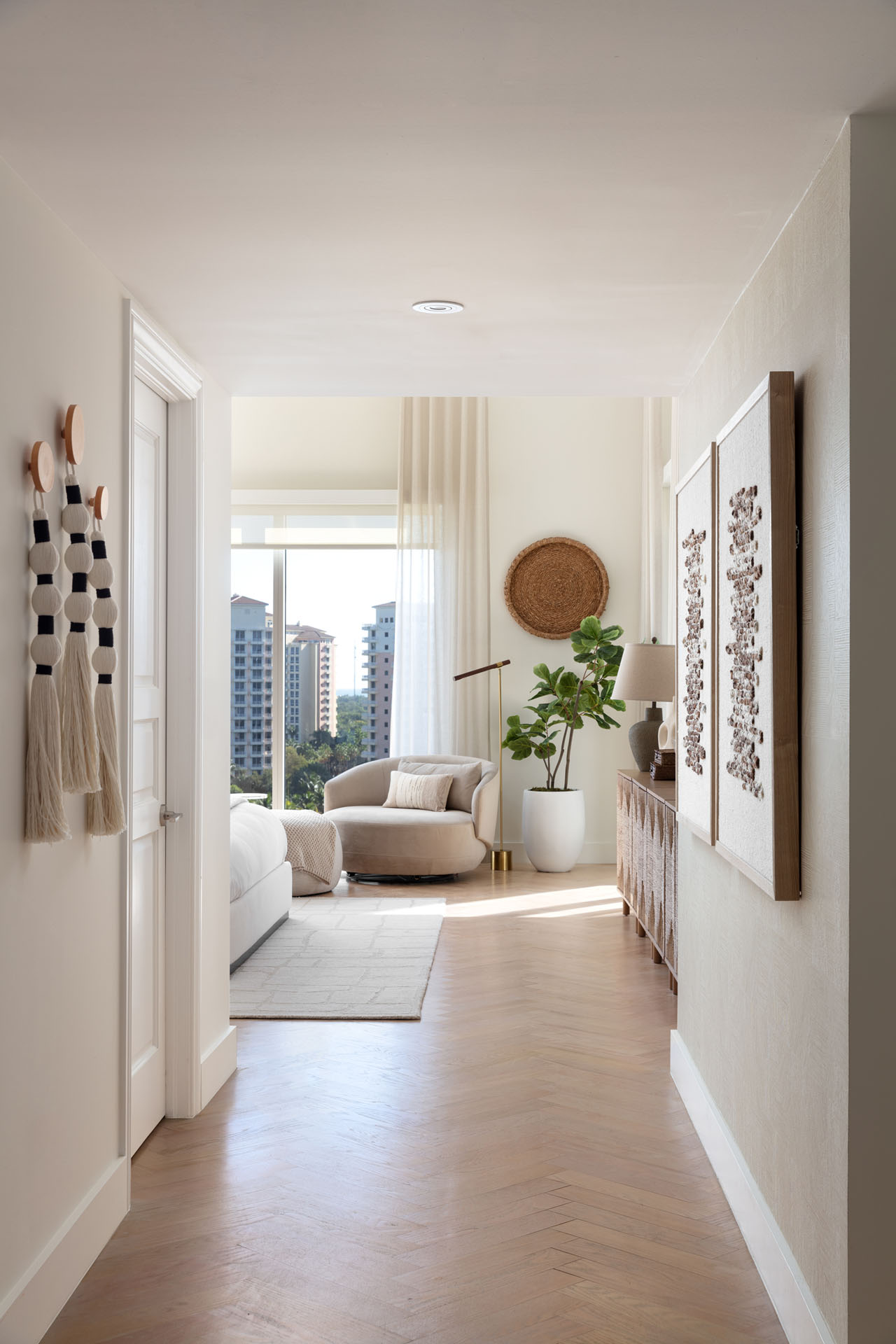
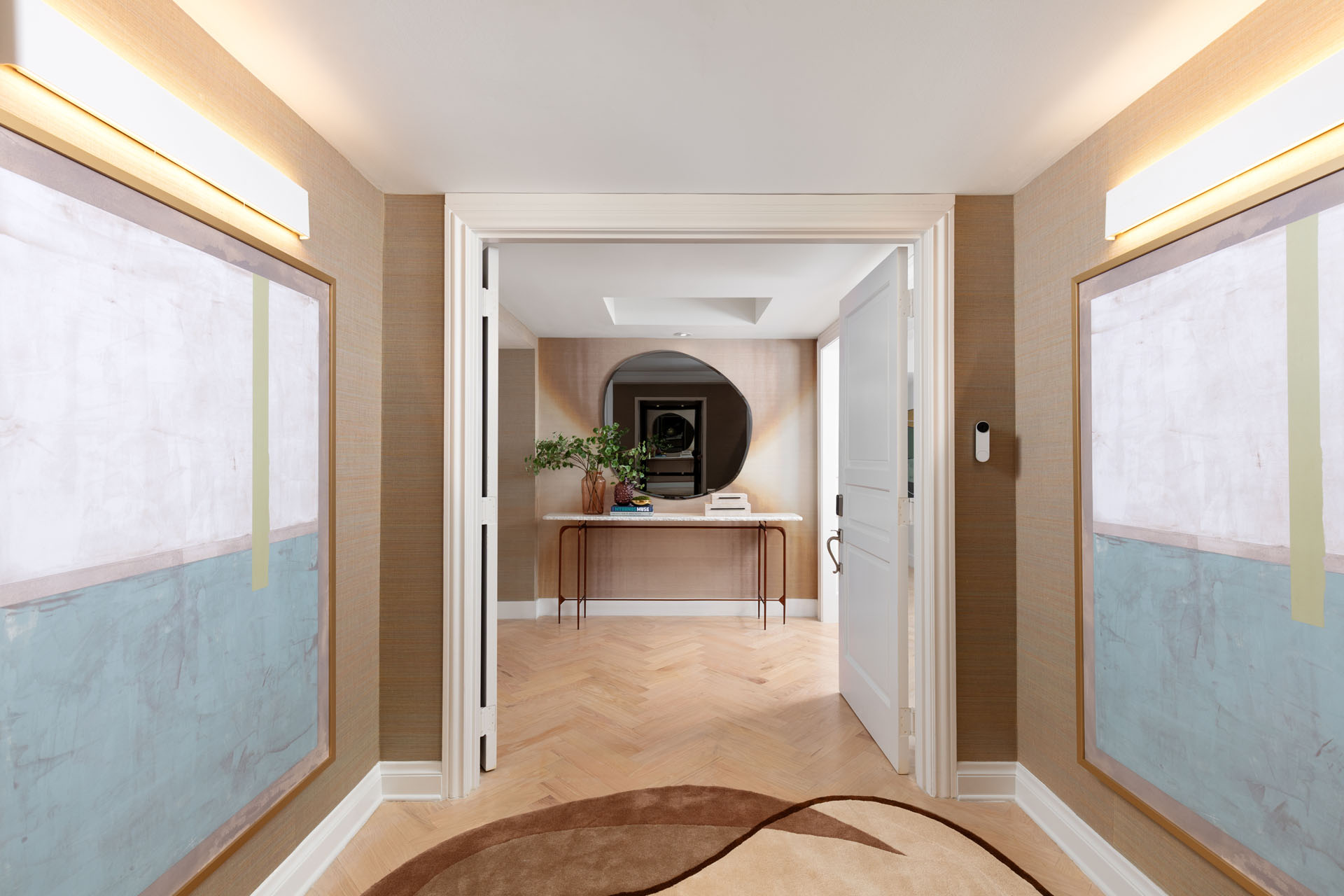
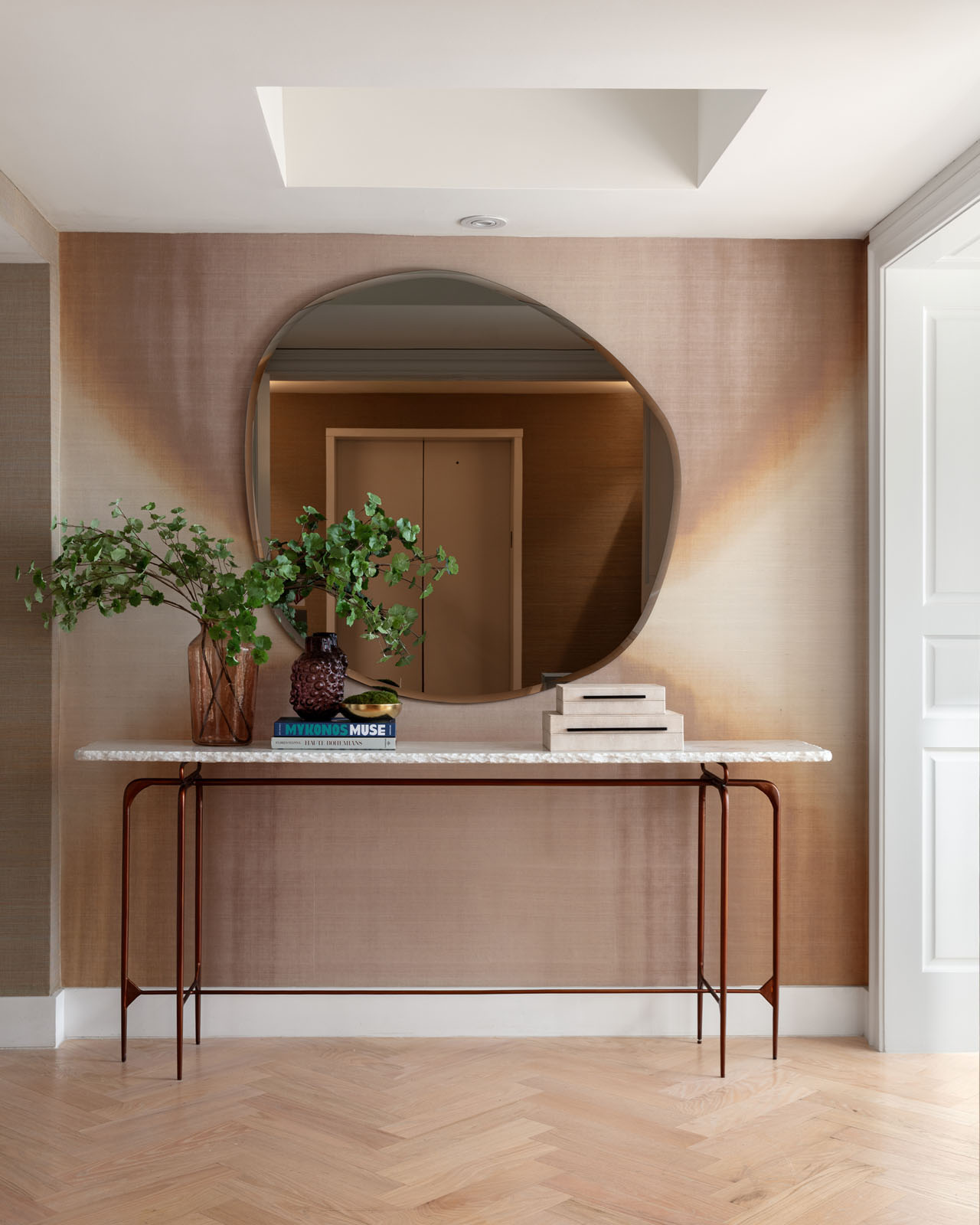
The entry sequence is equally considered. A statement mirror, console vignette, architectural wallpaper, and controlled palette introduce the home’s language before the main living areas are fully revealed. It is a small but important gesture: the apartment begins with a sense of arrival, not exposure. From there, the plan opens toward light, water, and the layered social spaces beyond, allowing the home to unfold gradually.
Ultimately, this Key Biscayne residence succeeds because it understands that coastal design does not need clichés to feel connected to place. There are no obvious nautical gestures, no forced tropical motifs, no excessive shine. Instead, C2 Creative Concepts Interiors creates an interior shaped by pace, light, material, and memory. It is a home that resists the disposable newness of trend-driven luxury and offers something more enduring: a warm, curated refuge where the island outside and the life inside become inseparable.