Equilibrium– Policlinica Dental Perez-Arroyo by D. Hernandez Arquitectura and Murillo Arquitectos
Published
"Bathed in light, these spaces breathe serenity — reminding us that architecture, too, can heal. Each curve invites reflection, turning precision into an experience of beauty and calm."
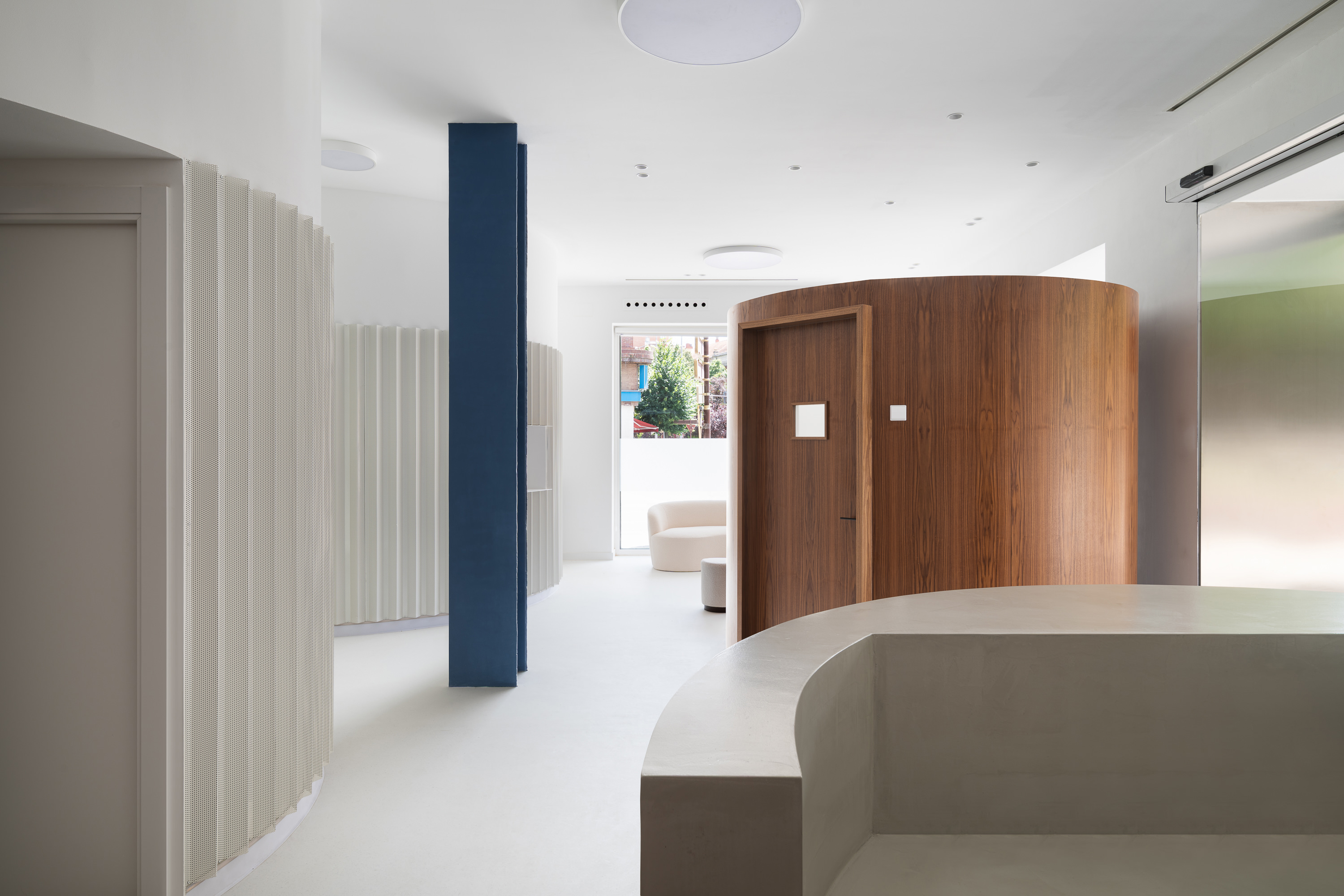
The project is born from an idea as pure as the tooth itself — a perfect circle that multiplies, expands, and becomes space. Every curve, texture, and reflection of light evokes an intimate relationship between architecture, the body, and the act of care.
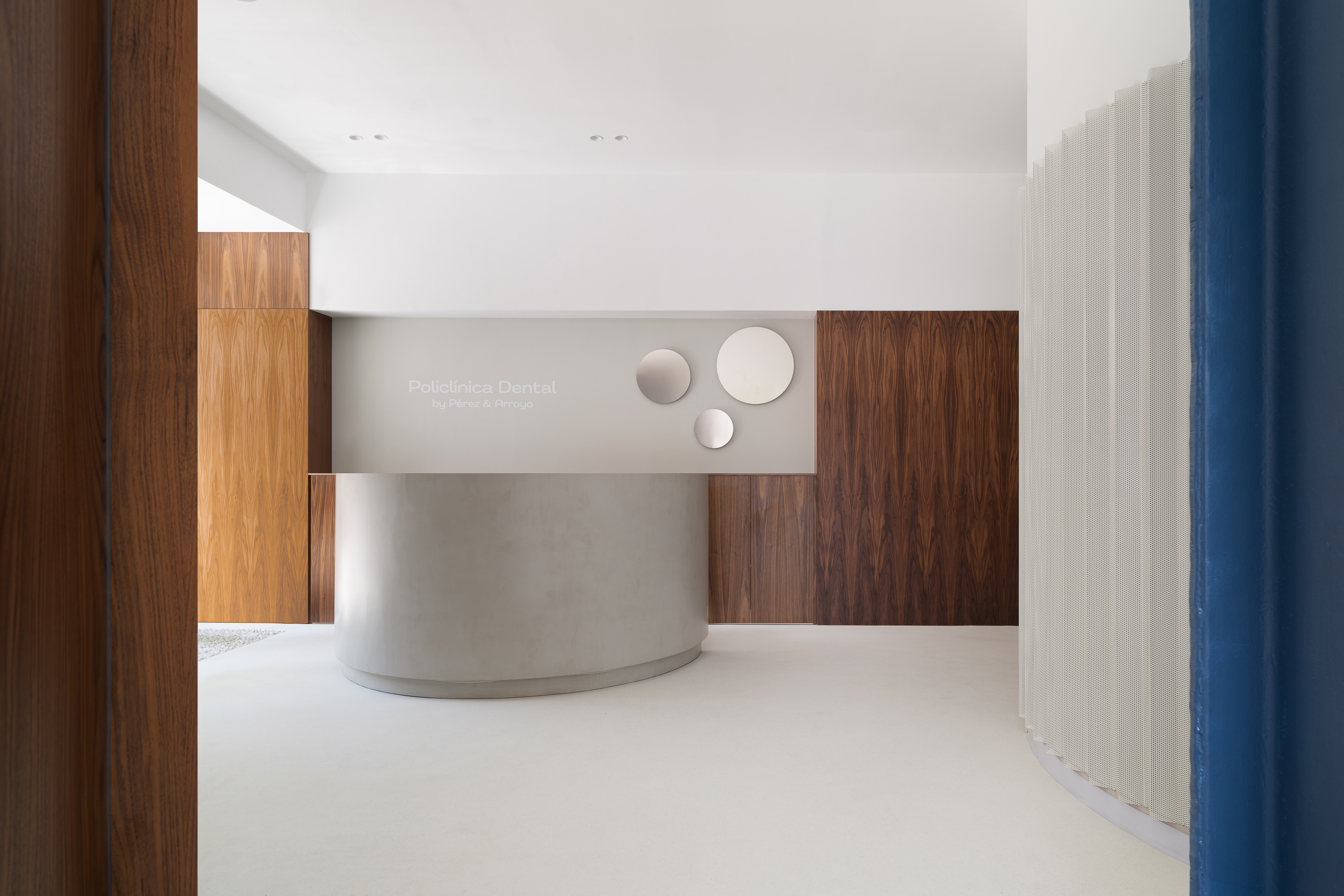
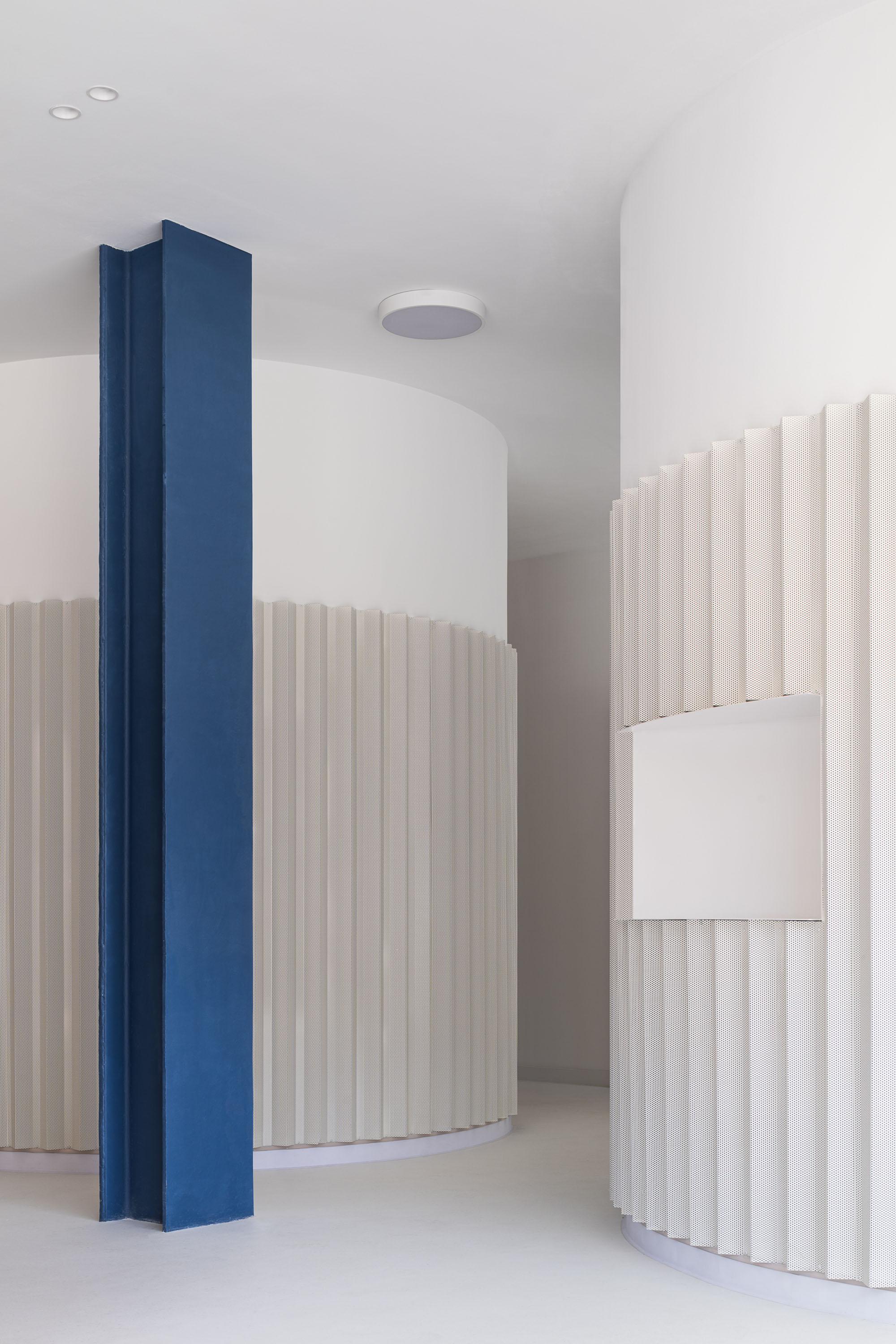
The circle, inspired by dental morphology, becomes the project’s guiding thread and the essence of its architectural language. This organic geometry, abstracted from the tooth’s top view, unfolds gracefully across volumes, lighting, corporate identity, and constructive details. The form is not mere decoration — it symbolically translates the precision and softness required in dental practice. The architects allow this essential geometry to express itself throughout the material composition, creating a coherent and unmistakable identity. A poetic example of this philosophy lies in the circular cutouts left from the access gate, which are repurposed as a backlit wall fixture — turning leftover material into a luminous emblem of continuity. Inside, the spatial composition is organized around circular volumes that soften circulation paths and blur traditional boundaries. These central elements, clad in natural wood and perforated folded sheet metal, contrast with the purity of white planes, creating an enveloping sense of warmth and order. The organic geometry of the core stands in gentle opposition to the orthogonal precision of the dental program arranged along the perimeter. While the outer ring meets the technical and sanitary needs of the practice, the central curved core becomes a zone of identity — a soft and human transition that connects functionality with emotion.
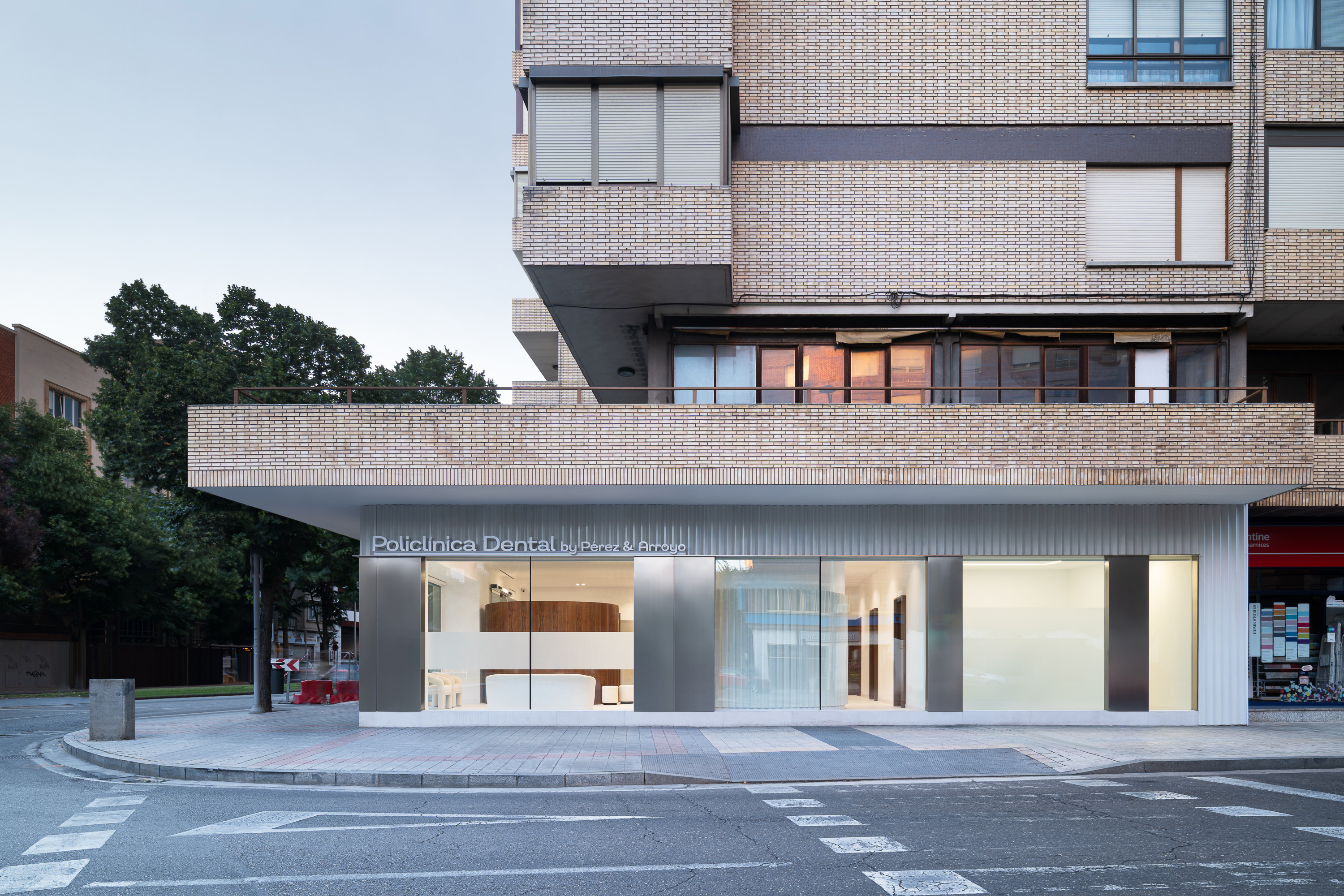
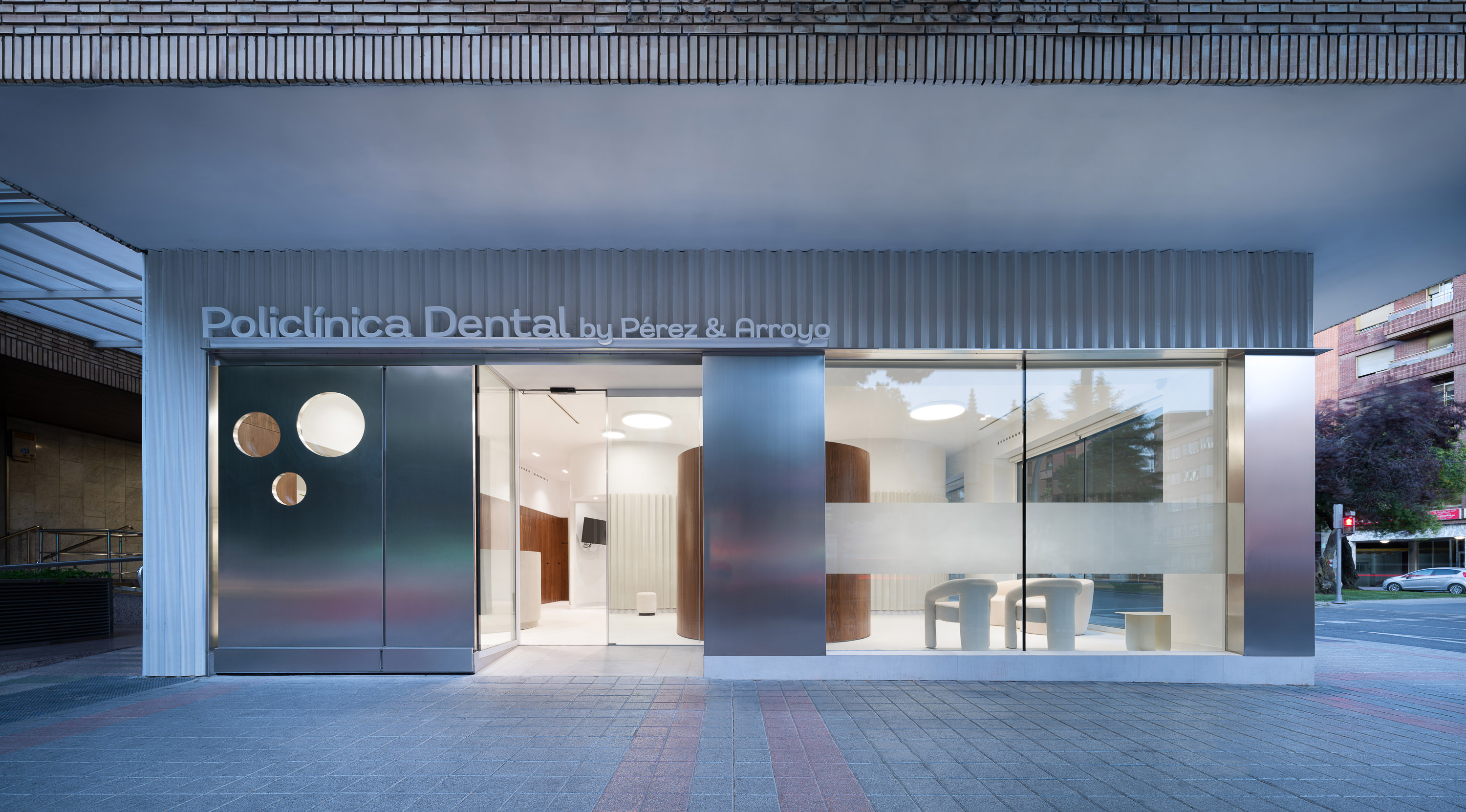
The clinic’s organization follows a logic grounded in efficiency, hygiene, and movement. Two distinct circulation paths are established: a public route connecting reception to the treatment rooms, and a private route reserved for staff, ensuring rapid access to sterilization and storage areas. The treatment rooms are arranged linearly, creating an orderly and efficient sequence that enhances supervision, privacy, and cleanliness. This dual system allows smooth daily operations while preserving spatial clarity. The clinic distinguished itself from the others in Palencia — not by abandoning functionality, but by reimagining it through innovation and a new vision of the dental space. Externally, the Policlínica Dental Pérez - Arroyo opens to the urban context with elegance and restraint. The façade, crafted from the same perforated metal sheet used inside, establishes a material and conceptual continuity between interior and exterior. Its upper band filters sunlight, casting delicate shadows that shift throughout the day. Below, stainless steel cladding mirrors the urban surroundings, amplifying brightness and dissolving the threshold between inside and out. This interplay of reflection and transparency transforms the façade into a living surface — one that breathes, reacts, and integrates with its environment. The building stands as both a clinic and a quiet architectural statement: precise, luminous, and humane.
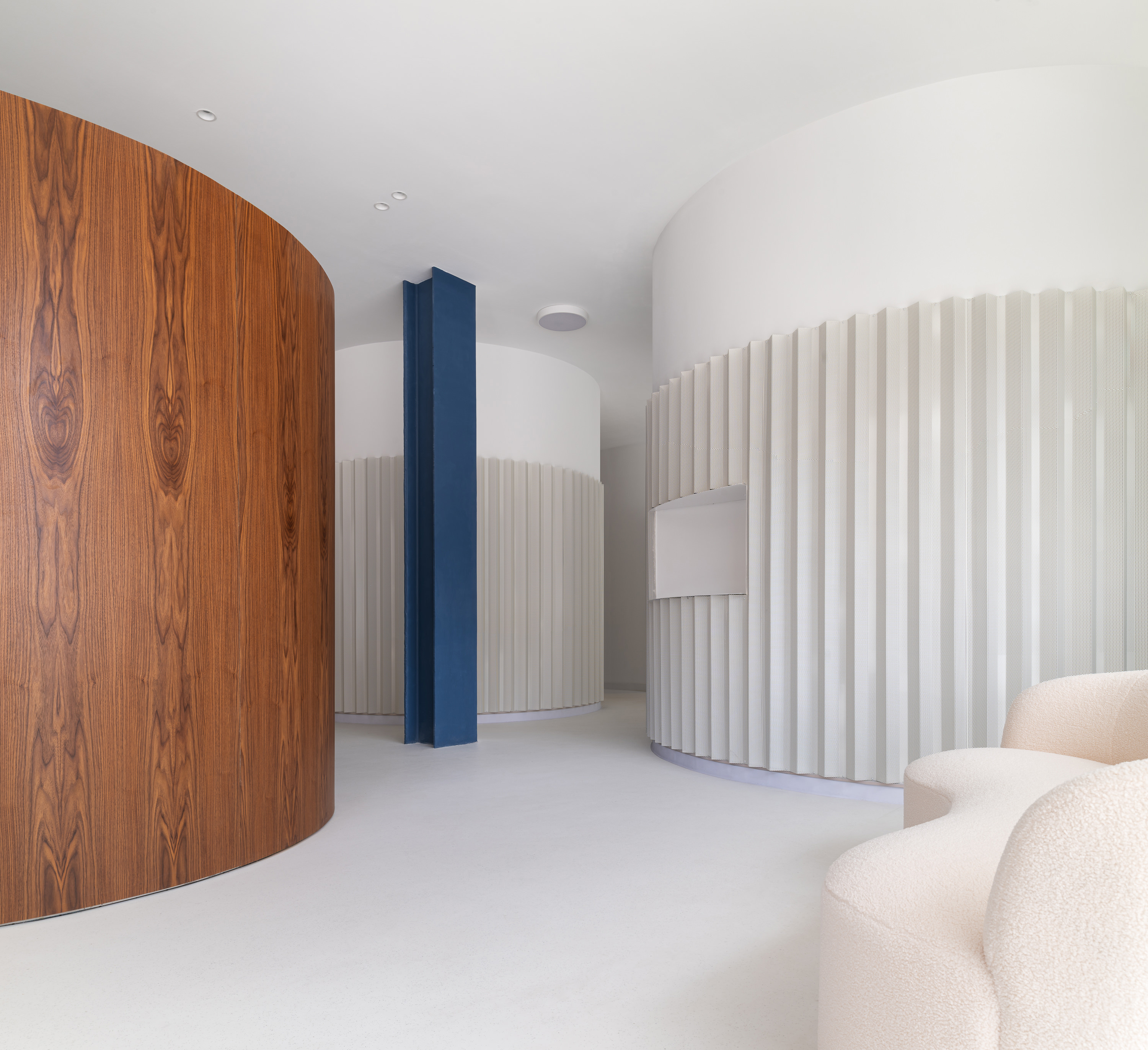
Occupying a corner site in the heart of Palencia, the clinic transforms what was once an administrative office into an open, light-filled space. Generous natural light, enhanced by the transparency of the façade, becomes an architectural material in its own right. Light here is not only functional but therapeutic — it defines mood, guides orientation, and reduces anxiety. Instead of the sterile coldness often associated with dental spaces, the design cultivates serenity through soft materials and indirect lighting. Each design decision is made with empathy, shaping a spatial experience that places comfort and calm at the center of care.
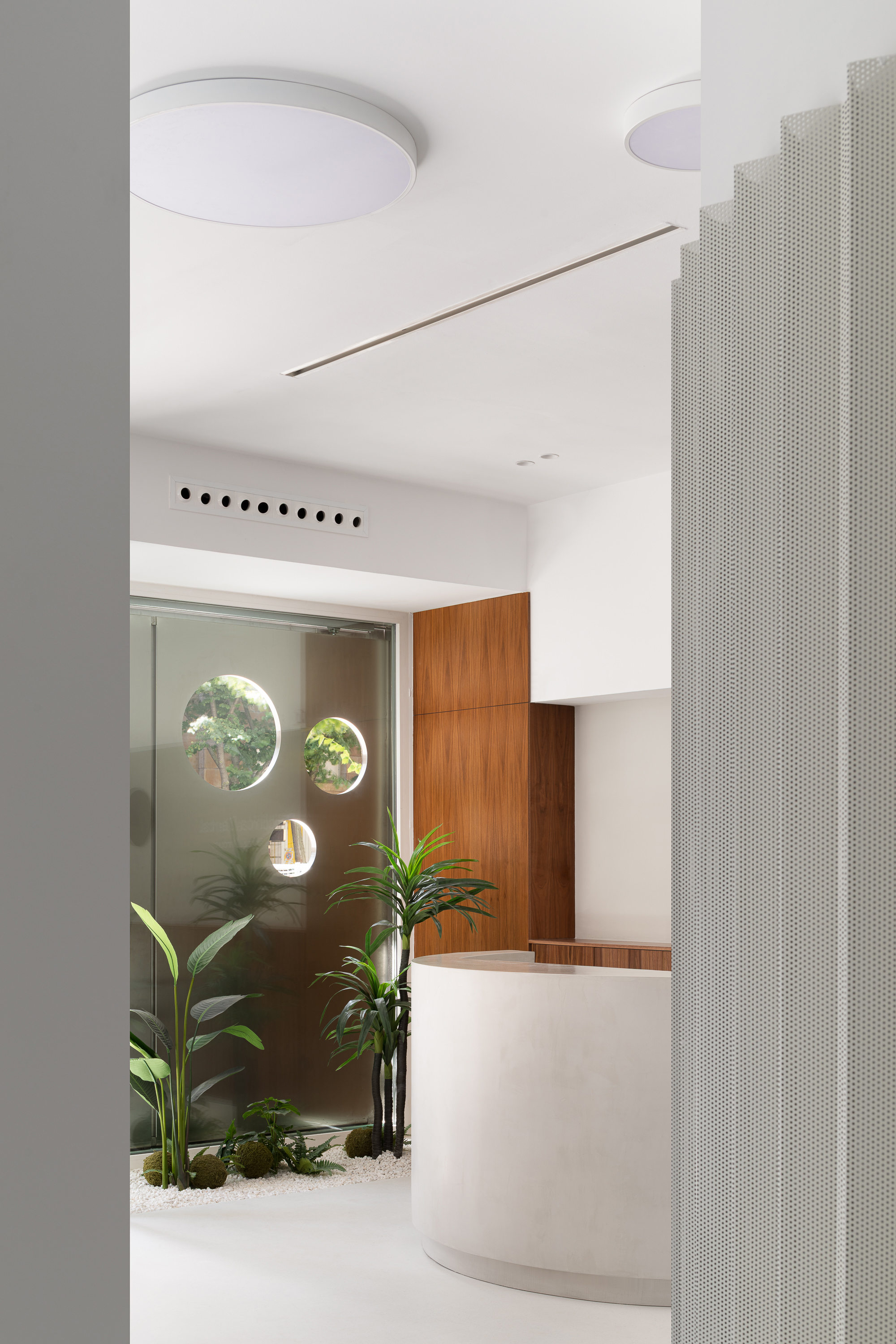
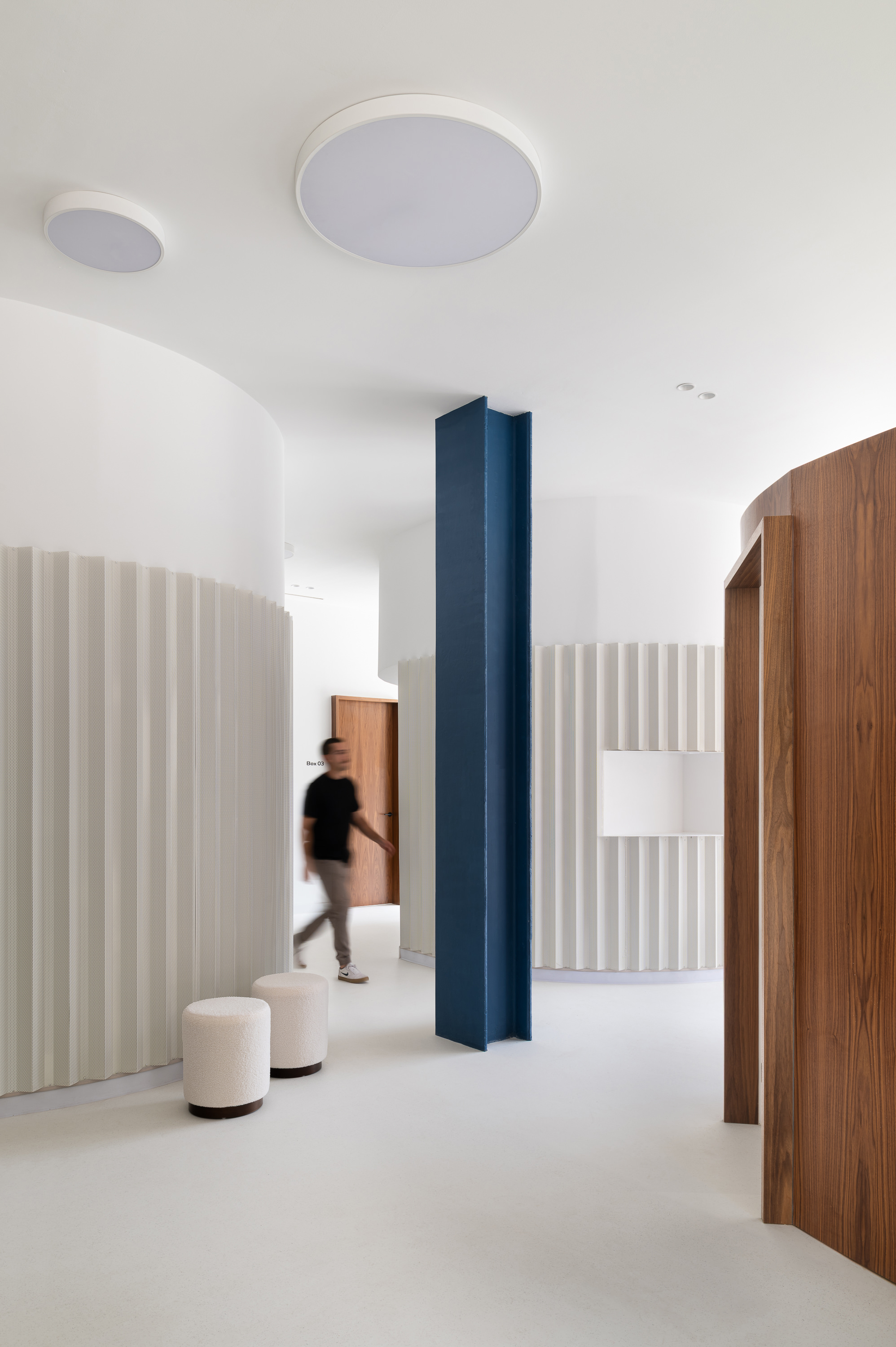
"Like the tooth itself, architecture finds in the circle its perfect form — a balance between strength and softness, between matter and spirit, between science and art."
The project’s material palette is carefully balanced — each texture is intentional. Natural wood introduces warmth and tactility; perforated metal adds lightness and transparency; and white surfaces enhance luminosity and visual purity. Together, they create a serene atmosphere that unites technical precision with emotional resonance. Detailing plays a crucial role: every joint, edge, and intersection is executed with finesse, preserving visual continuity. Nothing feels arbitrary — every gesture reinforces the overall coherence of the design. The result is a space where craftsmanship and clarity coexist, elevating dental architecture to the realm of design artistry.
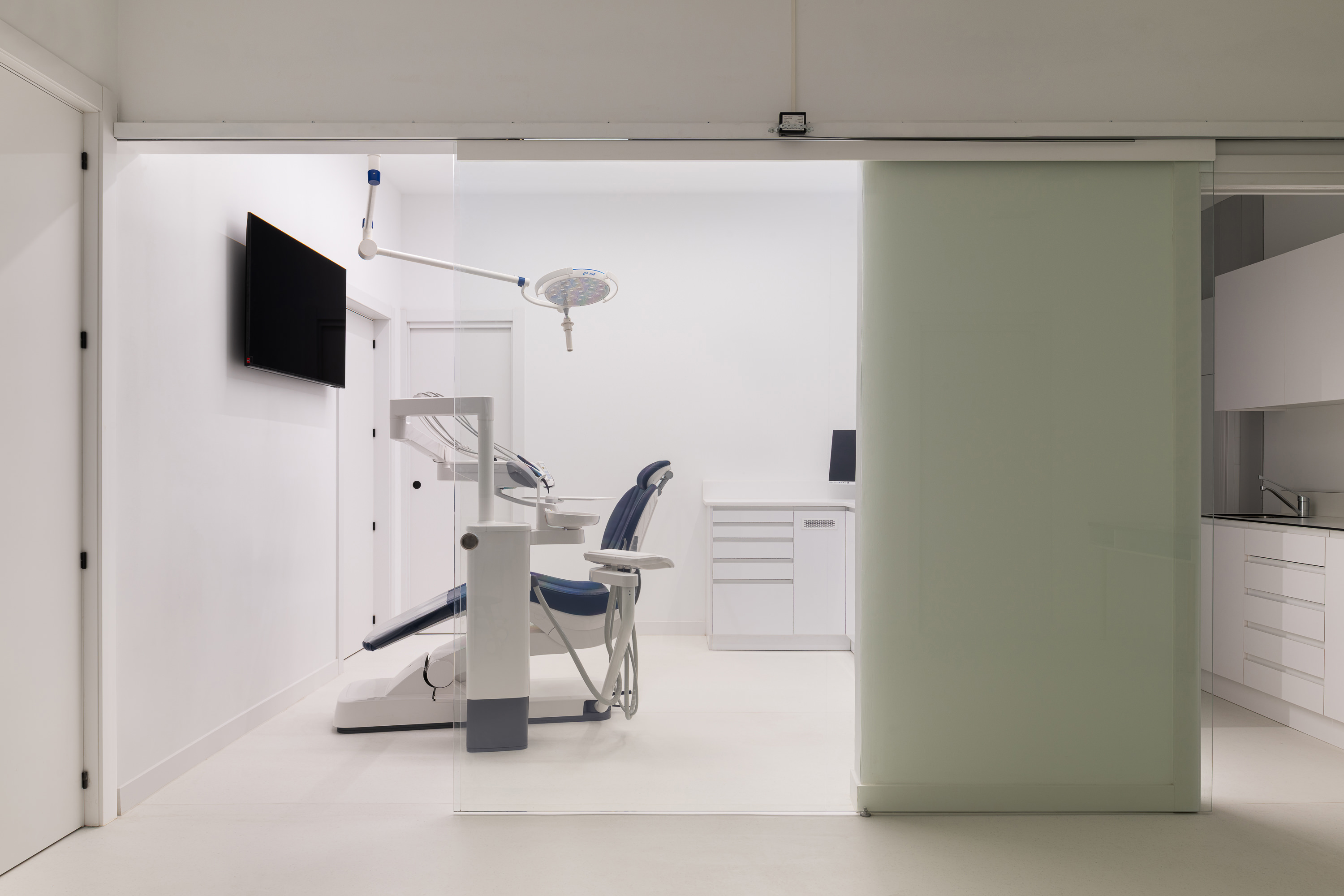
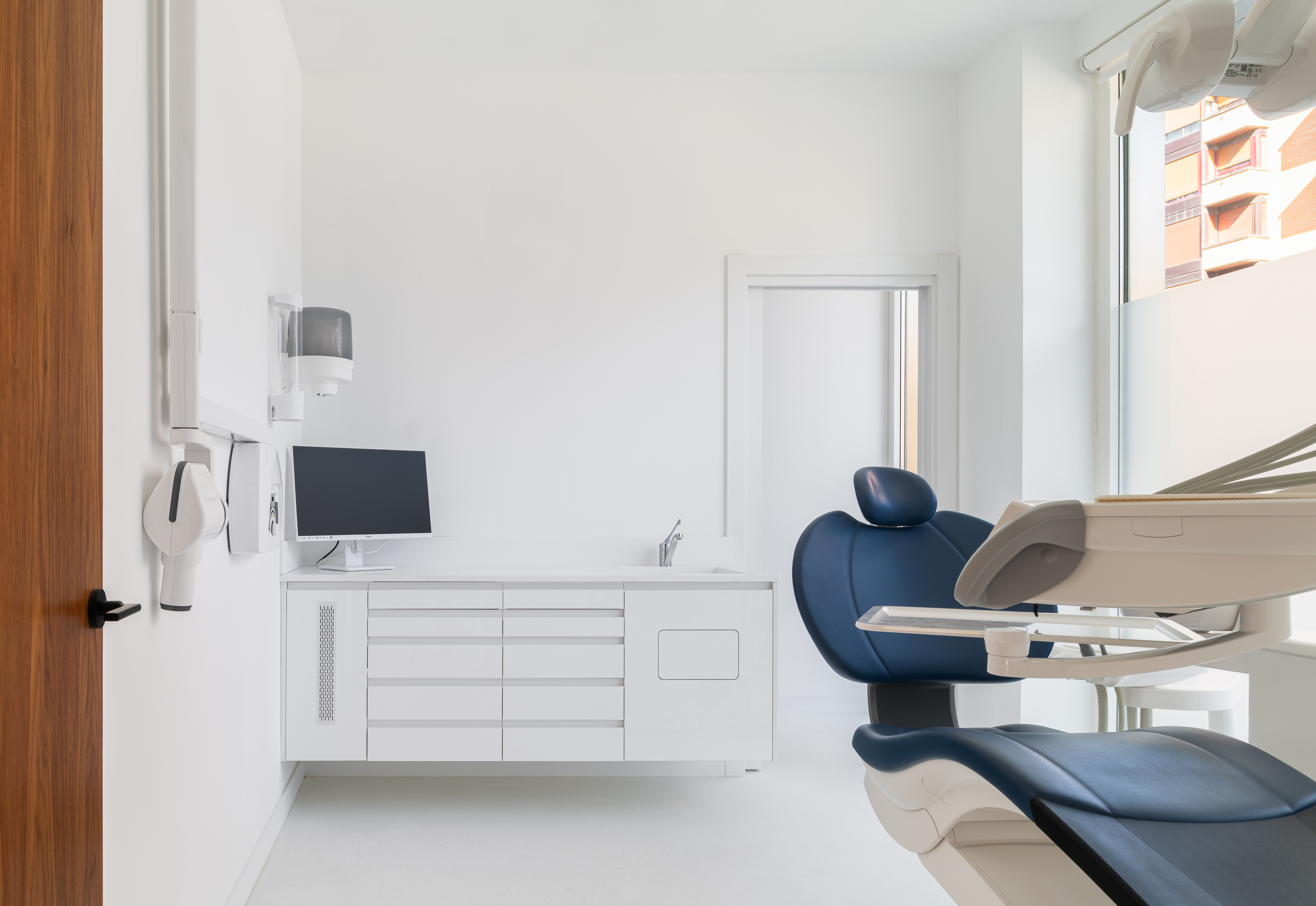
In the Policlínica Dental Pérez - Arroyo, architecture mirrors the precision of dentistry itself. Just as the dentist works with millimetric rigor, the architect operates with meticulous attention to proportion and form. The circle — symbol of perfection — becomes more than a geometry; it is a metaphor for balance between science and art. The space feels like an extension of the human body: soft in its transitions, clear in its structure, and filled with light. The project embodies a kind of architectural empathy, where every detail contributes to a sense of care, precision, and beauty.
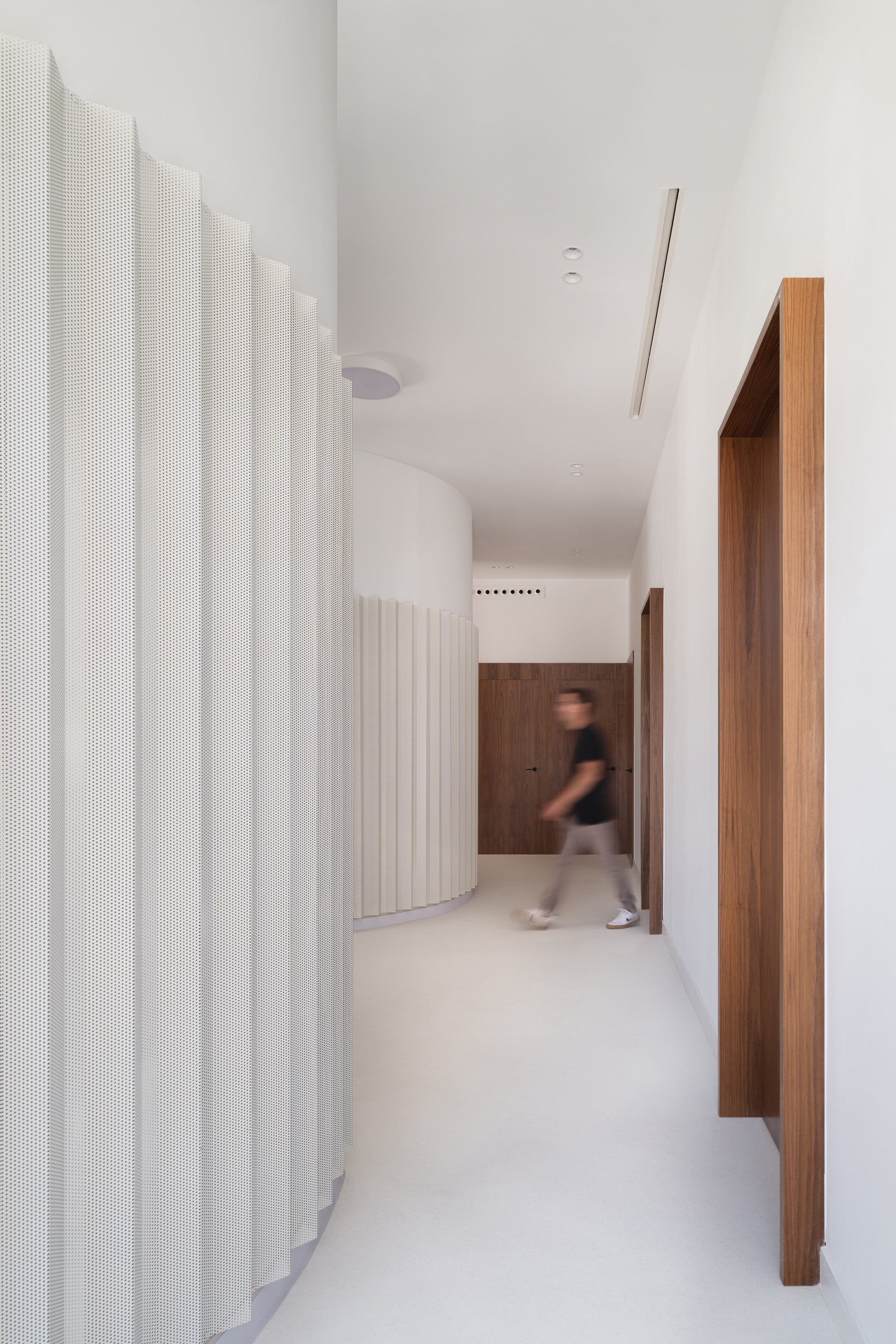
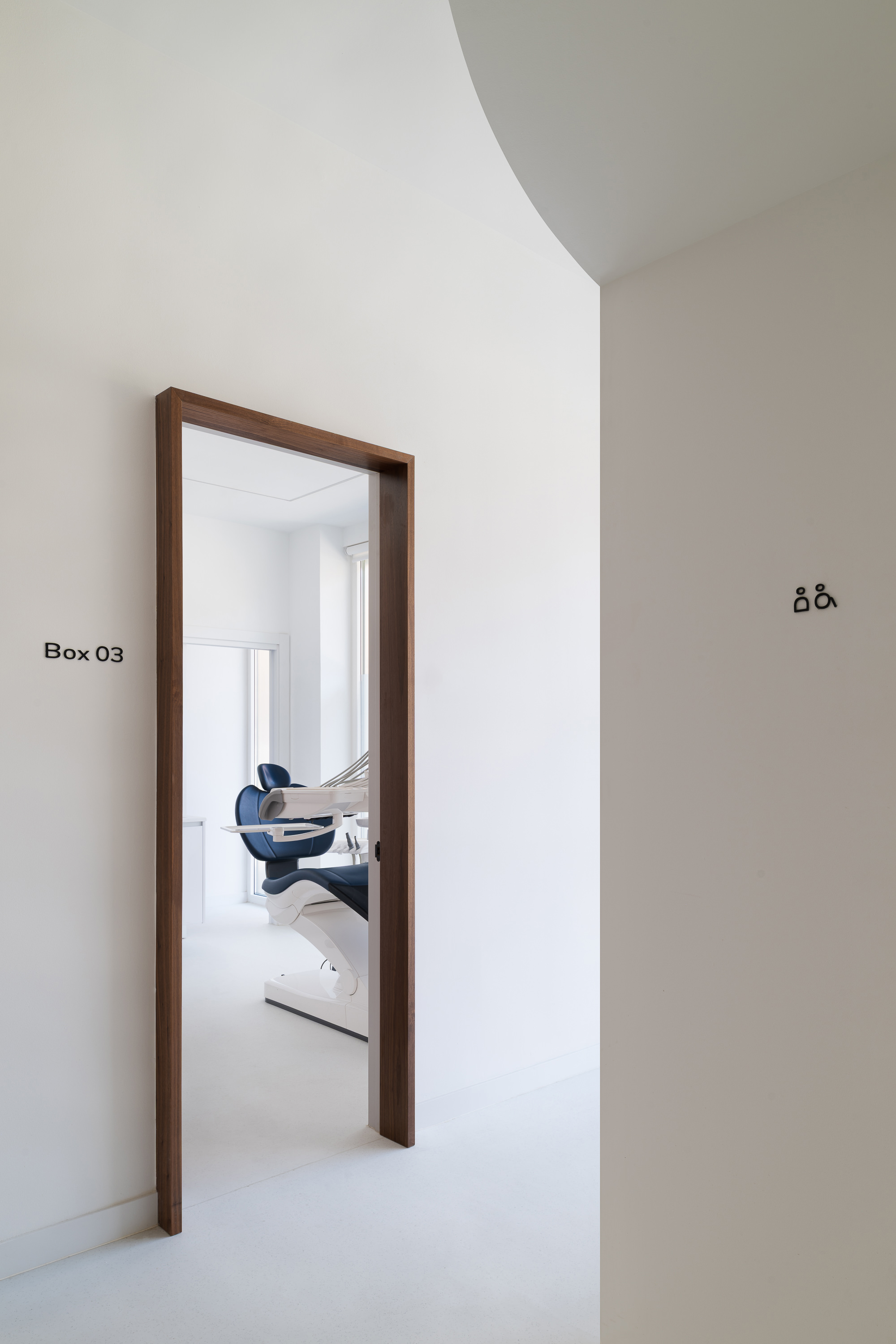
The work of D. Hernandez Arquitectura and Murillo Arquitectos stands out for its ability to transform a functional program into a sensory and aesthetic experience. Their interdisciplinary approach — combining technical expertise with spatial sensitivity — reimagines dental architecture through a contemporary lens. The project not only meets the demands of a clinical environment but also redefines how such spaces can be perceived: more open, more humane, more beautiful. The Policlínica Dental Pérez - Arroyo is, ultimately, a manifesto on how design can elevate the everyday act of care into an encounter with beauty and calm.
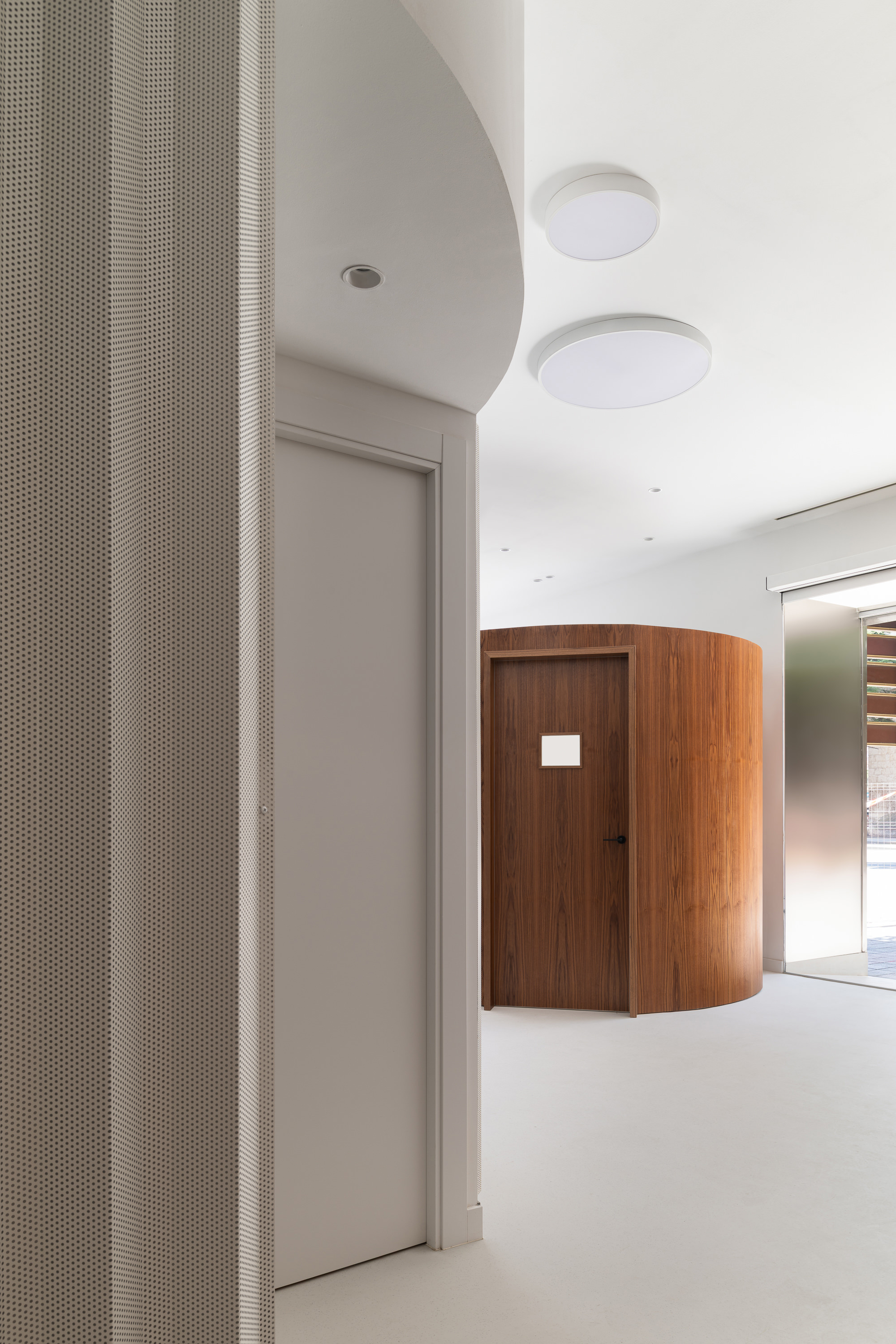
The recurring motif of the circle encapsulates the project’s philosophy: continuity, balance, and perfection. From the smallest detail to the user’s spatial experience, every element reinforces the belief that good design improves daily life. In a dynamic urban context, the clinic emerges as a quiet refuge — an architectural composition where science meets emotion, and where care is both practice and poetry.