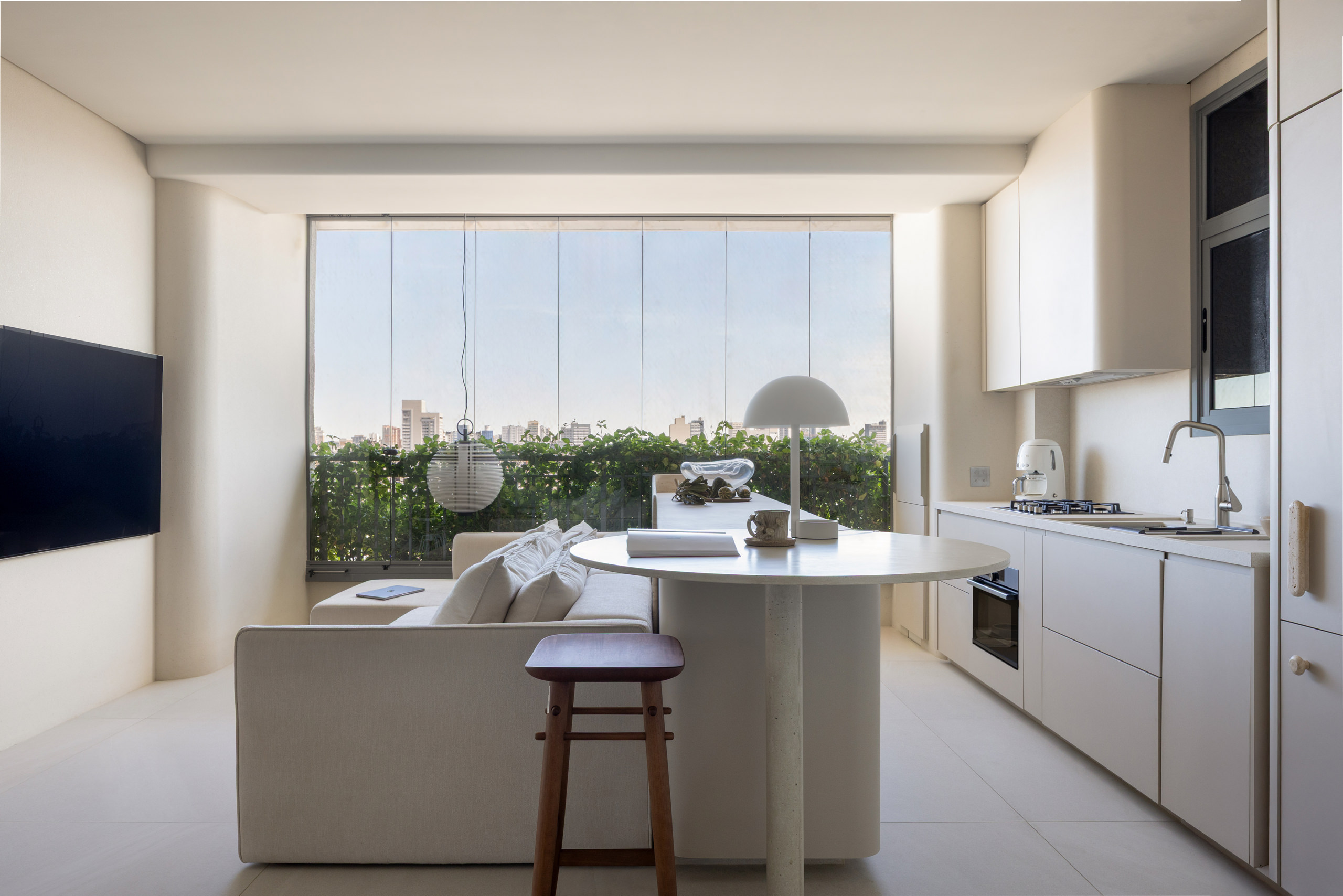
A Sensory Minimalism – Temporary Living by Diane Justus
"A home shaped by transition, where minimal gestures and tactile materials create a lasting sense of belonging, transforming a temporary residence into an enduring and deeply personal spatial experience."
It is a delicate interpretation of transition, where architecture becomes a quiet companion to change. Within a compact footprint, the project unfolds as a serene refuge, where textures, light and memory intertwine to shape an intimate and enduring sense of belonging.
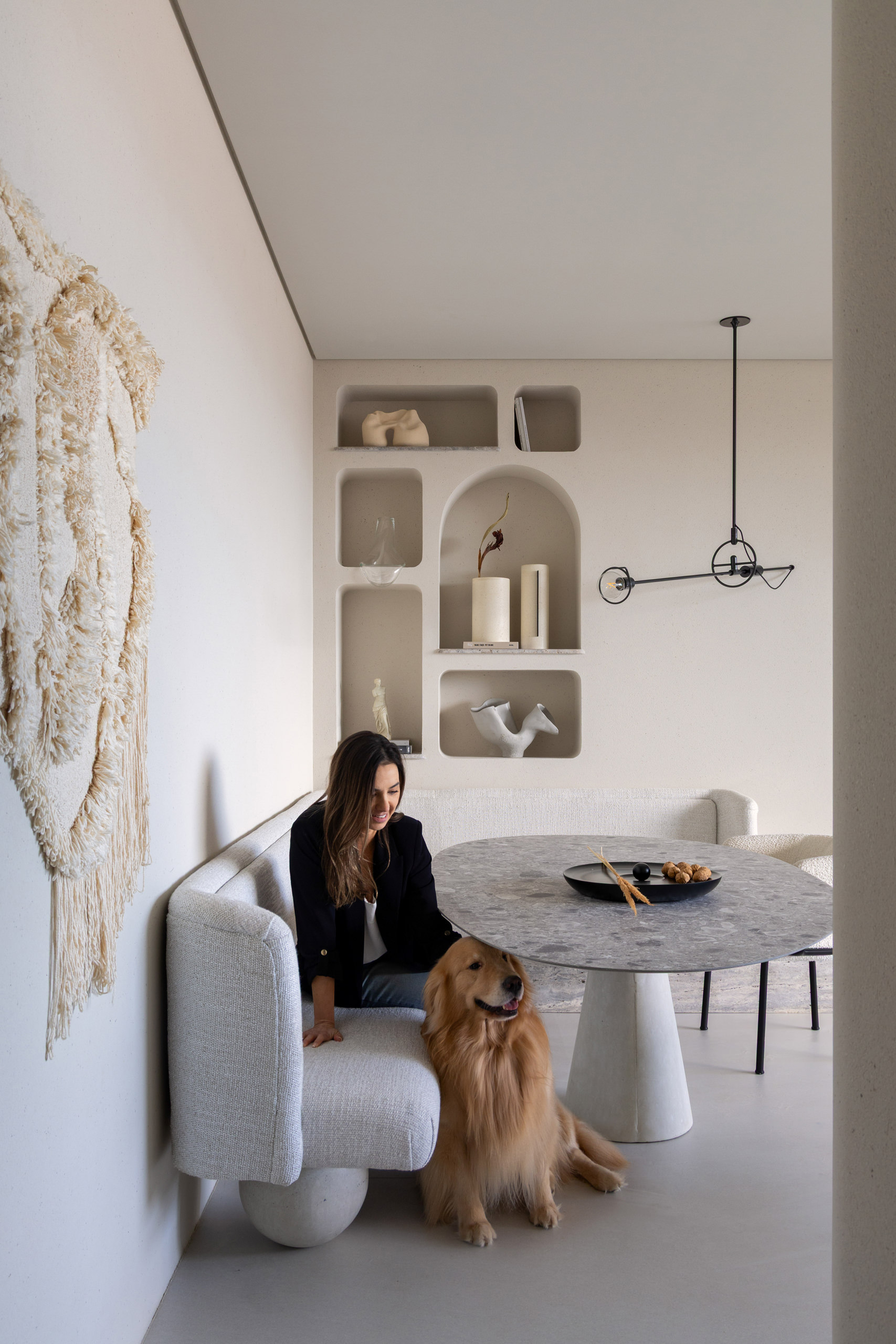
The project begins with a story of movement and adaptation. Relocating to Curitiba for a four-year medical residency, the young couple faced more than a geographical shift—they encountered the need to recalibrate their way of living. Accustomed to a larger home, their new apartment required a thoughtful reinterpretation of space, one that could preserve their routines while embracing a more compact scale. Diane Justus approached this challenge with sensitivity, understanding that the essence of a home lies not in its size but in its ability to sustain daily rituals and emotional continuity. Within this context, the presence of their two dogs—Romeu, a calm golden retriever, and Louis, a lively Yorkshire terrier—adds a subtle yet meaningful dimension to the design. Their contrasting temperaments influence the rhythm of the home, introducing moments of pause and liveliness that inform spatial decisions. The apartment becomes a landscape of small experiences, where comfort and quietness are balanced with movement and interaction, reinforcing the idea of a living environment shaped by its inhabitants.
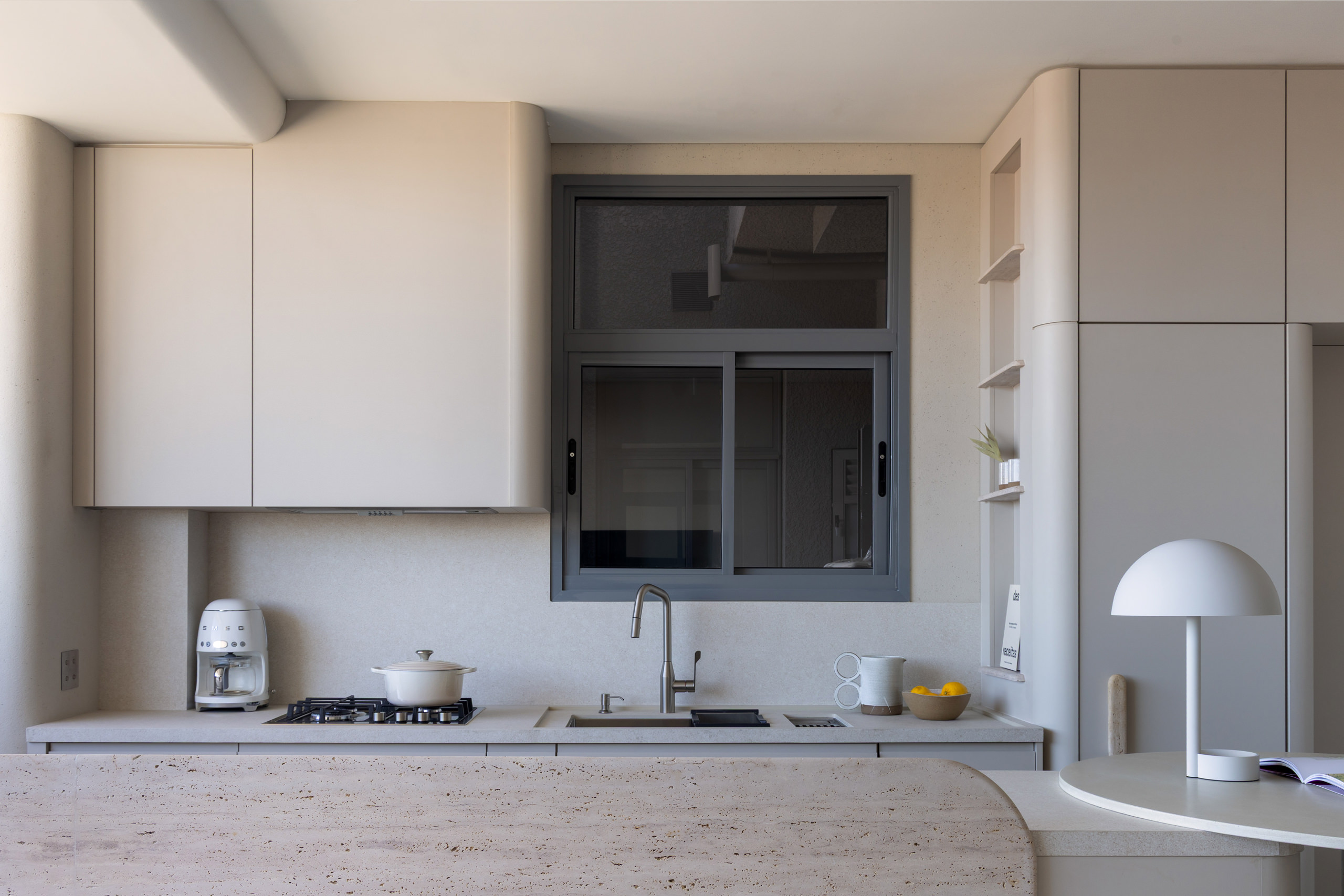
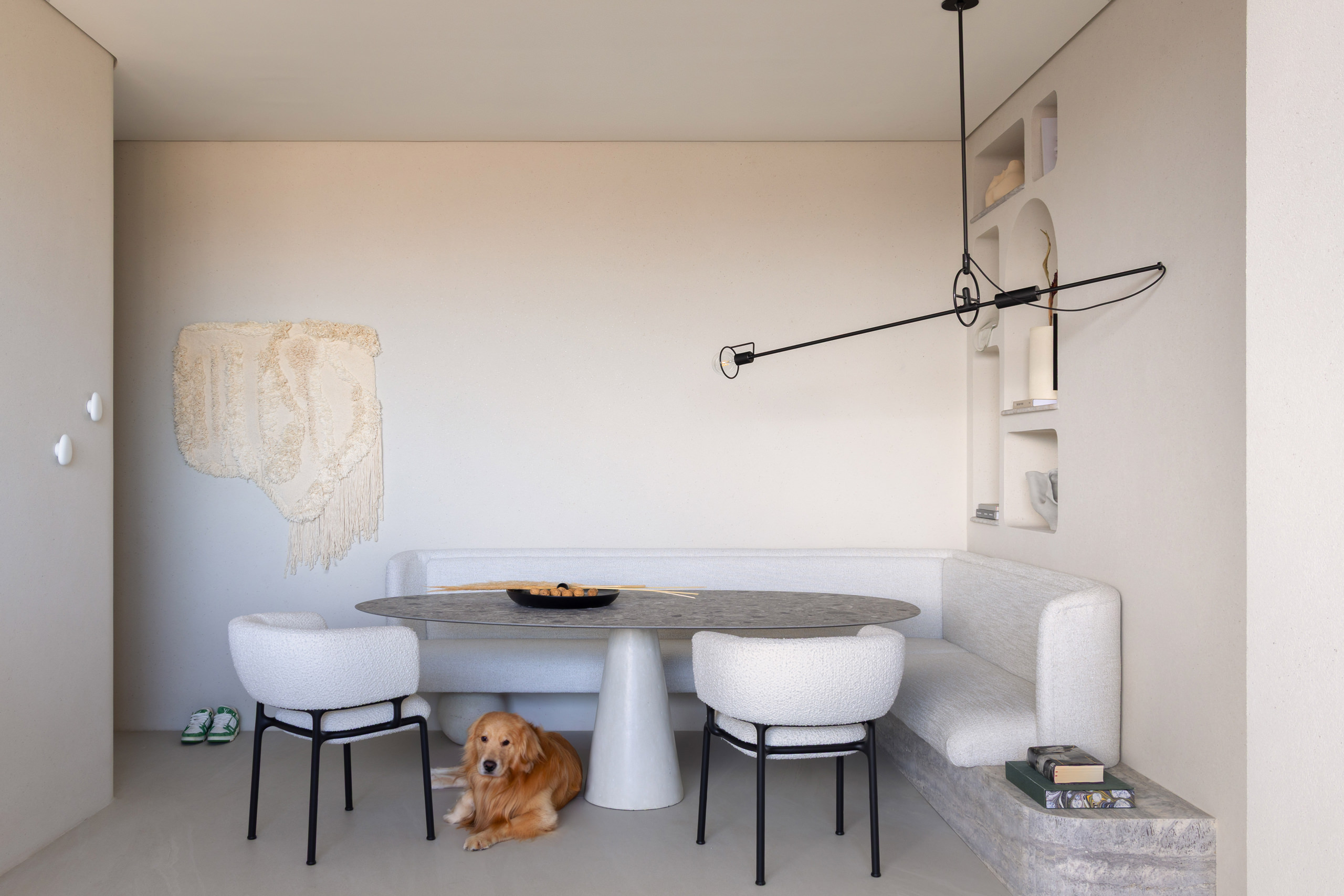
Central to the project is the notion of sensory minimalism, a concept that transcends visual restraint to engage touch, light and atmosphere. Rather than reducing the home to a purely aesthetic exercise, Justus crafts a space that invites permanence and presence. Materials are selected not only for their appearance but for their tactile qualities, creating an environment that feels both grounded and immersive. This approach transforms the apartment into a place where time slows down, allowing everyday moments to unfold with greater awareness.
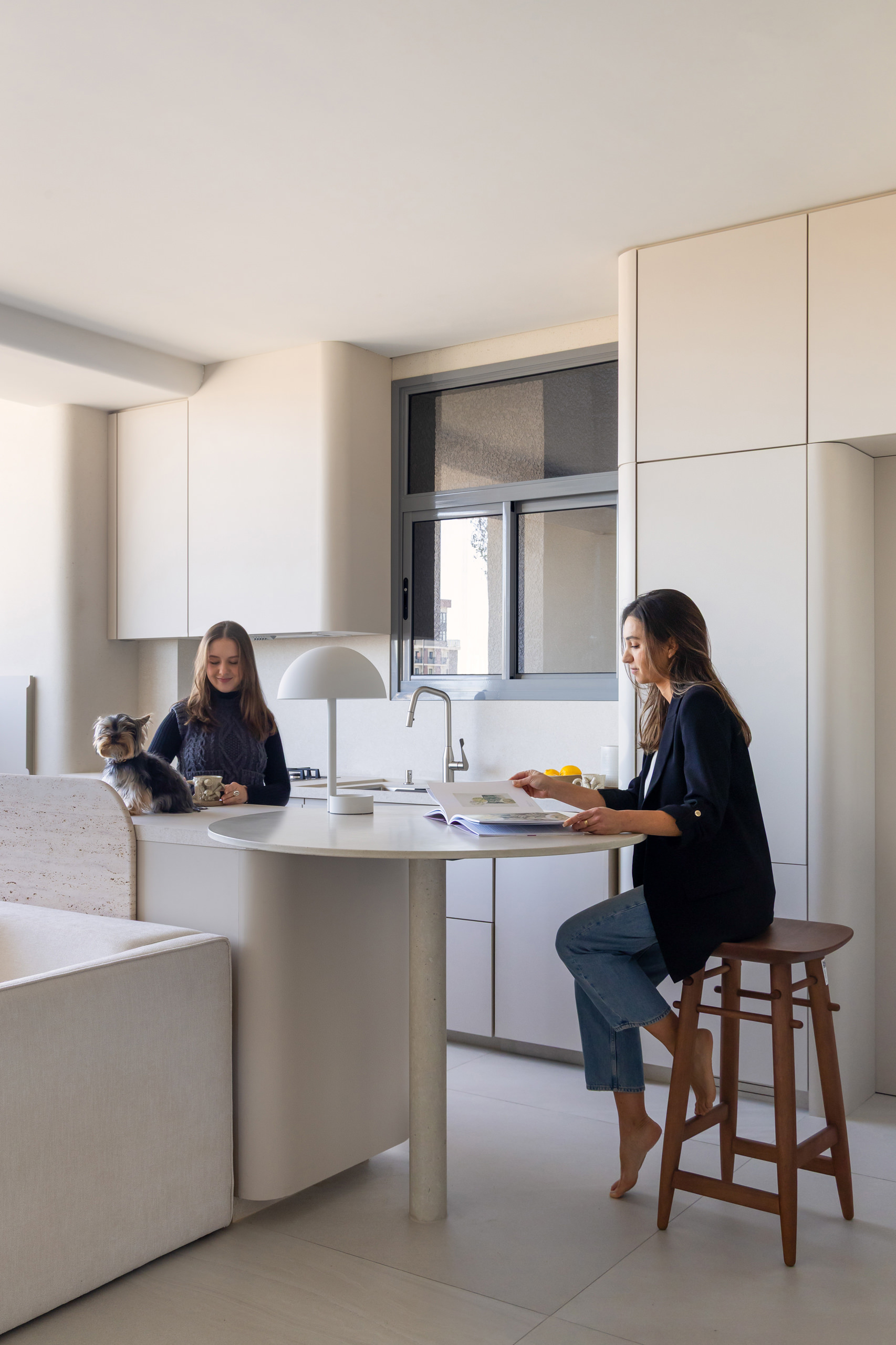
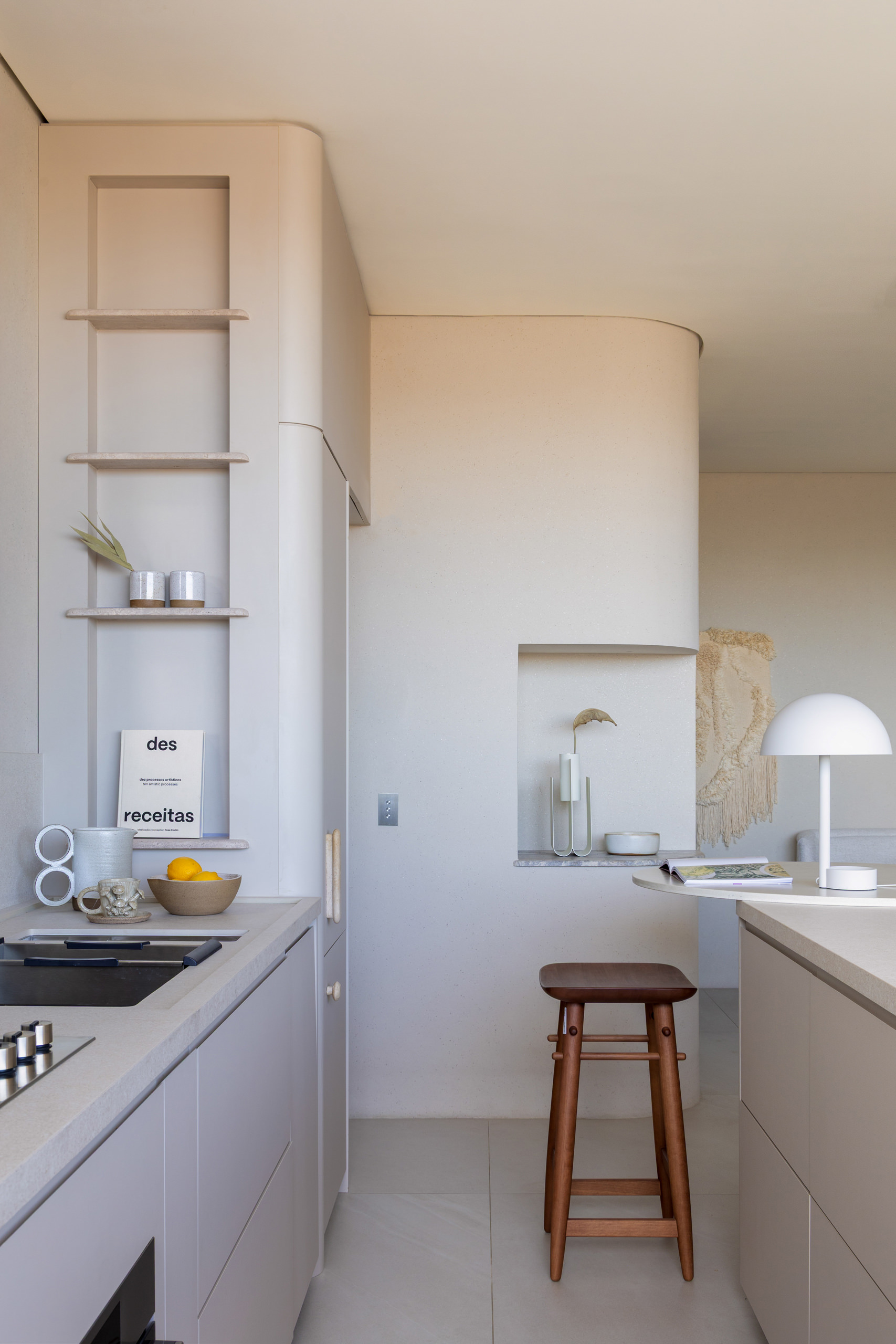
The spatial strategy is defined by precision and intention. One of the original bedrooms was removed to expand the primary suite, reinforcing the importance of private spaces as zones of retreat. This intervention reflects a shift in priorities, where comfort and personal well-being take precedence over conventional layouts. The result is a more generous and cohesive suite, incorporating a boudoir and an expanded bathroom that together create a sense of continuity and calm. In the social areas, the removal of a window frame between the living room and the balcony establishes a seamless connection between interior and exterior. This gesture enhances natural light and broadens the perception of space, allowing the apartment to feel more open and fluid. The living area becomes a place of gathering, carefully designed to accommodate guests without compromising the intimacy of daily life. Here, architecture supports both solitude and sociability, reflecting the dual nature of the couple’s routine.
"Through light, texture and curated detail, the project reveals a quiet sophistication that celebrates everyday rituals, inviting a slower rhythm of living defined by comfort, clarity and emotional connection."
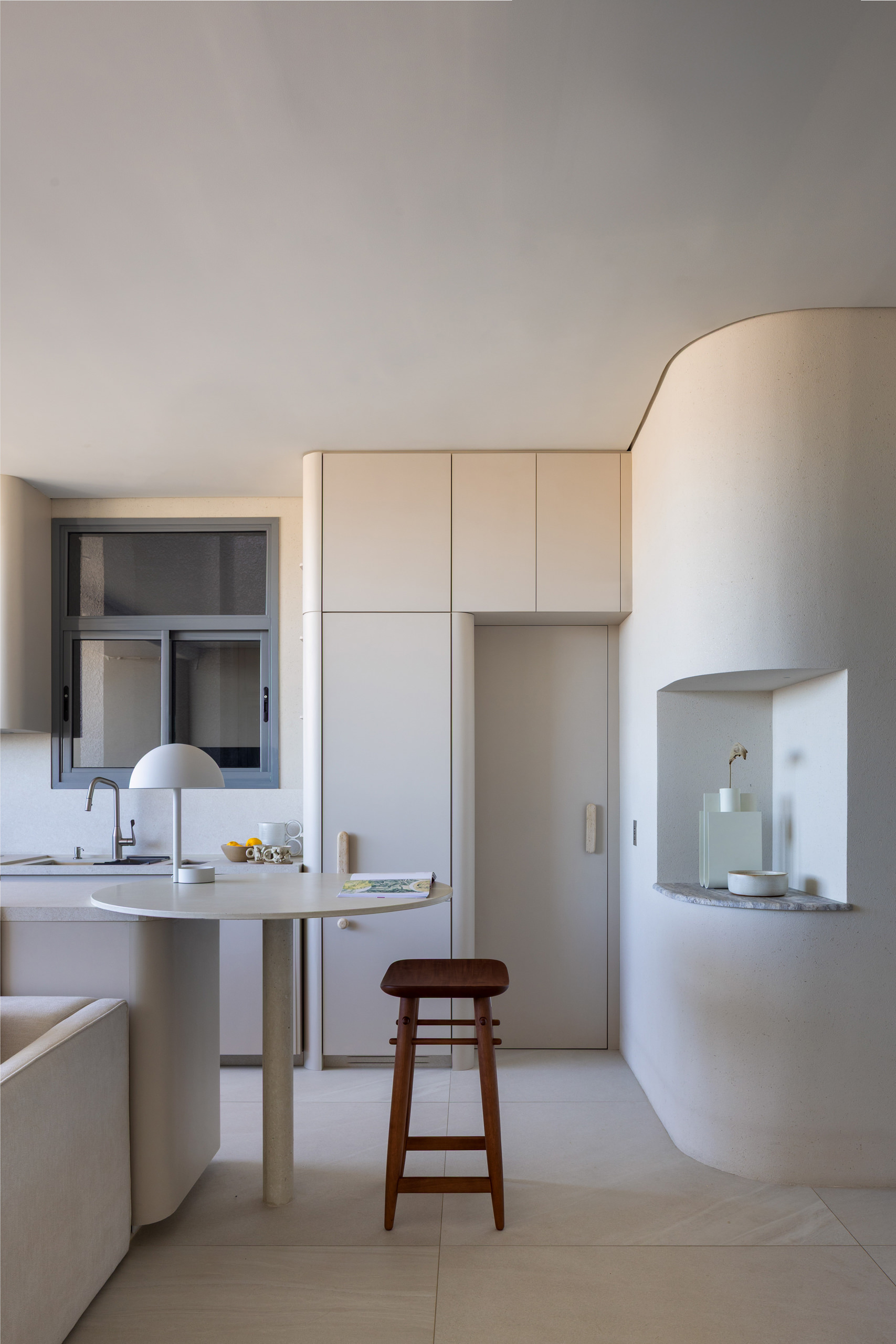
Material continuity plays a defining role in shaping the apartment’s identity. Stone surfaces are used prominently, establishing a cohesive visual language that extends throughout the space. This choice lends the interiors a timeless quality, anchoring the project despite its temporary nature. Complementing this, neutral-toned walls with textured finishes introduce a subtle depth, inviting touch and enhancing the sensory experience. The flooring, selected with particular attention to the needs of the couple’s golden retriever, reinforces a monolithic aesthetic while ensuring durability and comfort. Lighting is treated as an intrinsic architectural element, carefully integrated to enhance both form and atmosphere. Rather than functioning as a secondary layer, it follows the organic lines of the design, accentuating volumes and revealing textures. Indirect lighting creates a soft, diffused glow, while focal points highlight specific features, establishing a dynamic interplay between light and shadow. In the main suite, a stretched ceiling membrane above the boudoir diffuses illumination evenly, creating a serene and glare-free environment that supports rest and contemplation. Functionality is addressed with equal attention to detail, particularly in areas where performance is essential. In the kitchen and dining space, high-performance surfaces by Atlas Plan provide durability without sacrificing elegance. These materials ensure that the apartment can accommodate daily use while maintaining its refined aesthetic. Similarly, custom electrical finishes in brushed stainless steel add a subtle layer of sophistication, demonstrating how even the smallest elements contribute to the overall coherence of the project.
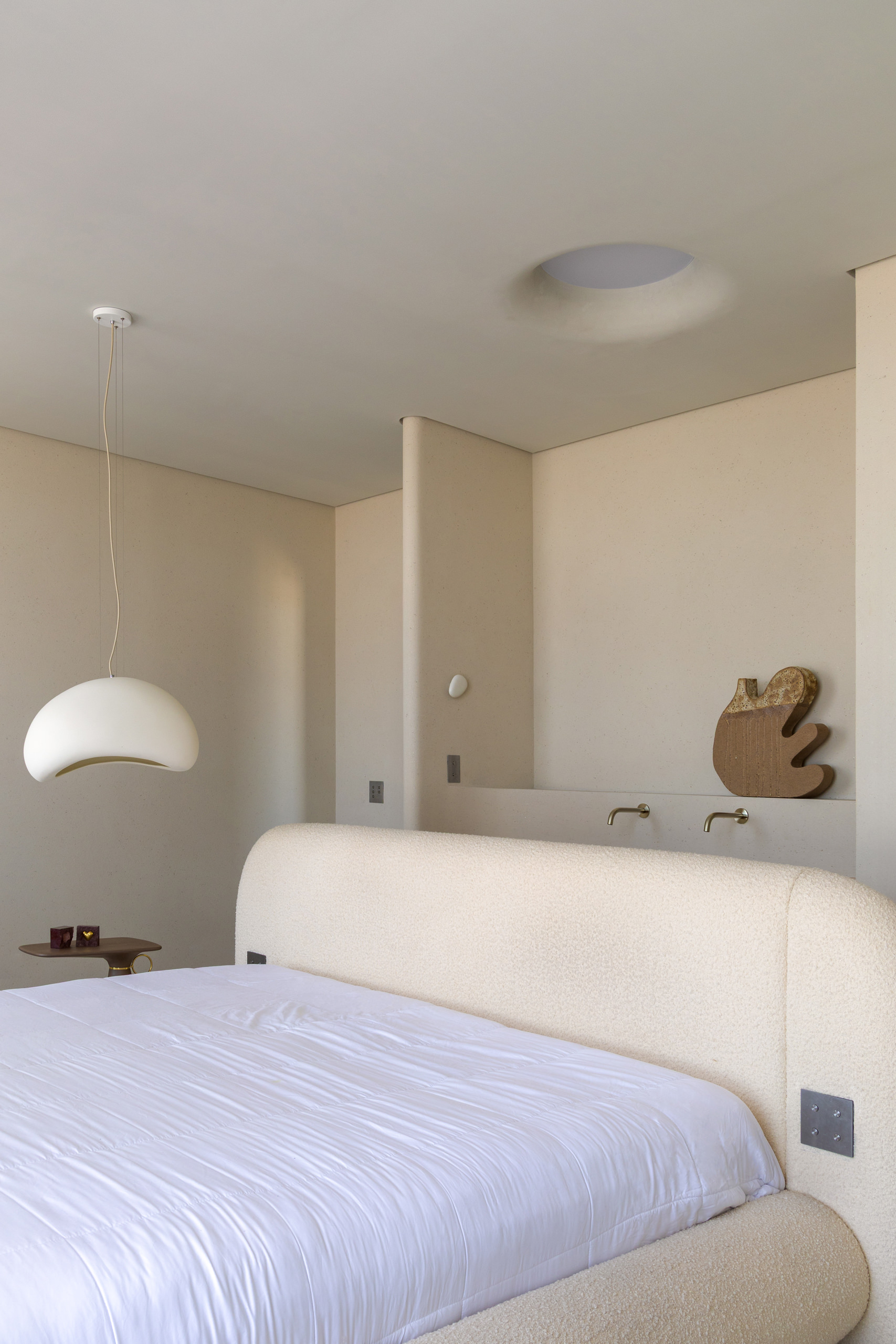
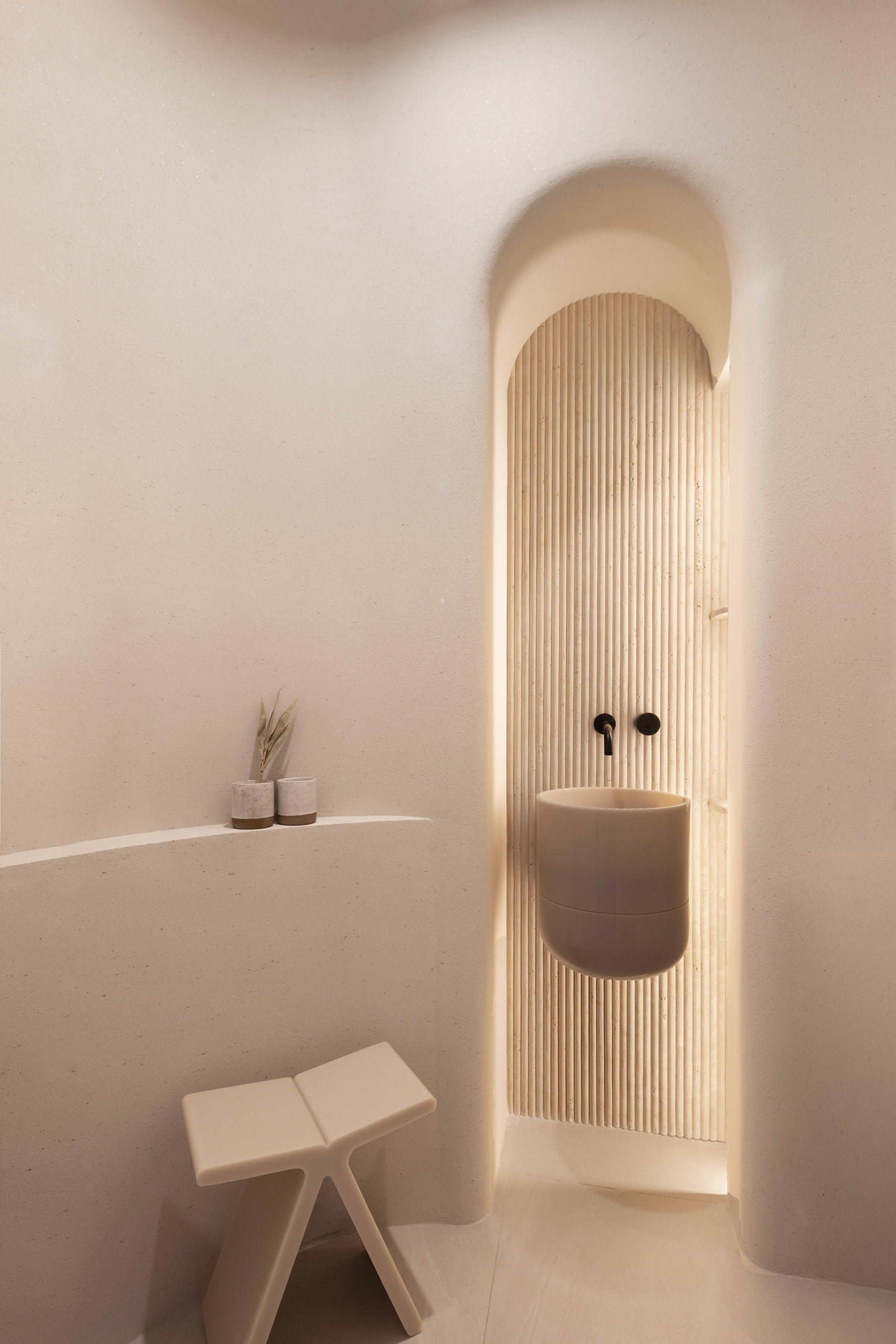
Significant technical interventions were required to achieve the desired spatial configuration. Plumbing systems were reworked to support the expanded bathroom and the integration of the boudoir within the main suite. Fixtures by Kohler, combined with suspended sinks, reinforce the contemporary character of these spaces while maintaining the project’s sensory focus. These precise solutions reflect a careful balance between technical feasibility and design intent, ensuring that functionality aligns seamlessly with the overall vision. Beyond its architectural framework, the apartment is enriched by a curated selection of objects that reflect the couple’s personal history. Pieces collected during their travels—such as marble powder sculptures inspired by classical works—introduce layers of meaning and narrative. Fashion items are also incorporated as design elements, blurring the boundaries between disciplines and expanding the dialogue between art, fashion and architecture. This curated approach transforms the apartment into a living archive, where each object contributes to a sense of identity and belonging.
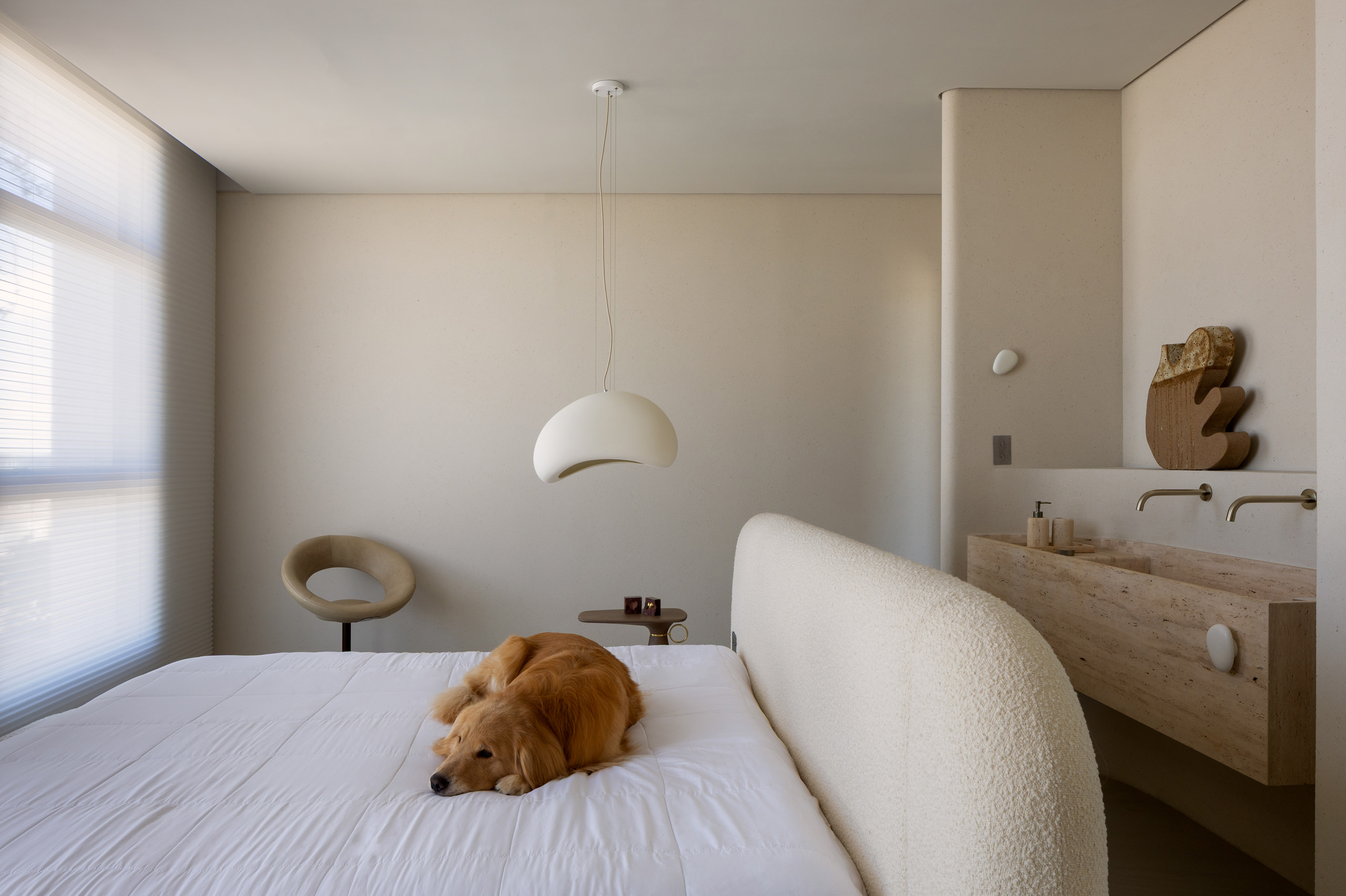
The project demonstrates how architecture can respond to temporality without sacrificing depth or a sense of permanence. Through a careful balance of minimalism, material richness and spatial precision, the apartment transcends its role as a temporary residence, becoming a meaningful extension of the couple’s lives. It is a place where change is embraced with quiet confidence, and where the essence of living is preserved in its most intimate and essential form.