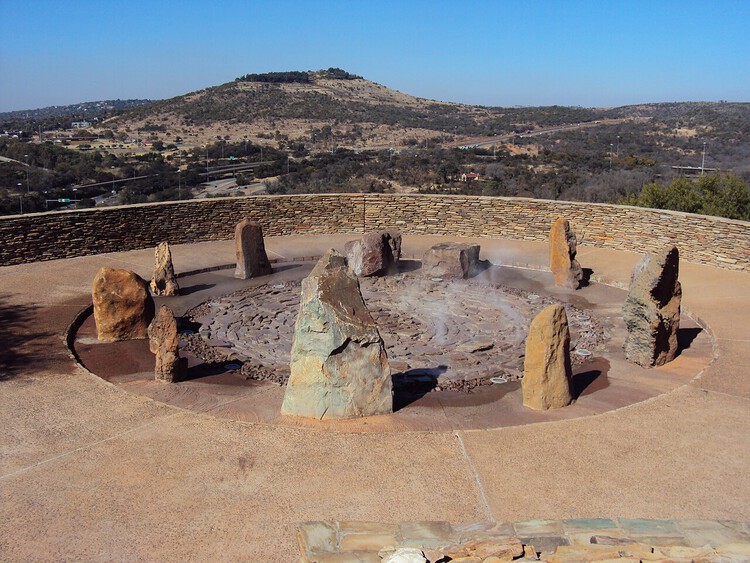
Examples discussed include Freedom Park in Lagos, Nigeria; Freedom Park in Pretoria, South Africa; and Uhuru Gardens in Nairobi, Kenya.
About this story
Written by Toke Joseph, the essay argues that gardens and cultivated ground can be understood as spatial practices of survival, gathering, care, and autonomy, and examines what changes when such practices become formalized as state memorial landscapes. It discusses Freedom Park in Lagos, on the former site of Broad Street Prison, redesigned by architect Theo Lawson; Freedom Park in Pretoria, where the article describes consultation with traditional healers, artists, historians, and faith communities and the material presence of Indigenous knowledge; and the mugumo fig tree at Uhuru Gardens in Nairobi as a living marker of independence. The article connects these examples to Wolff Architects’ research project Liberation Gardens. Wolff Architects’ own project page describes Liberation Gardens as ongoing research developed through fieldwork, archival research, drawing, and collage. The essay is interpretive commentary, not an announcement of a new park or intervention.
Status and timeline
ArchDaily published the essay on September 29, 2026. It discusses existing landscapes and references Wolff Architects’ ongoing research project Liberation Gardens; no event or project completion timeline is stated.
Design highlights
Treats the garden as a spatial practice rather than a fixed landscape typology; frames memorial landscapes as layered, socially produced spaces; emphasizes public occupation, gathering, ritual, Indigenous knowledge, ecological continuity, and the tension between emancipatory practices and state institutionalization.