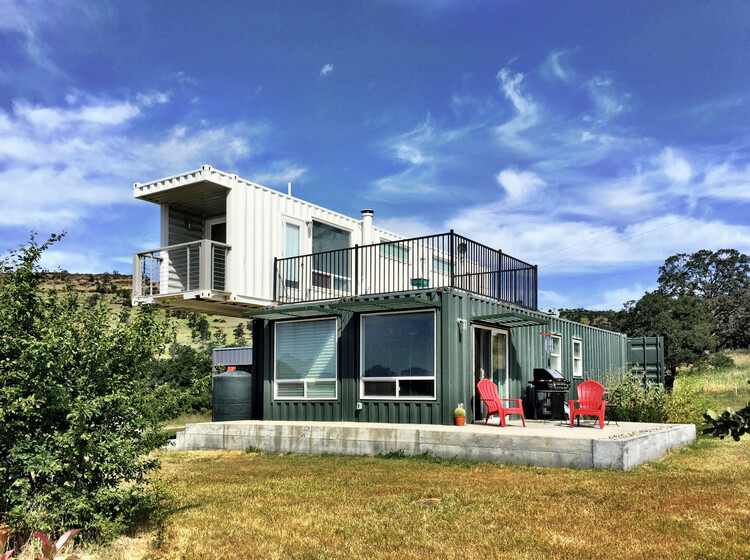
A timely sponsored overview compares container-conversion strategies for contrasting U.S. climates, including heat, snow, humidity, storms and coastal corrosion. Its practical reach is tempered by the lack of named projects or independent technical sourcing.
United States
About this story
ArchDaily’s sponsored article, credited “Courtesy of Shipping Containers,” discusses how container conversions may respond to regional conditions in the arid Southwest, northern states, the humid South and dense urban areas. It describes approaches including reflective coatings and secondary shade roofs, insulation and ventilation, snow-shedding or reinforced roofs, moisture and corrosion protection, anchoring, and green roofs. It also notes zoning, building-code, energy-code, foundation and site-access considerations, and cautions that extensive modifications can make conventional construction a better option. The article links to shipping-containers.com, whose site identifies CUBX as an independent U.S. container marketplace and says the site is operated by Containerbasis Pty Ltd. No specific buildings, architects, project case studies, or independently attributed technical experts are identified.
Status and timeline
Published by ArchDaily on October 8, 2026; this is an informational sponsored article, not a project announcement.
Design highlights
Climate-responsive adaptation of container conversions: reflective roofs and shade structures in hot regions; insulation, cladding and snow-load strategies in cold regions; humidity, wind and corrosion protection in the South; and vertical stacking or green roofs in dense cities. The article emphasizes that extensive modifications can undermine the cost and efficiency rationale for container construction.