About this story
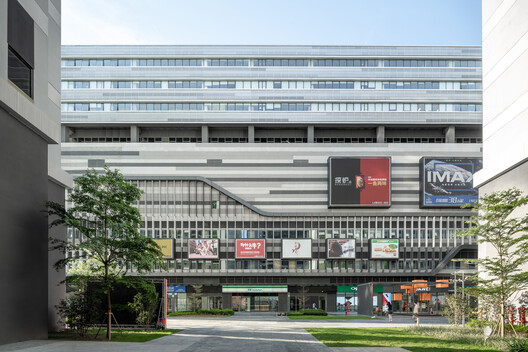
Written by Jonathan Yeung, the essay argues that air-conditioning has grown from a building service into part of urban infrastructure, particularly where transit, shopping, housing, offices and pedestrian links interconnect. It discusses Hong Kong’s podium malls and transit connections, Singapore’s planned multilevel pedestrian networks, and Bangkok’s One Bangkok as examples. It considers the convenience and weather protection these systems provide alongside the energy cost and the possibility that streets become merely intervals between controlled interiors. It suggests shaded, planted, open-sided and semi-conditioned spaces as ways to provide comfort without making full enclosure the default. ArchDaily’s lead image is captioned “Guangzhou Tianhe Vanke Plaza / FCHA” and credited to Changheng Zhan. The article also cites Hong Kong government energy data and Singapore planning guidance; its broader interpretation is the author’s analysis.
Status and timeline
Published by ArchDaily on September 28, 2026; an editorial essay, not a project announcement.
Design highlights
Conditioned interiors as urban infrastructure; transit-connected podium and mall networks; all-weather pedestrian circulation; the trade-off between mechanical cooling and outdoor public life; shaded, landscaped, open-sided and semi-conditioned thresholds as alternatives to complete enclosure.