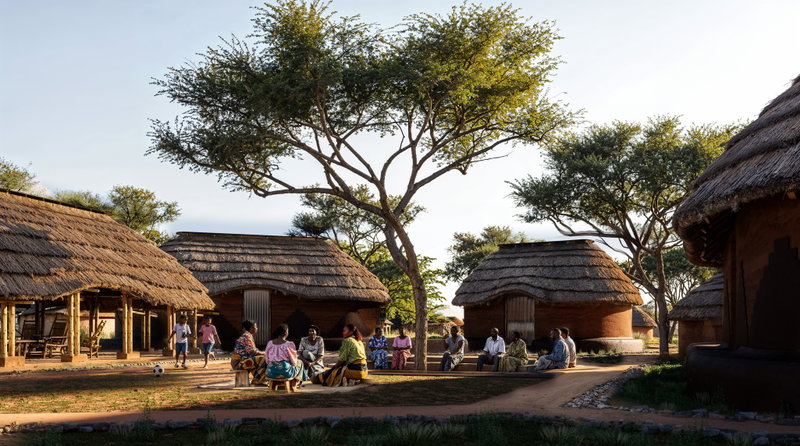
The proposal reframes a refugee settlement as long-term urban infrastructure, combining housing, livelihoods, public space and local resource systems. It is a substantial urban-design story with important questions about implementation and community participation.
Bidi Bidi, Yumbe District, northern Uganda
About this story
Bjarke Ingels Group’s project page describes Refugee Future Cities, a comprehensive urban plan developed with client to.org for Bidi Bidi in northern Uganda, a settlement the page says is home to roughly 230,000 refugees. The proposal is designed to accommodate an additional 155,000 residents while connecting Zones 1 and 2. The plan includes housing, courtyards and market squares, a covered market and coworking centre, workshops, a technical school, a health centre, food-production facilities and a solar-powered industrial hub intended to support local energy generation, water treatment and waste processing. BIG says the work was informed by research visits to Kakuma and Bidi Bidi in 2025 and names Local Works as a collaborator. BIG identifies Bjarke Ingels and Giulia Frittoli as partners in charge; listed collaborators also include Buro Happold and Beauty & The Bit.
Status and timeline
Bjarke Ingels Group lists the project as “In Design.” Its proposal is planned to accommodate an additional 155,000 residents and connect Zones 1 and 2; construction funding, approval and delivery dates are not stated on the cited project page.
Design highlights
A shift from temporary-camp framing toward incremental urban development; shared courtyards and market squares; livelihood infrastructure; locally managed energy, water and waste systems; integration of services and public space.