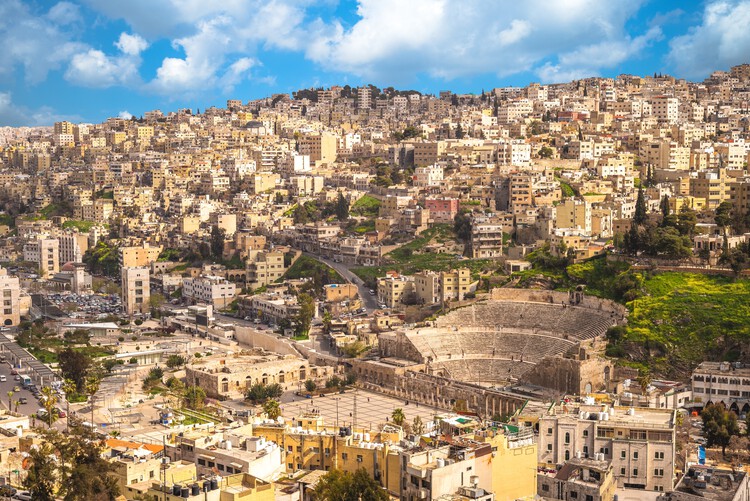
Amman, Jordan
About this story
ArchDaily’s guide examines how Amman’s growth across hills and successive migration waves shaped its urban fabric, while locally quarried limestone provides a shared façade material across otherwise varied buildings. It frames the city’s architecture as a dialogue between vernacular traditions and international influences, and features Queen Alia International Airport / Foster + Partners; Wild Jordan Center / Ammar Khammash; Abdoun Bridge / Dar Al-Handasah; King Hussein Business Park / Engicon-Praxis; Royal Academy for Nature Conservation / Khammash Architects; Housing Bank Center (Al-Iskan Bank) / Ssangyong; King Abdullah I Mosque / Rasem Badran; Al Rawda Mosque / Uraiqat Architects; Amman Roman Theater; The Umayyad Palace Complex; and Jordan Museum / Jafar Tukan. The article credits author Camilla Ghisleni. Its lead image is credited to Richie Chan via Shutterstock; the Royal Academy image is credited to Ammar Khammash. The guide reports that the Housing Bank Center was built in Shmeisani from 1980 to 1984. This is a survey of previously built work, not a report of new construction.
Status and timeline
Published September 28, 2026. The guide surveys 11 existing projects; it does not announce a new project or provide a future project timeline.
Design highlights
Locally quarried limestone as a shared façade language; urban growth across hills; architecture shaped by migration; reinterpretations of stone masonry, topography, and landscape; juxtaposition of historic, Brutalist, contemporary, and internationally influenced work.