The Poetics of Permanence – Entre Tempos by Flavia Koloske and Taina Pravato
"Surrounded by the essence of nature, Entre Tempos stands as a testament to the timeless union between material truth and human emotion, inspiring a slower, more meaningful way of inhabiting space."
There is a certain quiet poetry in Entre Tempos — a place where time pauses, materials breathe, and light becomes memory. Designed with grace and balance, the space harmonizes the tangible warmth of nature with the fleeting beauty of the moment, evoking serenity through every curve and surface.
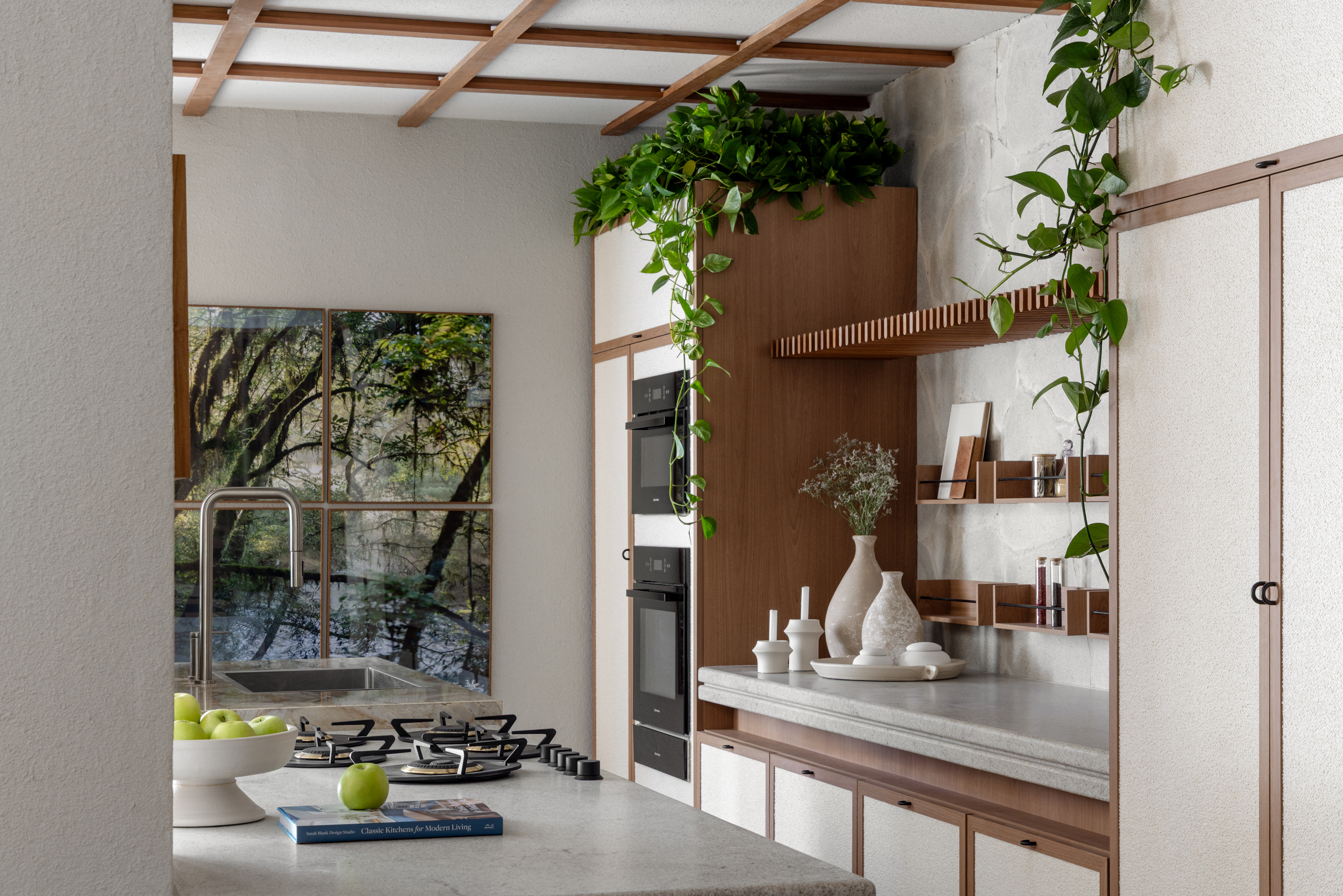
Occupying 82 square meters within the 2025 edition of CASACOR Florianopolis, Entre Tempos by architects Flavia Koloske and Taina Pravato emerges as a serene composition that celebrates coexistence — between people, between timeframes, and between contrasting states of being. The project’s title, meaning “Between Times,” encapsulates its conceptual essence: a meditation on impermanence and continuity. Conceived as a multifunctional living space integrating a gourmet kitchen, dining area, and lounge, it also shelters two introspective corners — sanctuaries for pause, reading, and reflection. Drawing inspiration from the exhibition’s overarching theme, Semear Sonhos (“Sowing Dreams”), the architects propose a spatial narrative that questions what truly endures. The project unfolds as an allegory of contemporary life, where movement and stillness coexist. Through its measured material palette and deliberate composition, Entre Tempos seeks equilibrium between what is essential and what is transient — a philosophical framework that feels particularly poignant in today’s fast-paced cultural landscape.
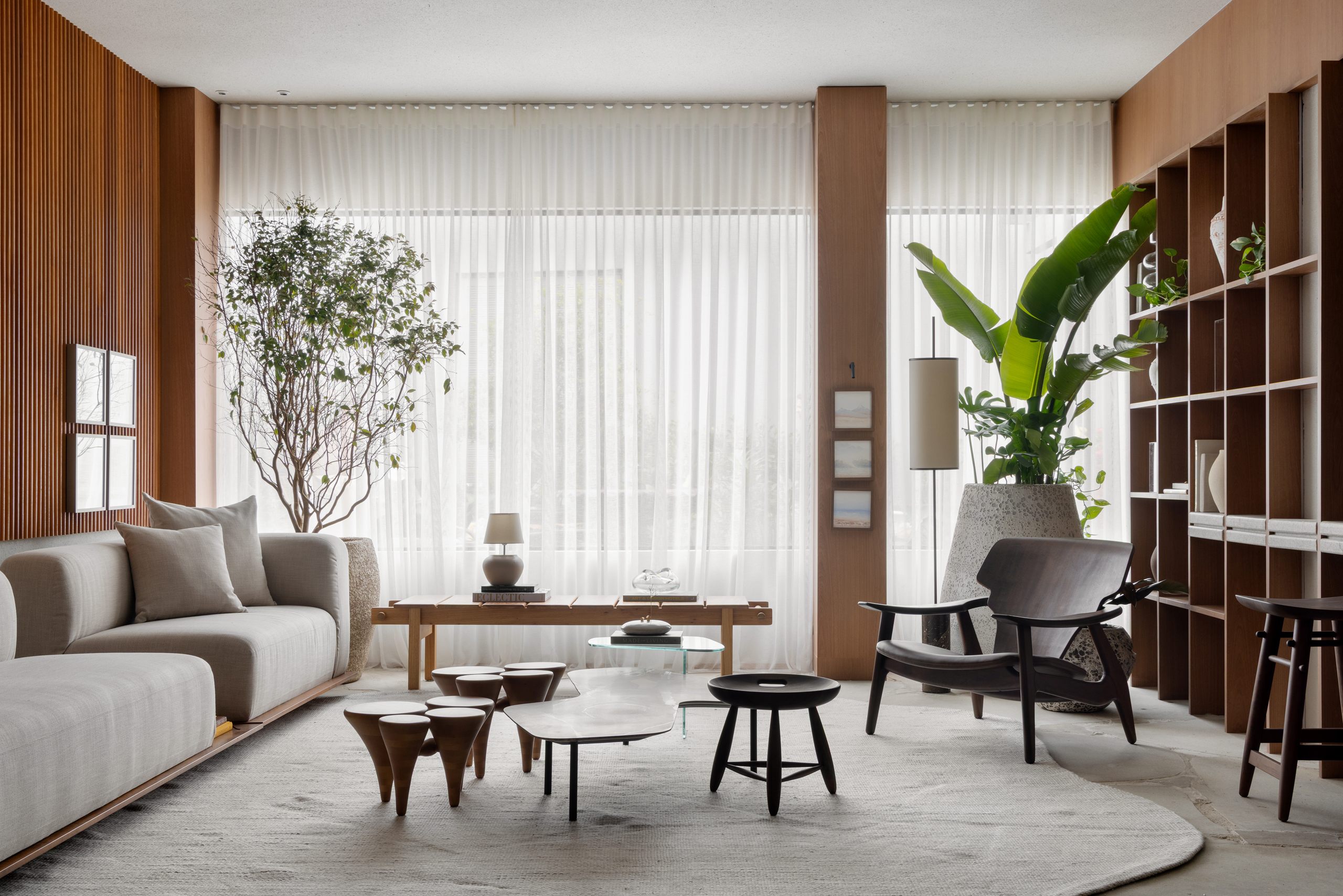
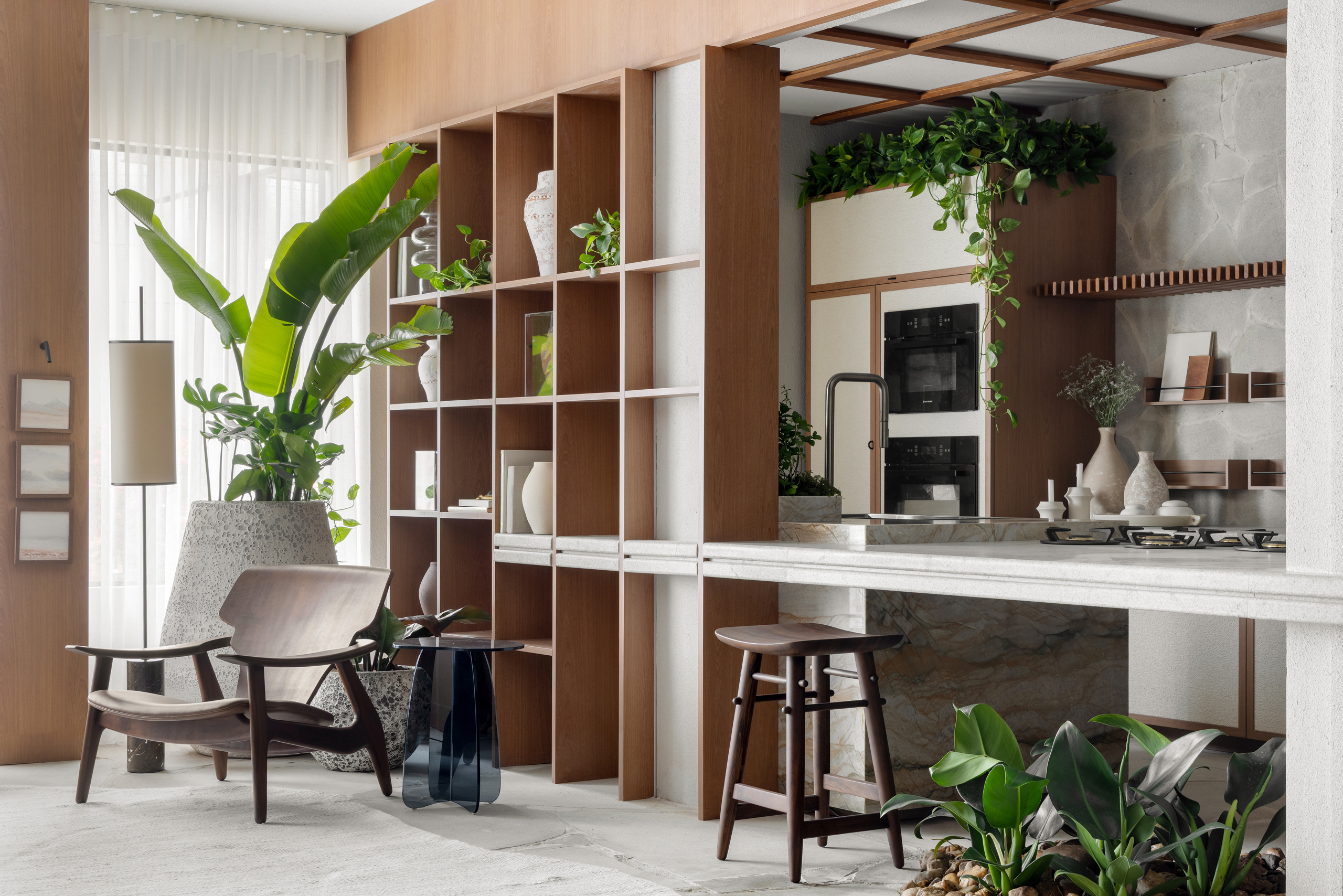
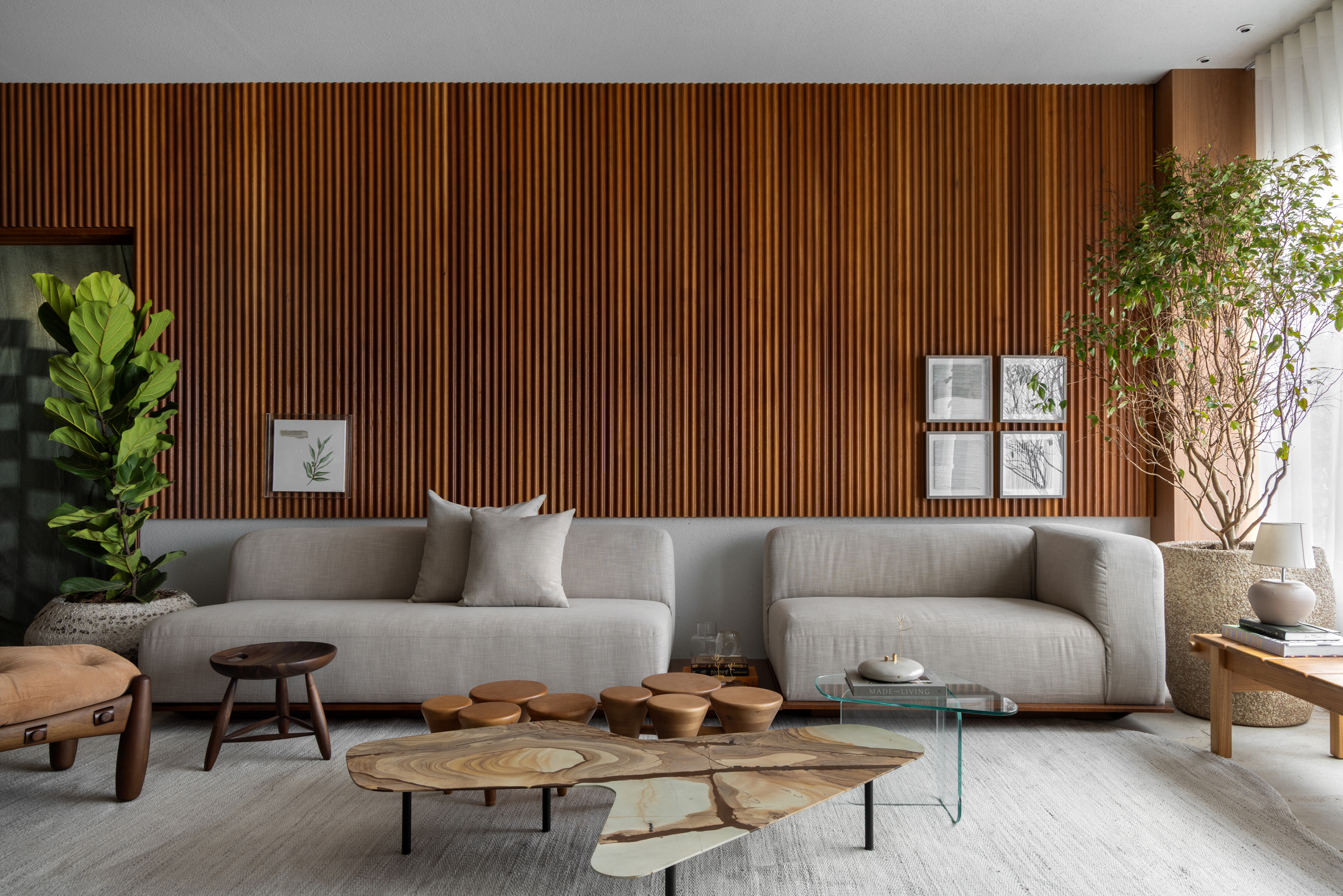
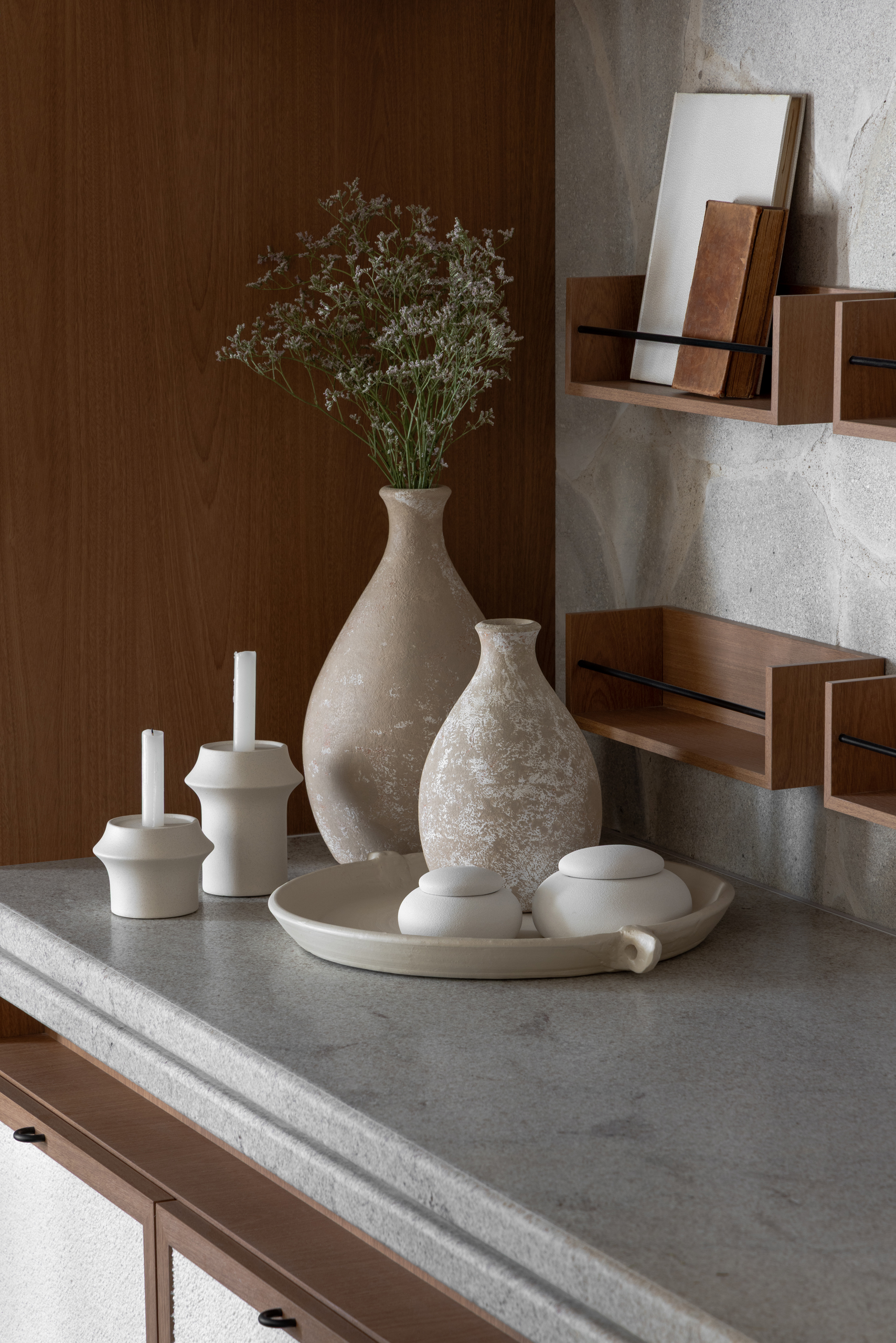
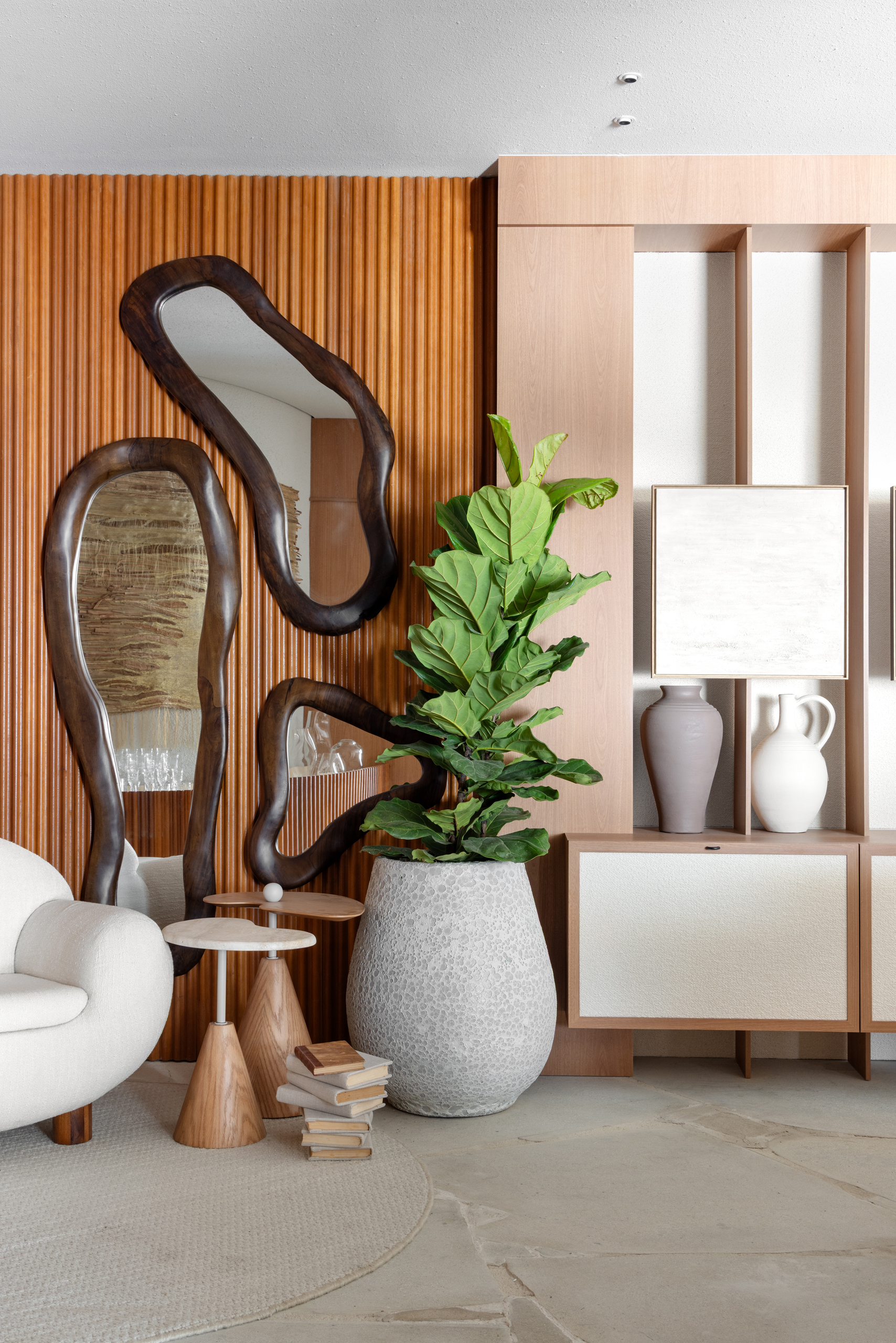
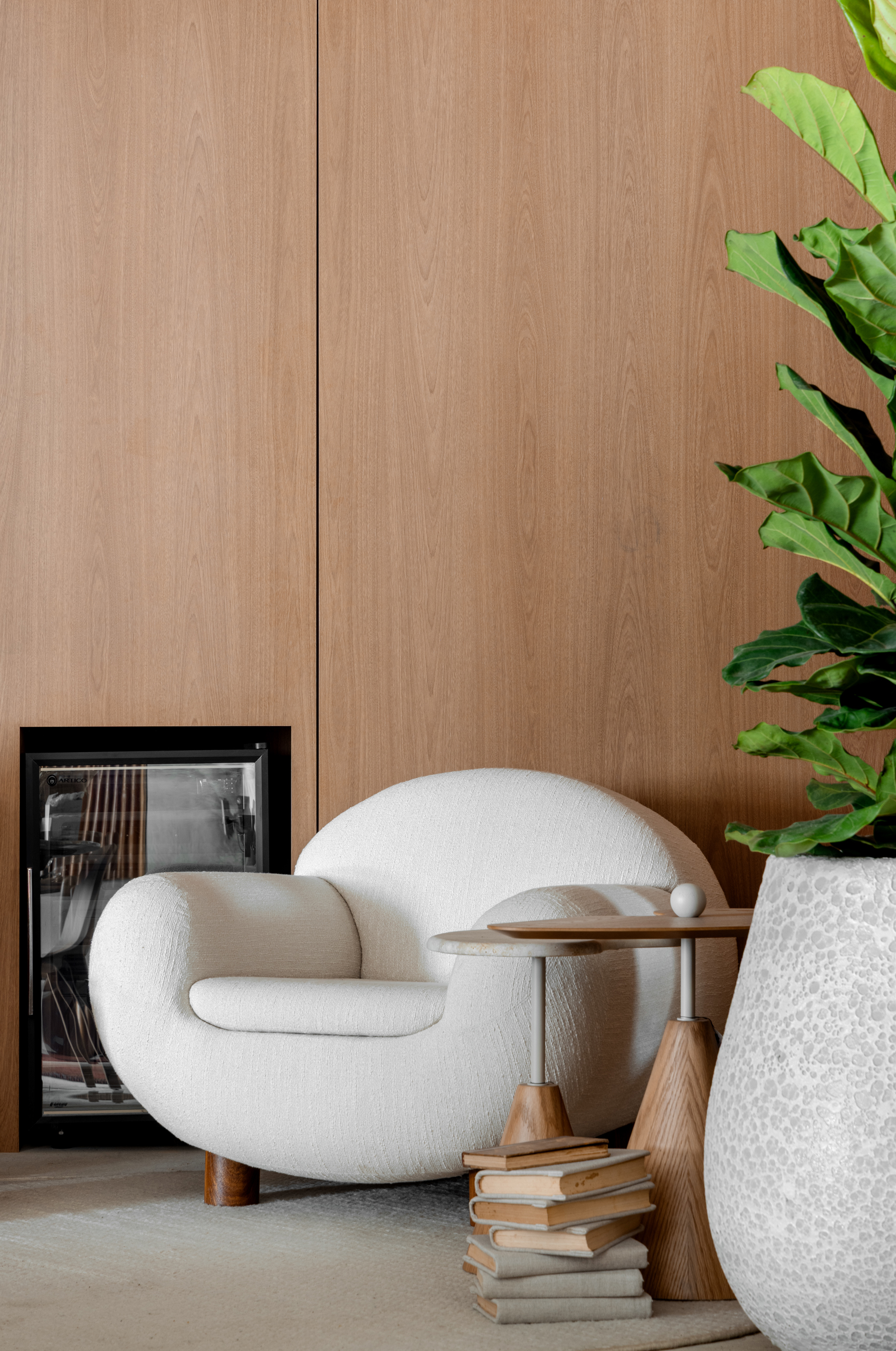
The aesthetic direction reflects an enduring commitment to authenticity. Natural materials dominate the palette — wood, stone, fiber — all chosen not only for their visual harmony but for their ability to evoke emotional resonance. Developed in partnership with Madeireira Catarinense, the custom woodwork serves as both structure and ornament, defining the architectural rhythm through curved panels that guide the eye in fluid motion. This material continuity establishes a dialogue between permanence and transformation, between human craft and the organic pulse of nature.
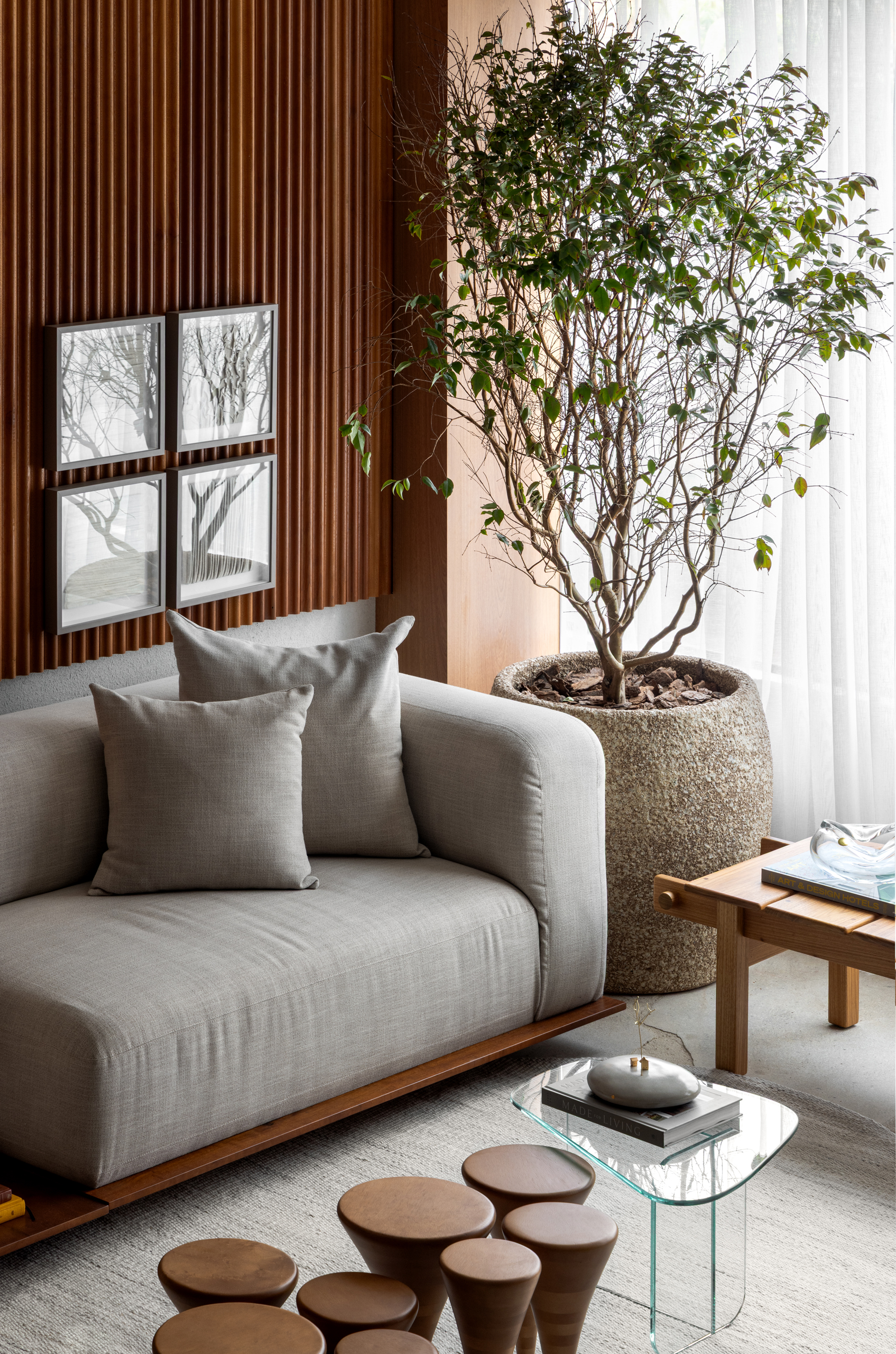
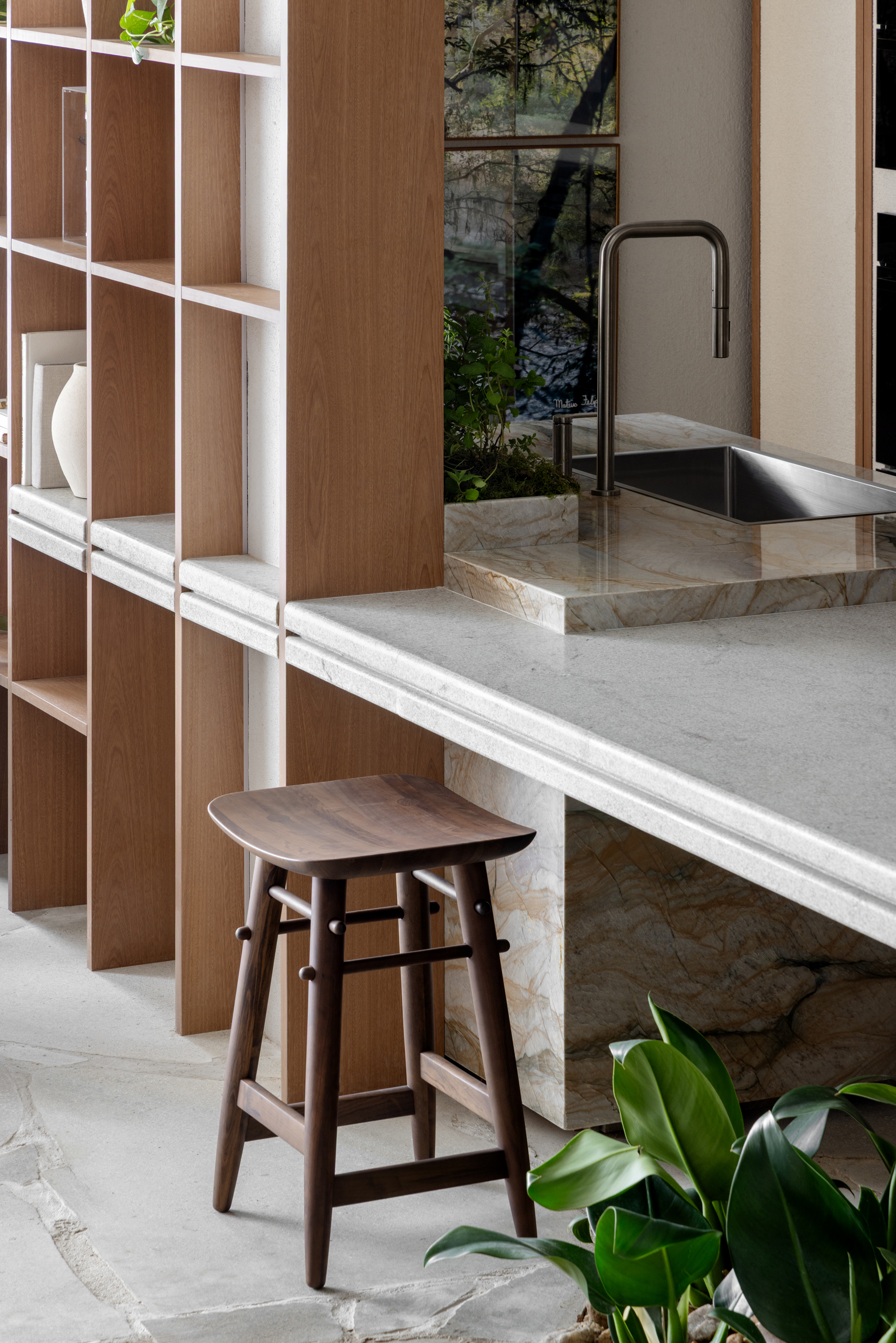
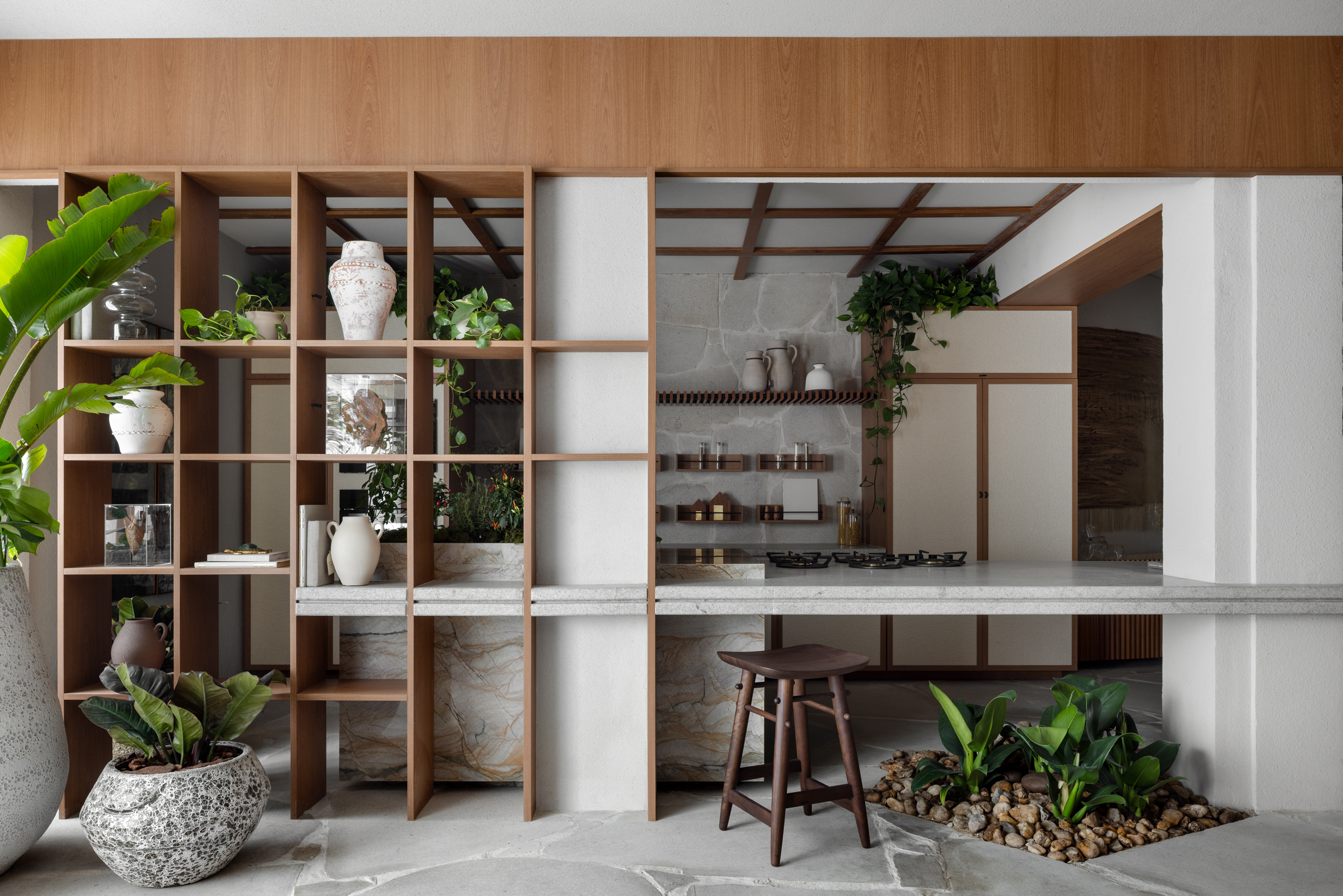
The spatial organization, both functional and poetic, invites an experience of freedom and fluidity. Every transition feels intentional: the kitchen opens subtly into the dining area, which then dissolves into the lounge, where textures and tones modulate the sensory perception. The architects conceived the layout for a contemporary inhabitant — someone who navigates between social energy and introspective solitude. Acoustic comfort, universal accessibility, and tactile diversity were considered fundamental, ensuring that every visitor — including those with visual impairments — experiences the space as inclusive and complete.
"In honoring what endures, we discover that beauty is not fleeting — it lives in the textures we touch, the light we nurture, and the dreams we continue to sow."
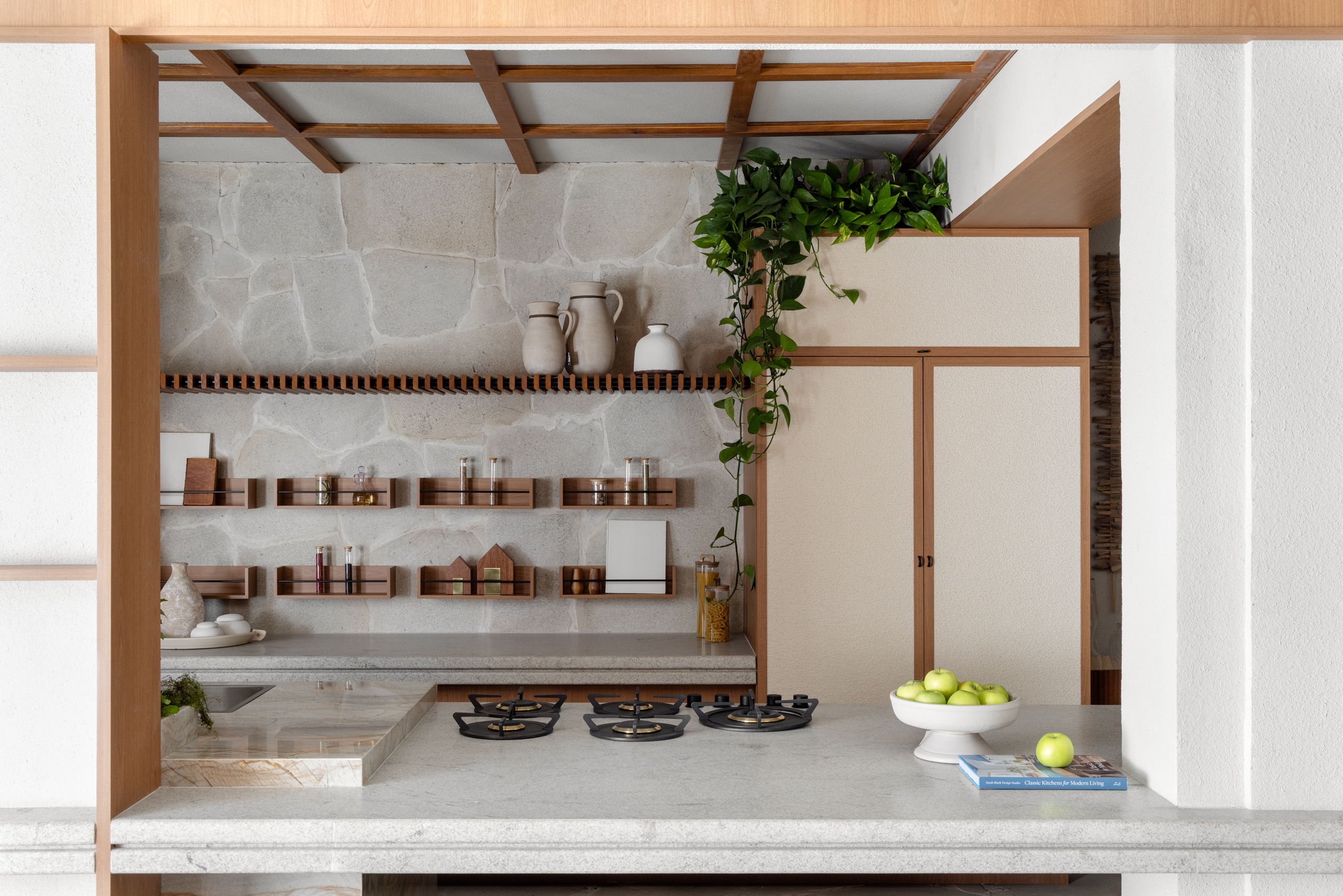
Visually, the palette resonates with serenity. Earthy tones, sandy beiges, and fendi hues compose a chromatic harmony that mirrors the calm of Brazilian landscapes. The tactile presence of wood panels, softly curved and sculpted, evokes the organic rhythm of germination — a metaphor for constant renewal. The natural stone flooring anchors the space in solidity, while the kitchen’s stone surfaces — robust yet elegant — establish a tangible connection to the earth. Above it, a floating countertop extends like a poetic gesture, symbolizing the delicate balance between the grounded and the ethereal.
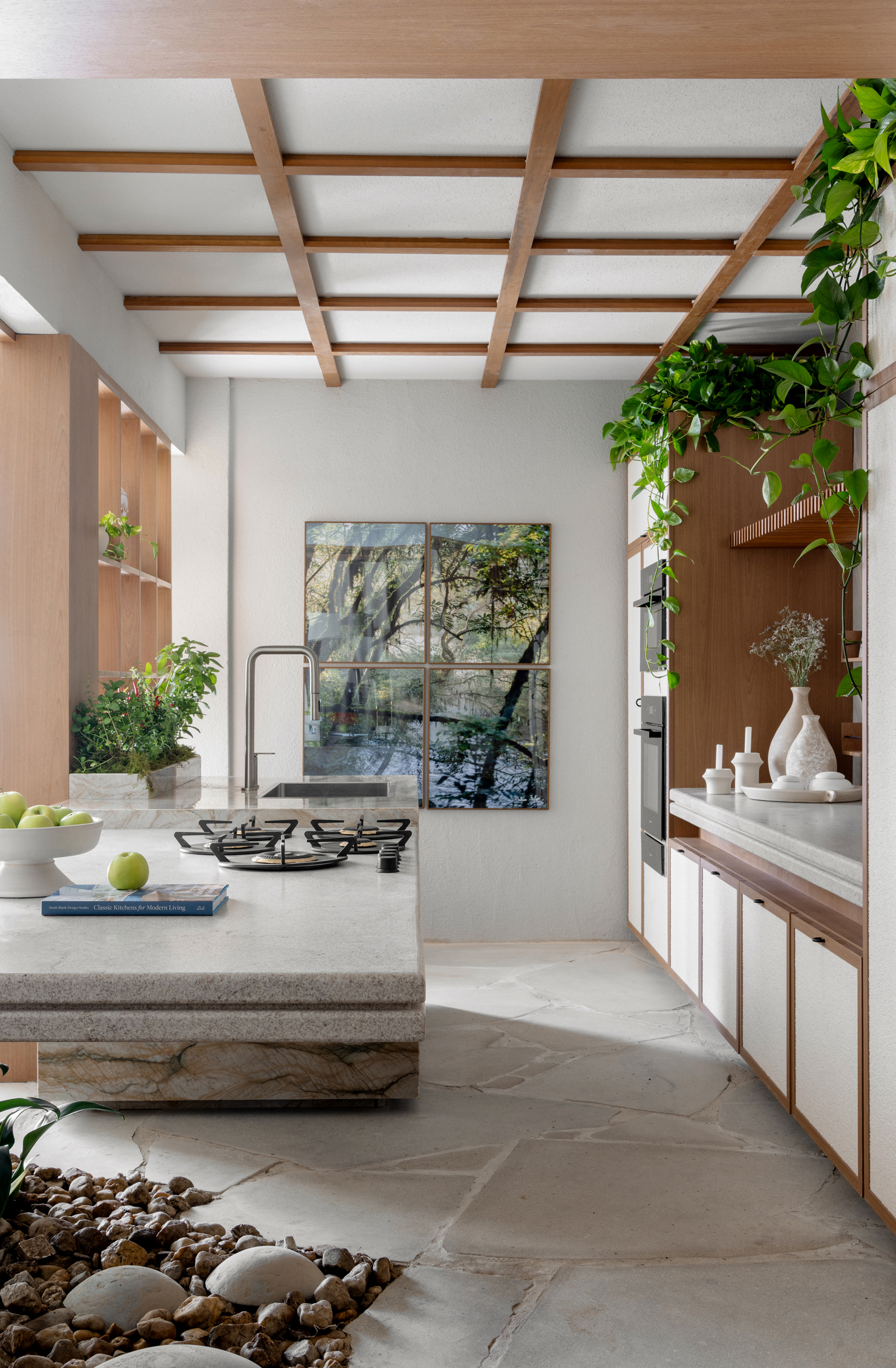
Lighting becomes the silent narrator of this story. Layered illumination — diffuse, direct, and reflective — enhances the sculptural presence of textures and introduces an atmospheric fluidity. A wooden ceiling grid allows filtered light to unfold gently, creating a sense of rhythm and depth. Energy-efficient LED fixtures, coupled with automated lighting scenes, echo the project’s sustainable commitment. The architects’ sensitivity extends to every ecological detail: certified woods, low-impact materials, and solutions designed for longevity over fashion. Sustainability, here, transcends aesthetics — it becomes an ethic of care and conscious permanence.
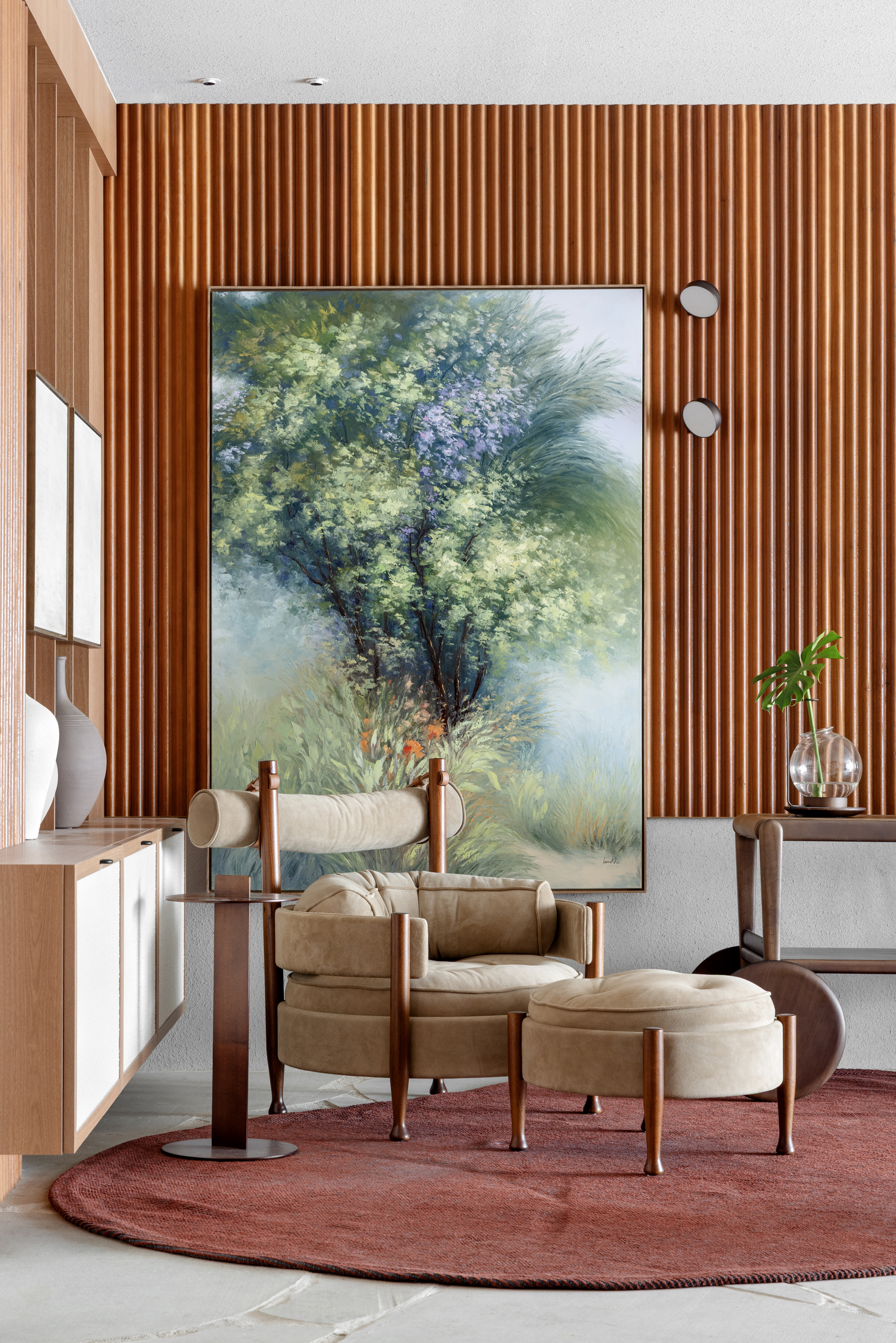
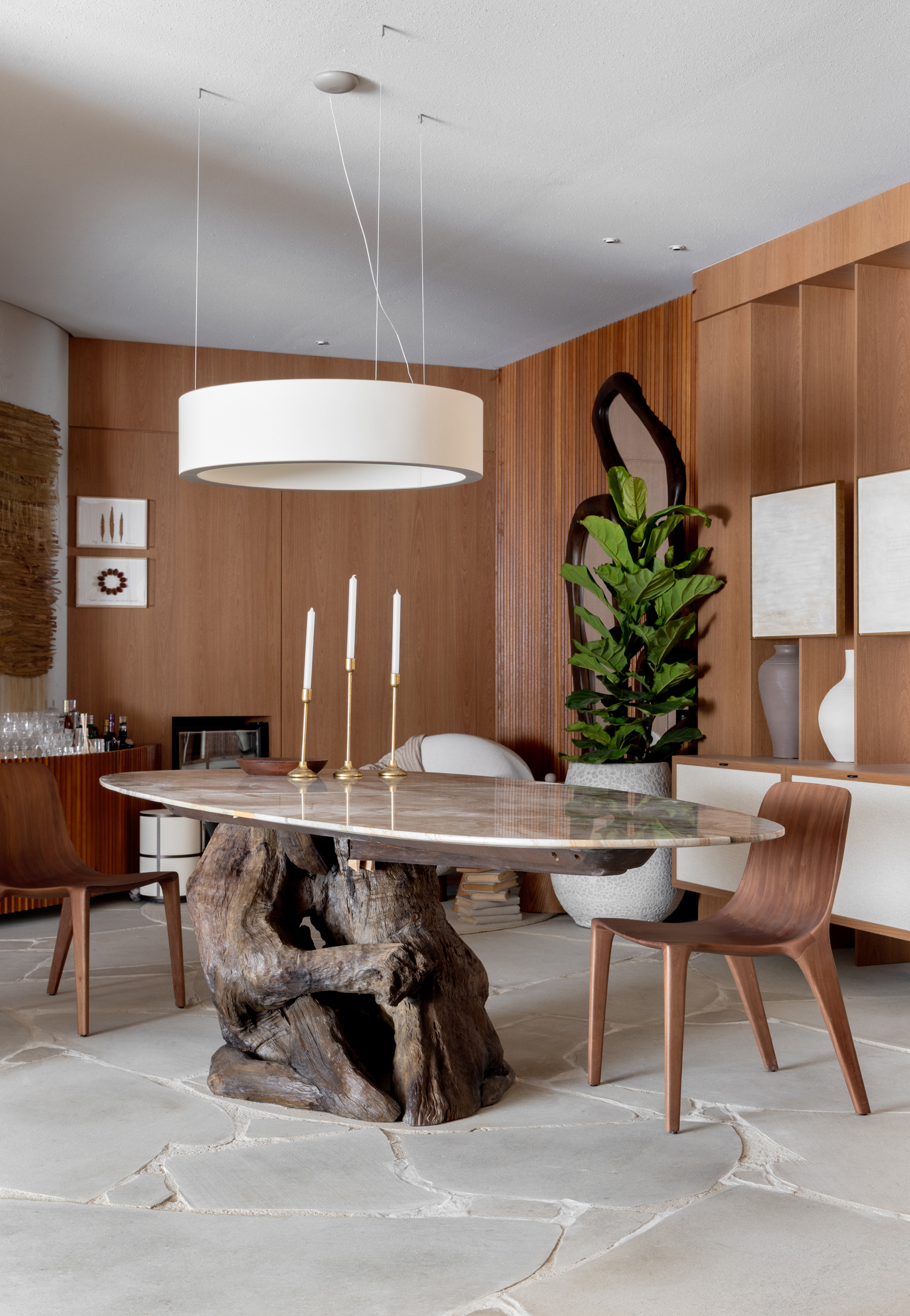
One of the most striking elements within Entre Tempos is the dining table, created in collaboration with Residual Design and MG3 Marmores. Sculptural yet grounded, its base — crafted from a reclaimed wood trunk — supports a Capadocia quartzite top whose veining resembles rivers of memory carved in stone. The piece acts as a metaphor for resilience and regeneration, embodying the architects’ reverence for material authenticity. Around it, seating by iconic Brazilian designers such as Sergio Rodrigues and Estudiobola reinforces the project’s cultural roots and timeless modernity. Each object transcends its utilitarian function, becoming a vessel of continuity and emotional legacy.
Beyond aesthetics, Entre Tempos positions itself as a statement on architectural responsibility in the age of impermanence. Koloske and Pravato suggest that enduring beauty lies not in novelty but in truth — the truth of material, of gesture, of emotion. Their creative process, nourished by fragments of thought and sound — from the words “to live is better than to dream” to the echoing voice of Nina Simone in Baltimore — speaks of resilience, artistry, and collective longing. Within the uncertainty of our global context, the architects respond not with spectacle, but with sincerity. The result is a space that transcends trends, reaffirming architecture as an act of resistance — and of hope.