Spatial Intelligence– Vivian Zanotto Office by Vivian Zanotto Arquitetura
"Spatial intelligence transforms constraint into opportunity, where collaboration, light and material coherence expand perception beyond physical limits."
Gently bathed in morning light and framed by the treetops of Porto Alegre, the Vivian Zanotto Arquitetura Office unfolds as a quiet declaration of intent. Within its modest footprint, atmosphere and authorship intertwine, transforming everyday work into an experience shaped by warmth, proximity and care.
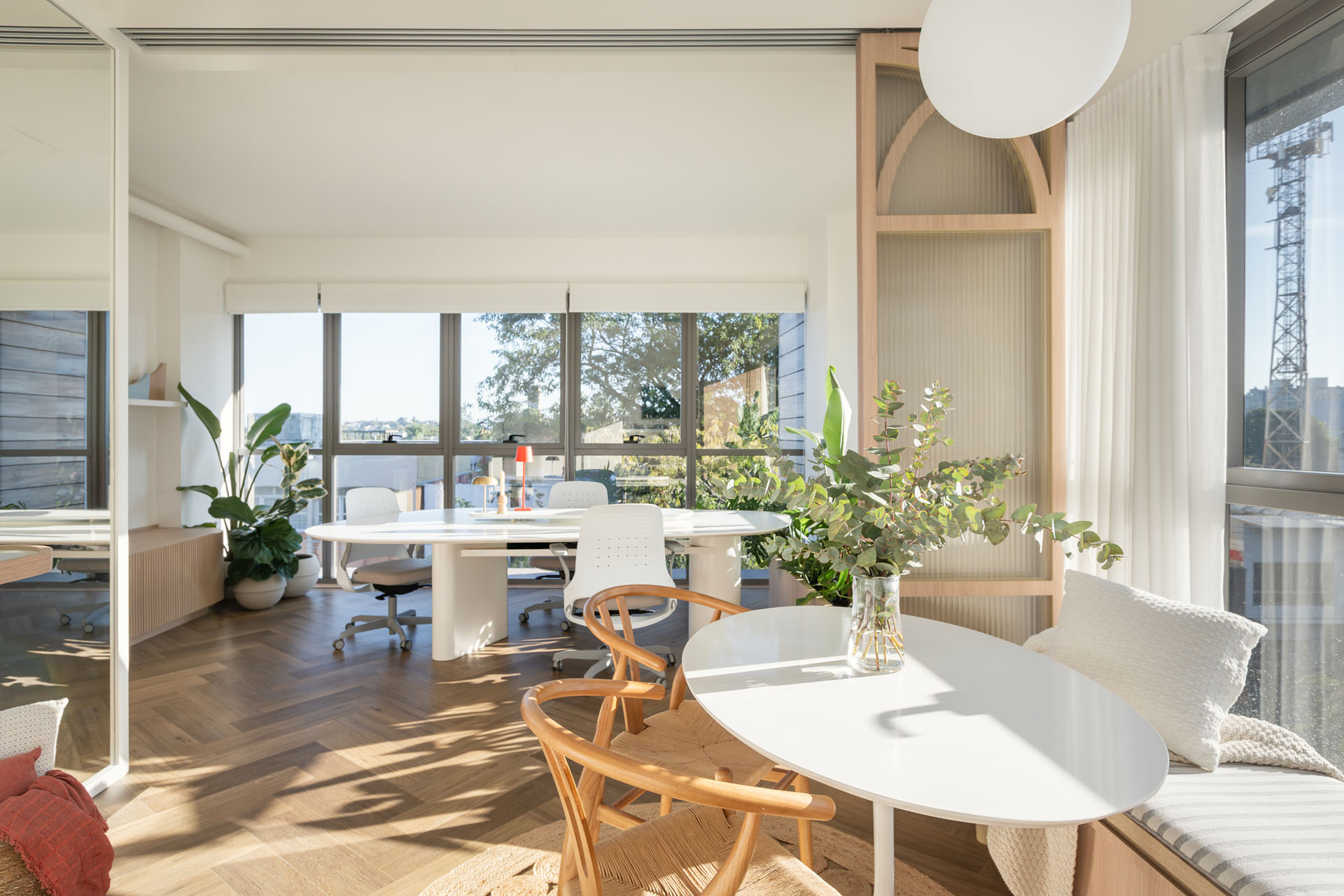
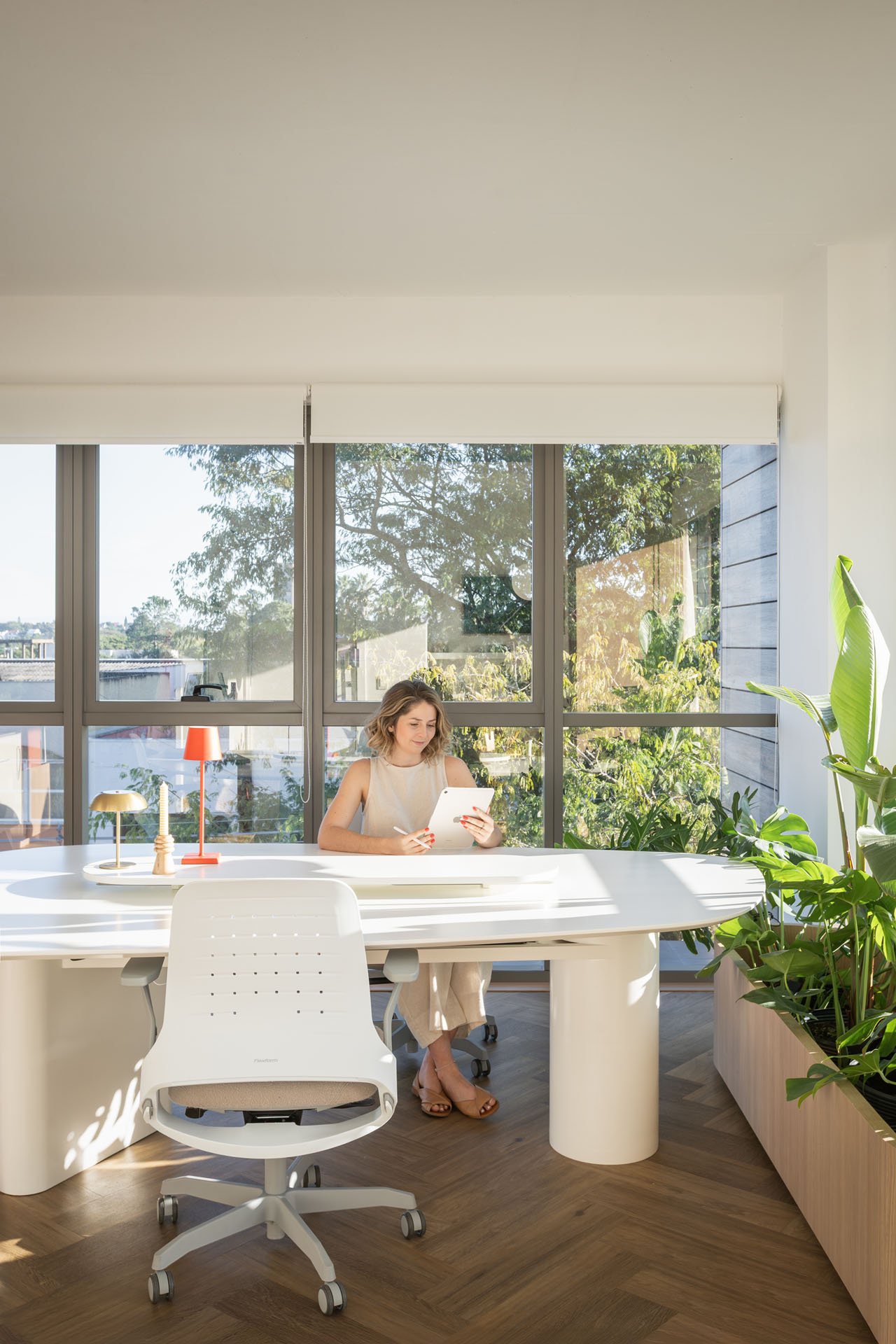
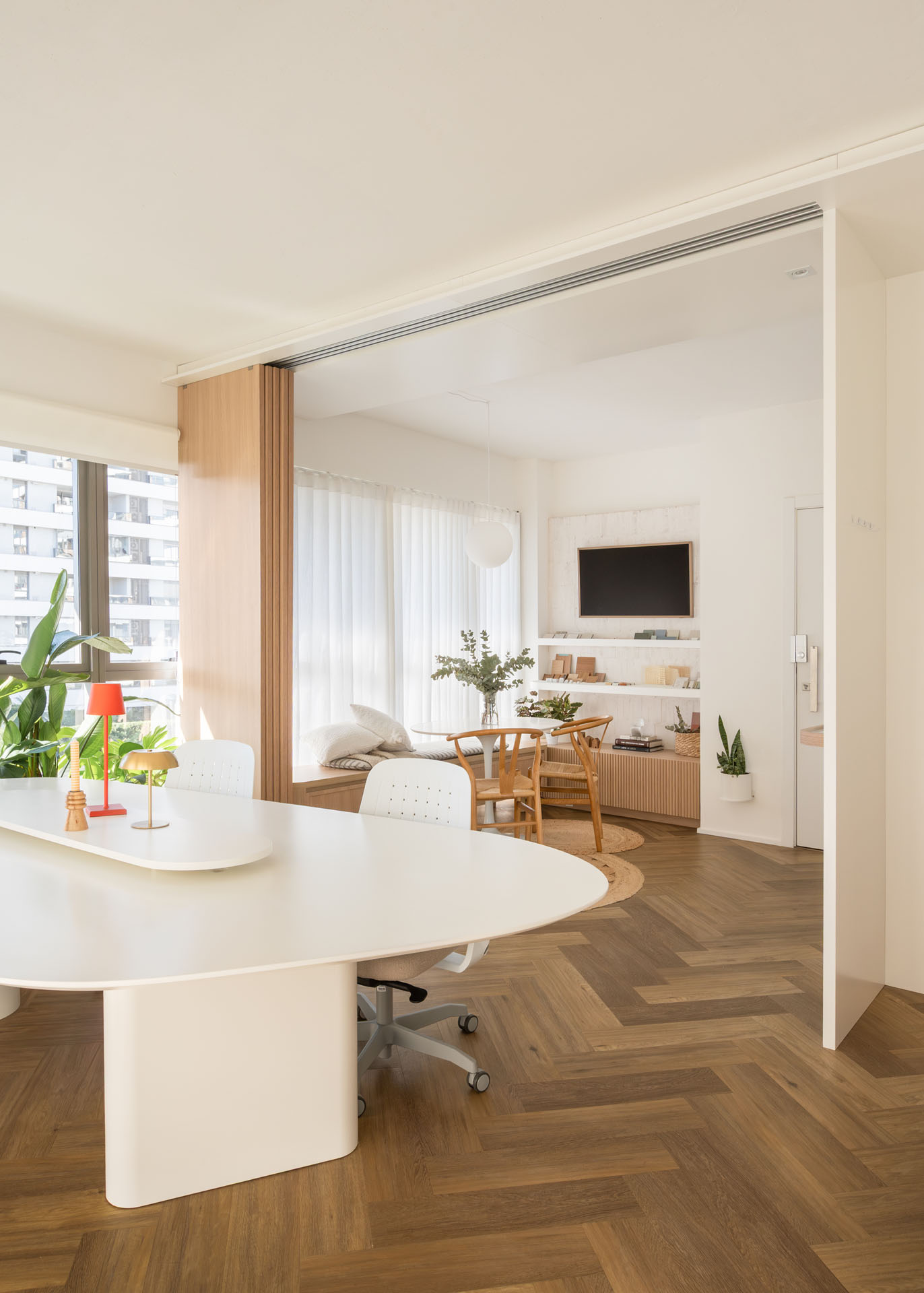
The premise of the project is both simple and ambitious: architecture should reflect the culture of those who inhabit and create within it. Located near Lake Guaíba, the 30-square-metre studio was conceived not merely as a workplace, but as a spatial manifesto for the practice’s values. From the first site visit, natural light, cross ventilation and the surrounding greenery informed the layout and material decisions, ensuring that environmental awareness became the foundation of every gesture. Spatial intelligence defines the project’s success. Rather than subdividing the compact plan into enclosed micro-rooms, the design centres on a generous, organically shaped communal table. This sculptural element anchors the studio, supporting collaborative work, informal dialogue and the daily rituals of practice. Circulation flows intuitively around it, maintaining open sightlines and reinforcing a sense of collective engagement. In this context, openness is not aesthetic indulgence but operational necessity.
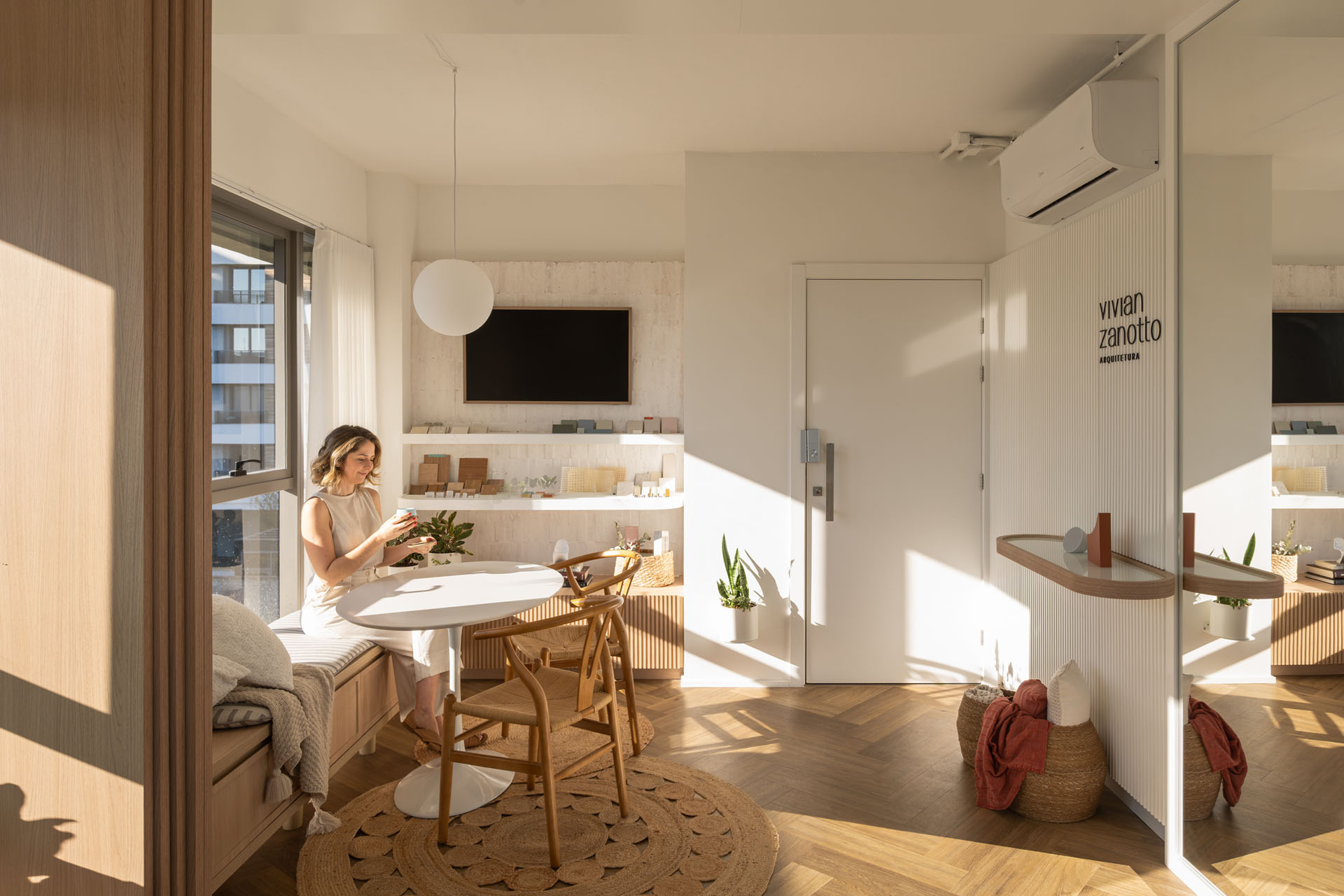
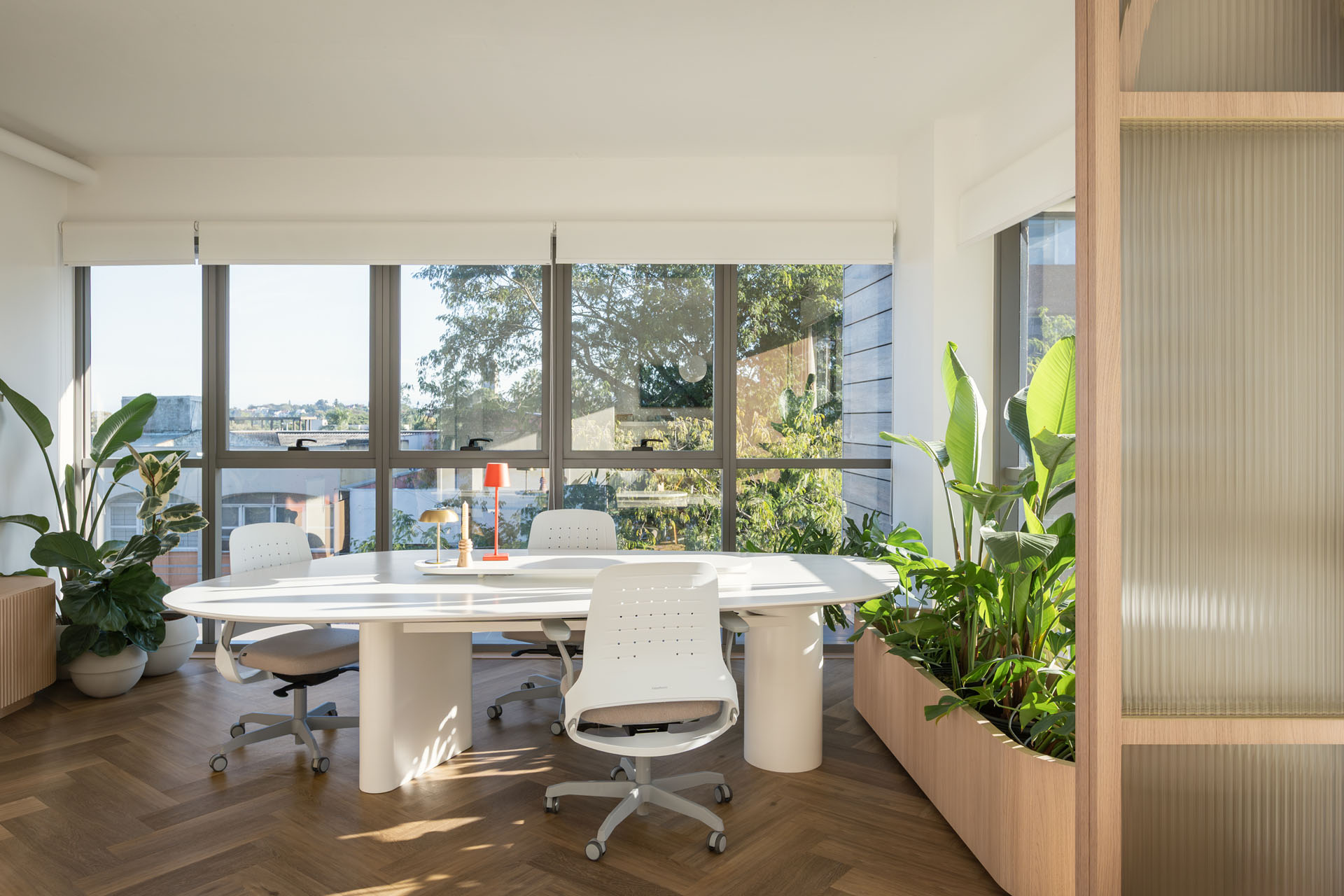
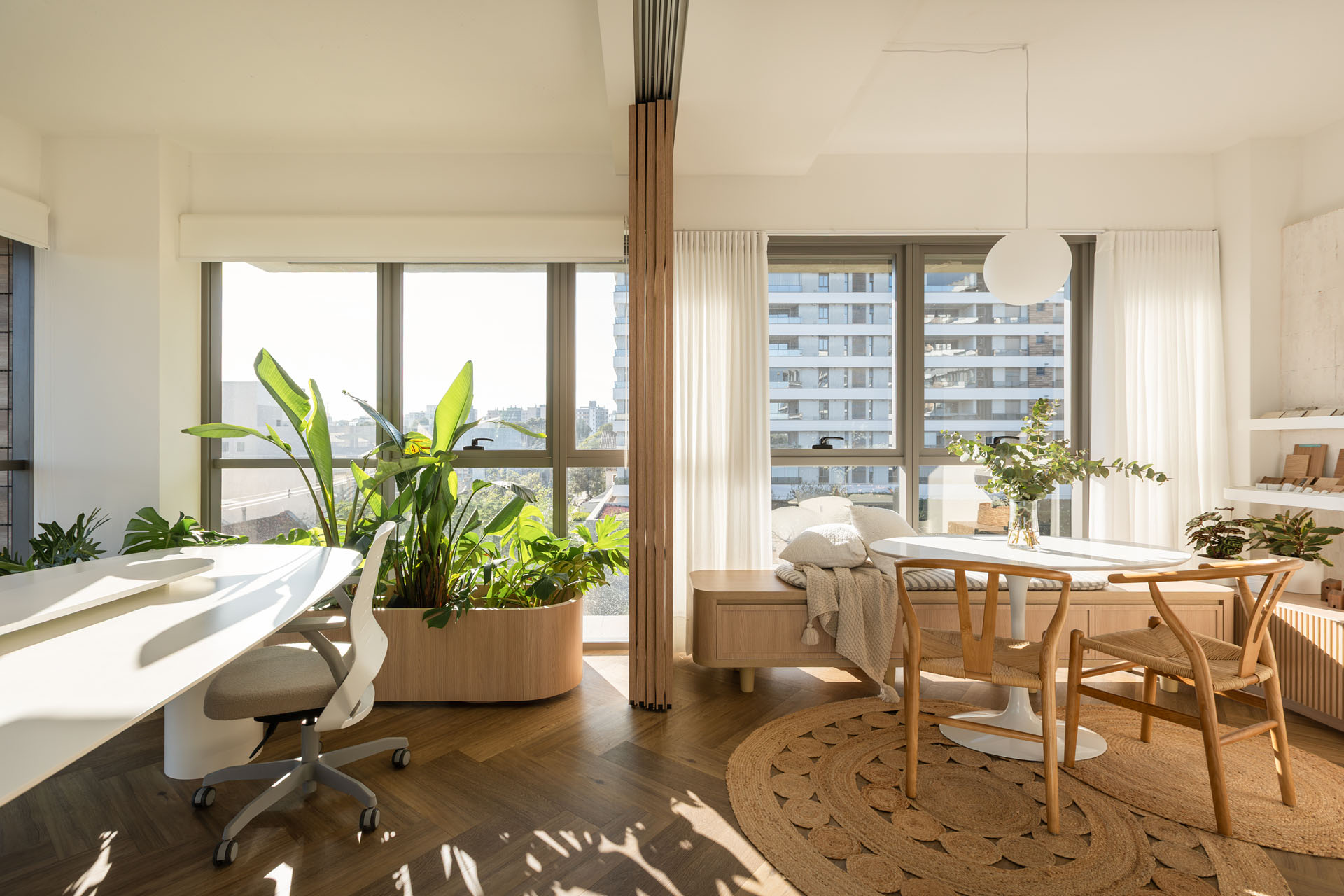
The work area merges with an entrance hall designed as a hybrid zone for meetings, informal meals, and moments of pause. A large planter with tall vegetation occupies a strategic position beside the table, creating a deliberate continuity between interior life and the natural context outside. This gesture does more than decorate the room: it introduces scale variation, softens transitions, and reinforces the project’s biophilic intent without theatrical devices.
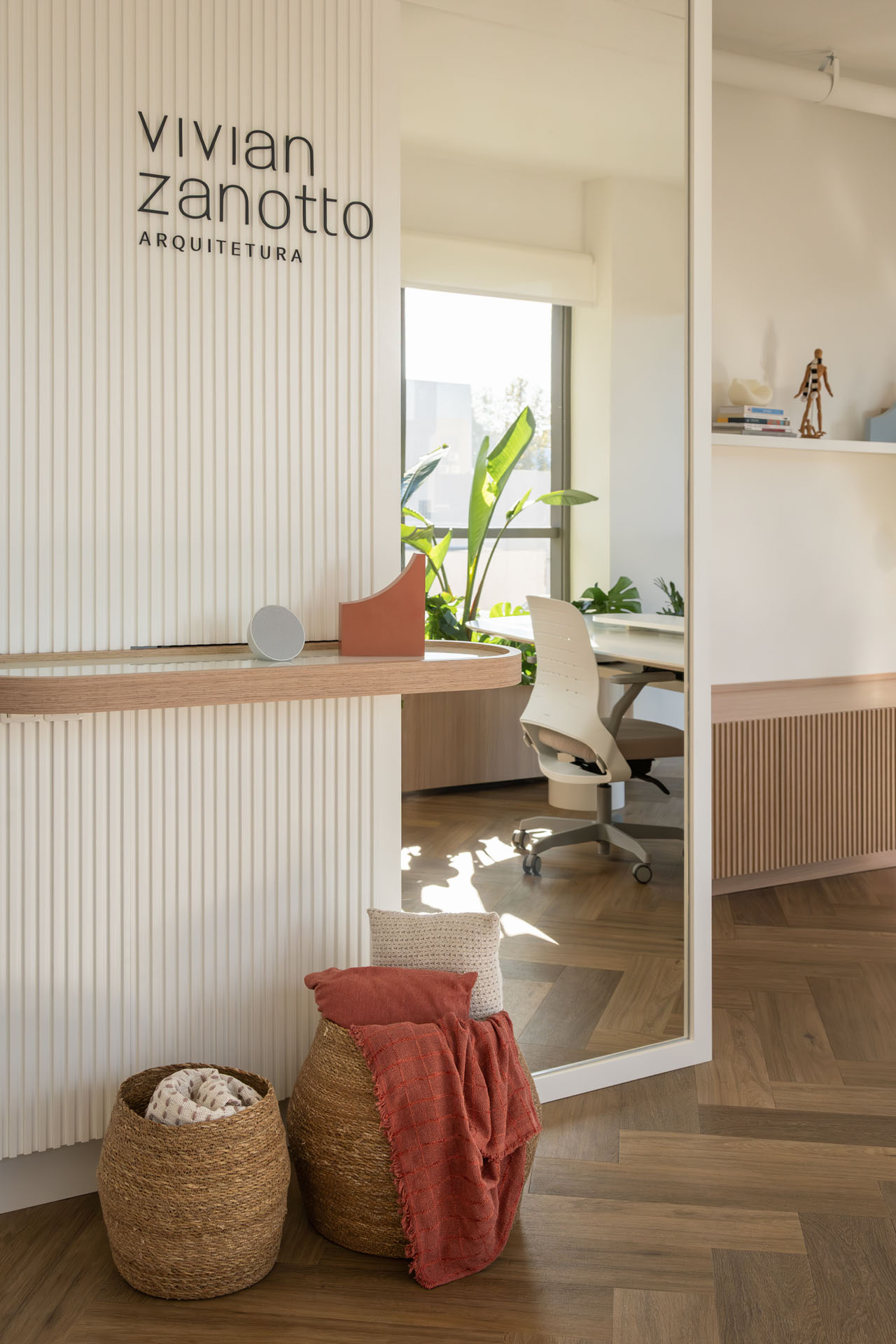
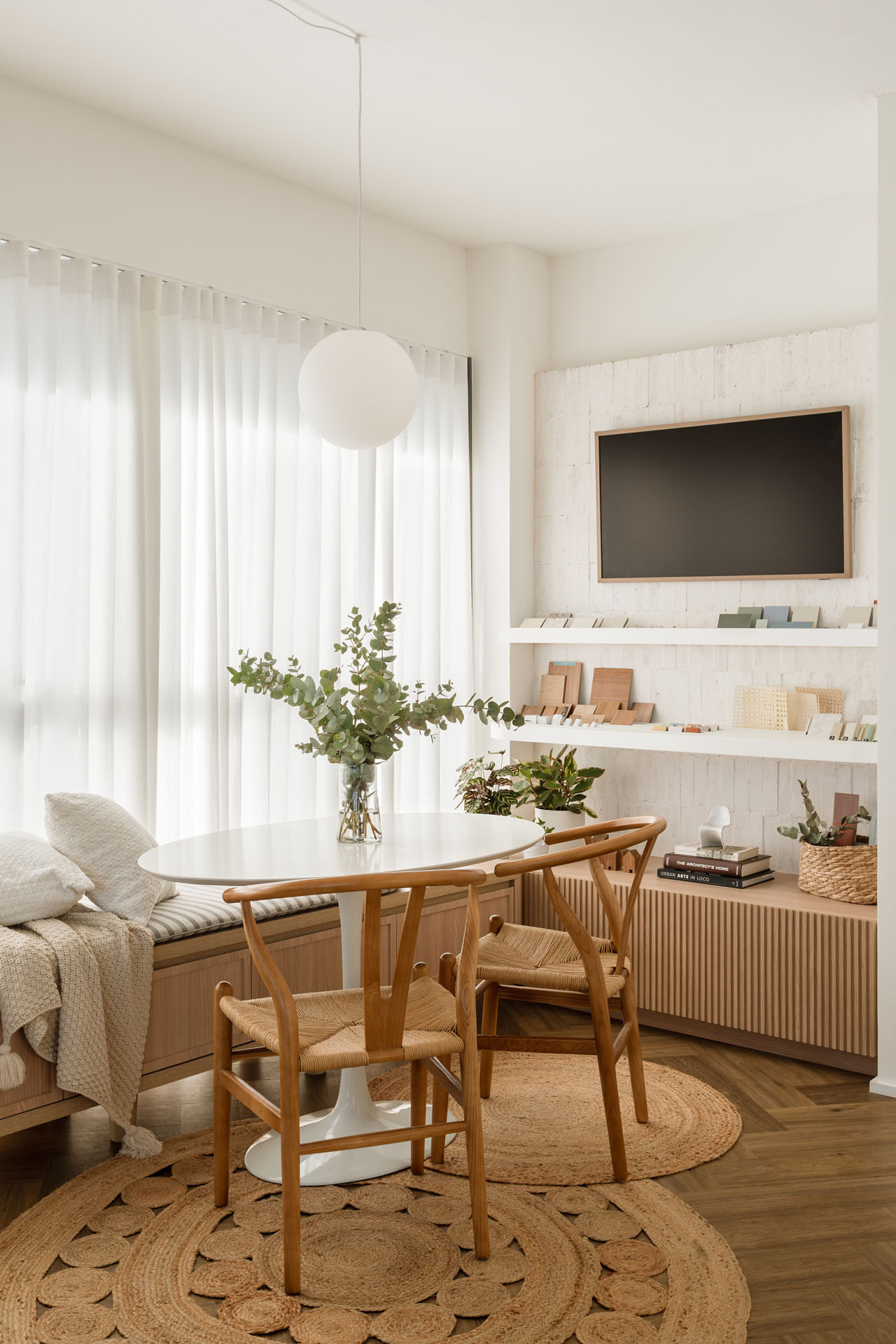
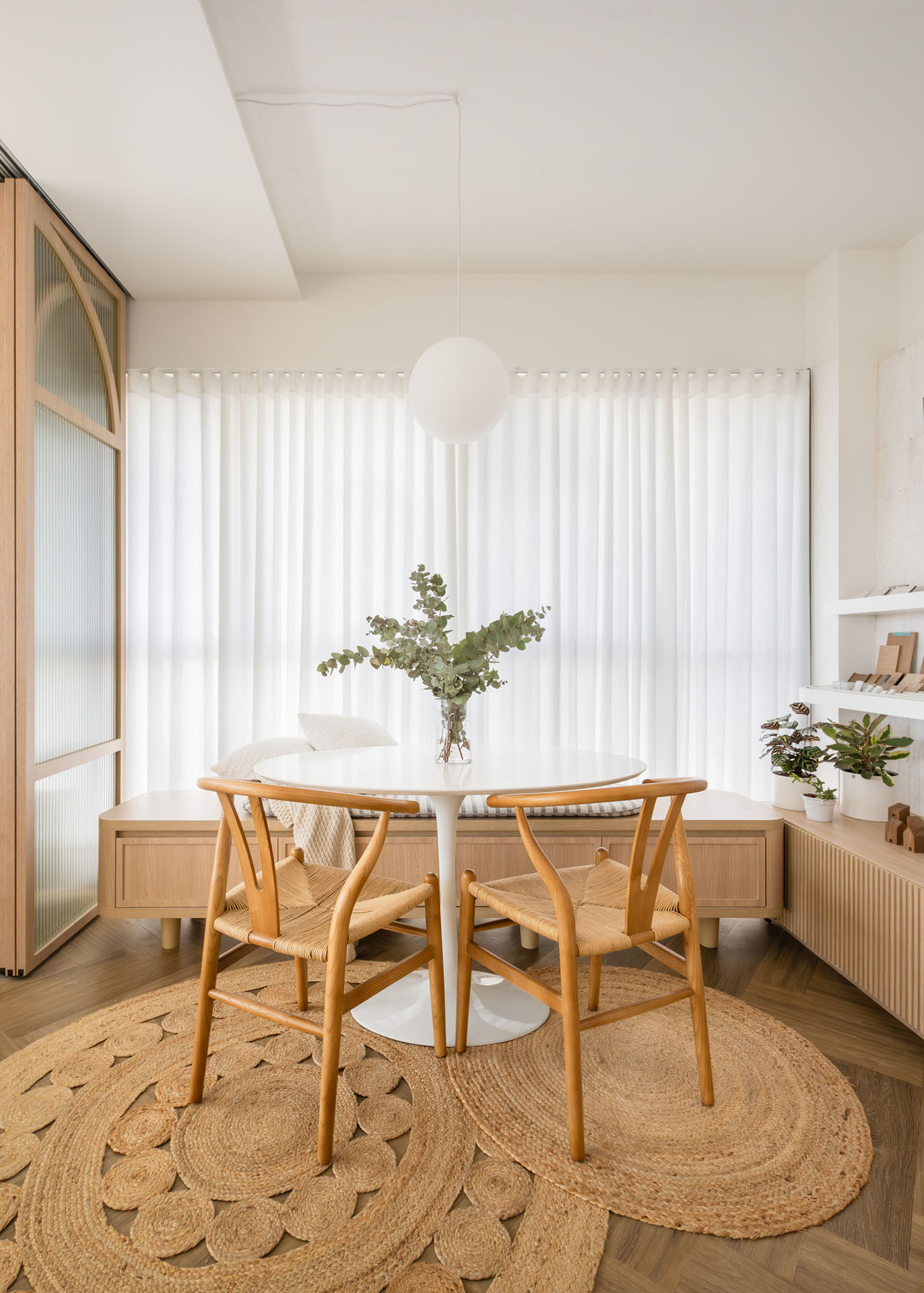
Materiality plays a decisive role in shaping the office’s emotional register. Linen curtains filter daylight into a gentle glow, while sisal rugs and reclaimed white-painted brick lend texture and familiarity. Freestanding furniture pieces with timeless silhouettes reinforce flexibility and longevity. Above, a white-painted exposed concrete slab preserves its raw character while visually elevating the ceiling plane, subtly expanding the perception of space. The restrained palette ensures visual calm, allowing proportion and detail to lead.
"Rooted in context and guided by restraint, the studio reveals how thoughtful detailing and natural warmth can turn a compact office into a living extension of identity."
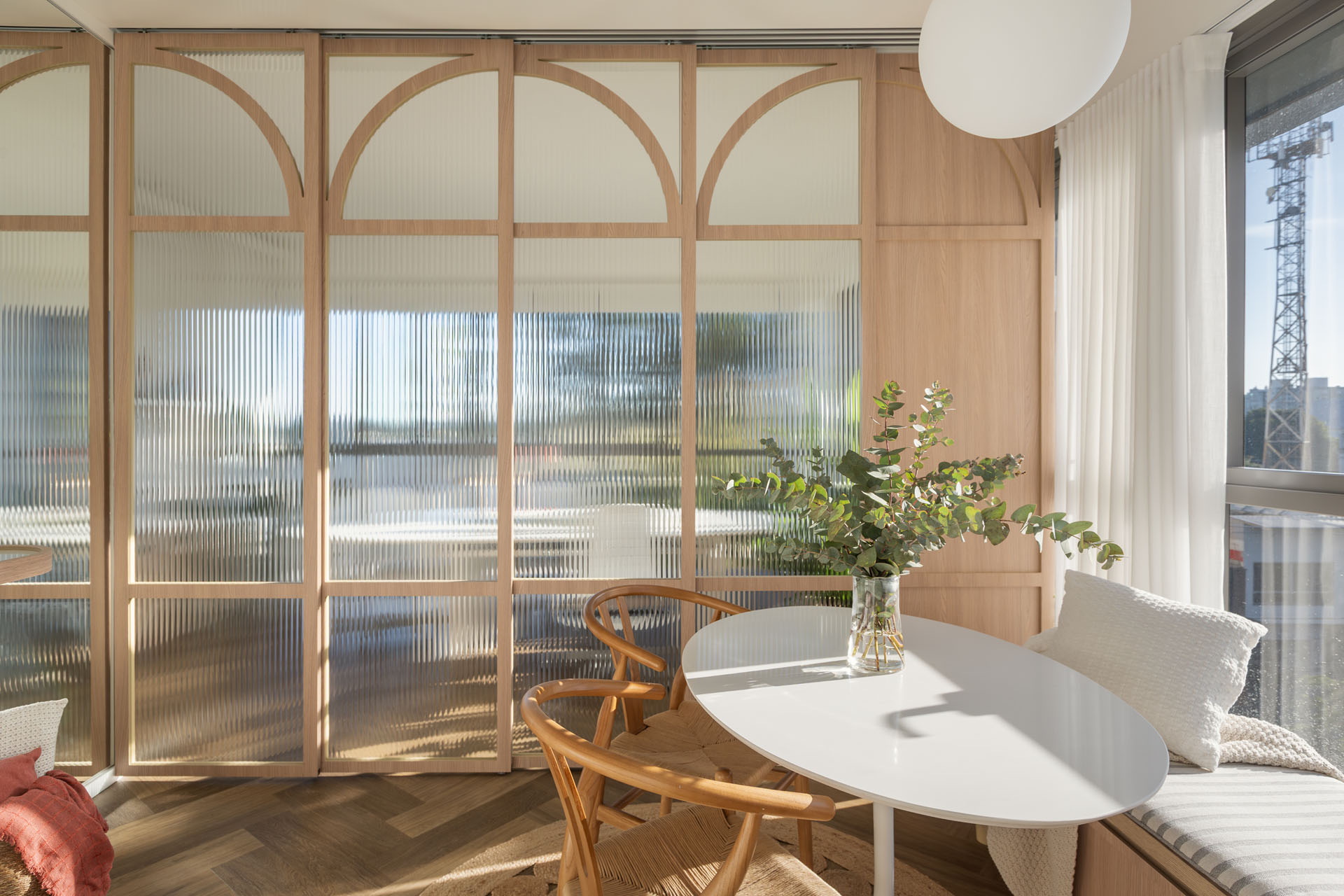
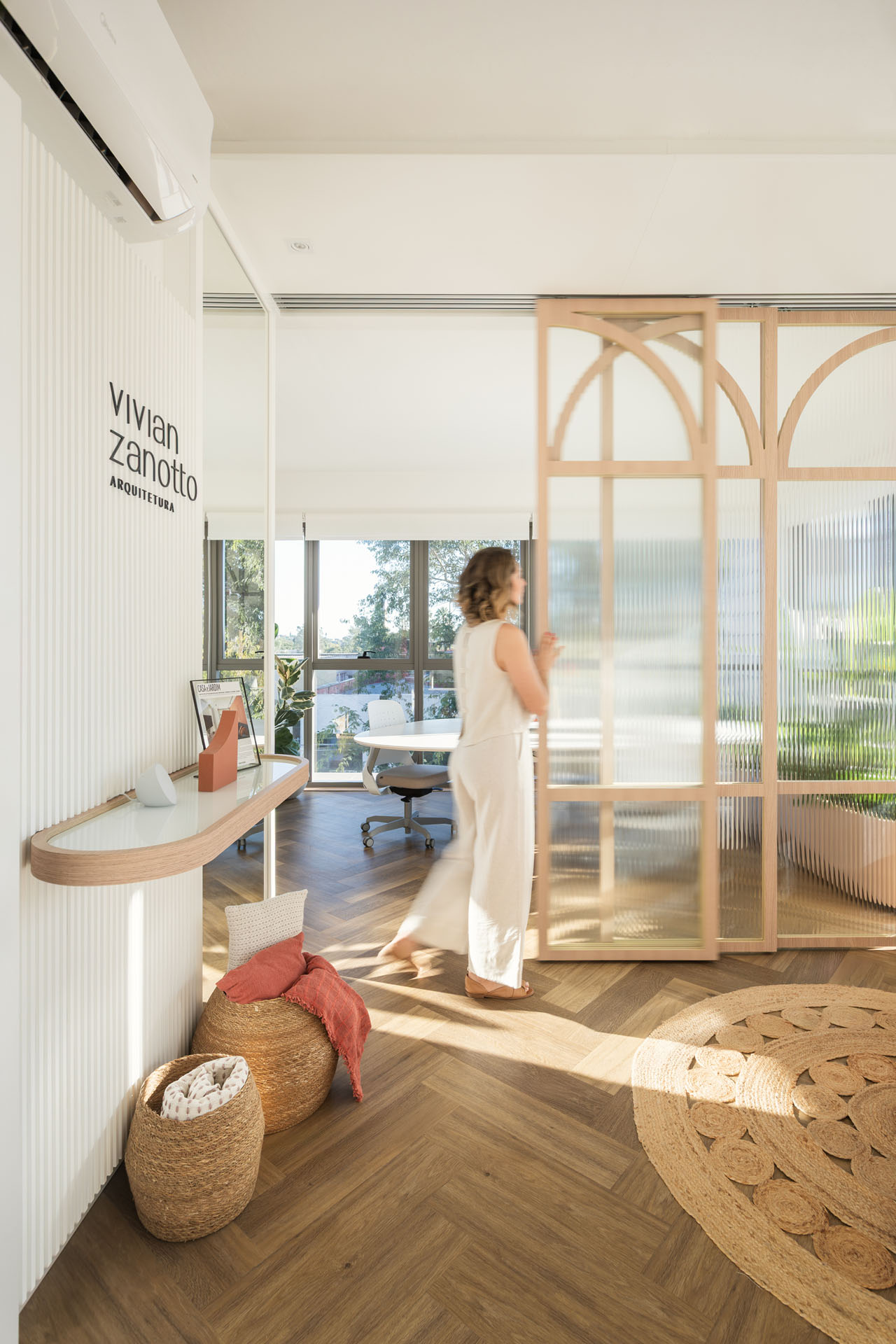
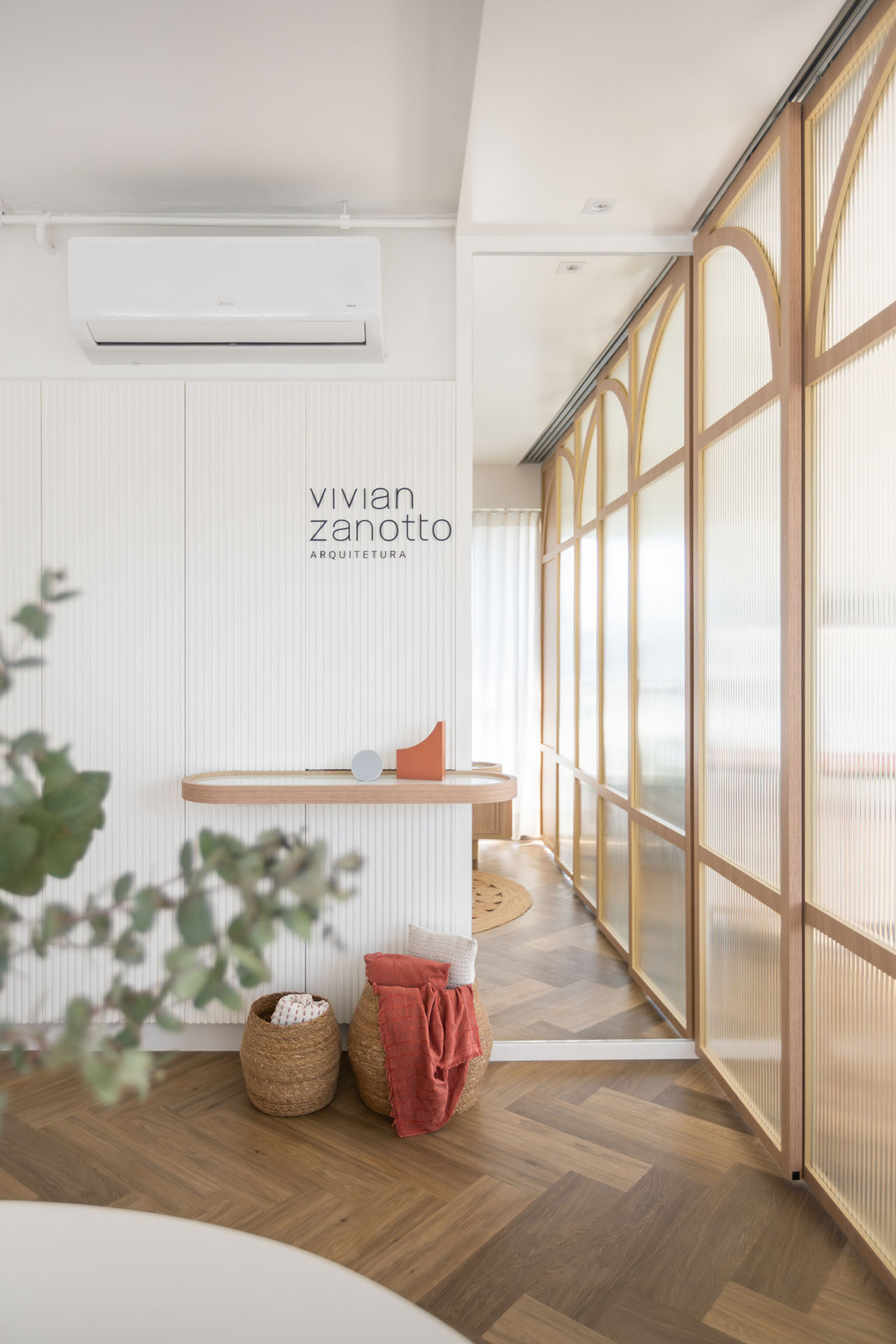
One of the project’s most refined interventions is the carpentry portico that articulates transitions between key areas. Integrating tracks for sliding wood-and-fluted-glass doors, this element allows selective separation without sacrificing permeability. It resolves technical constraints—particularly in a space without a drywall ceiling—while also supporting nuanced lighting strategies. Here, architectural detailing becomes a tool for performance, privacy and atmosphere simultaneously.
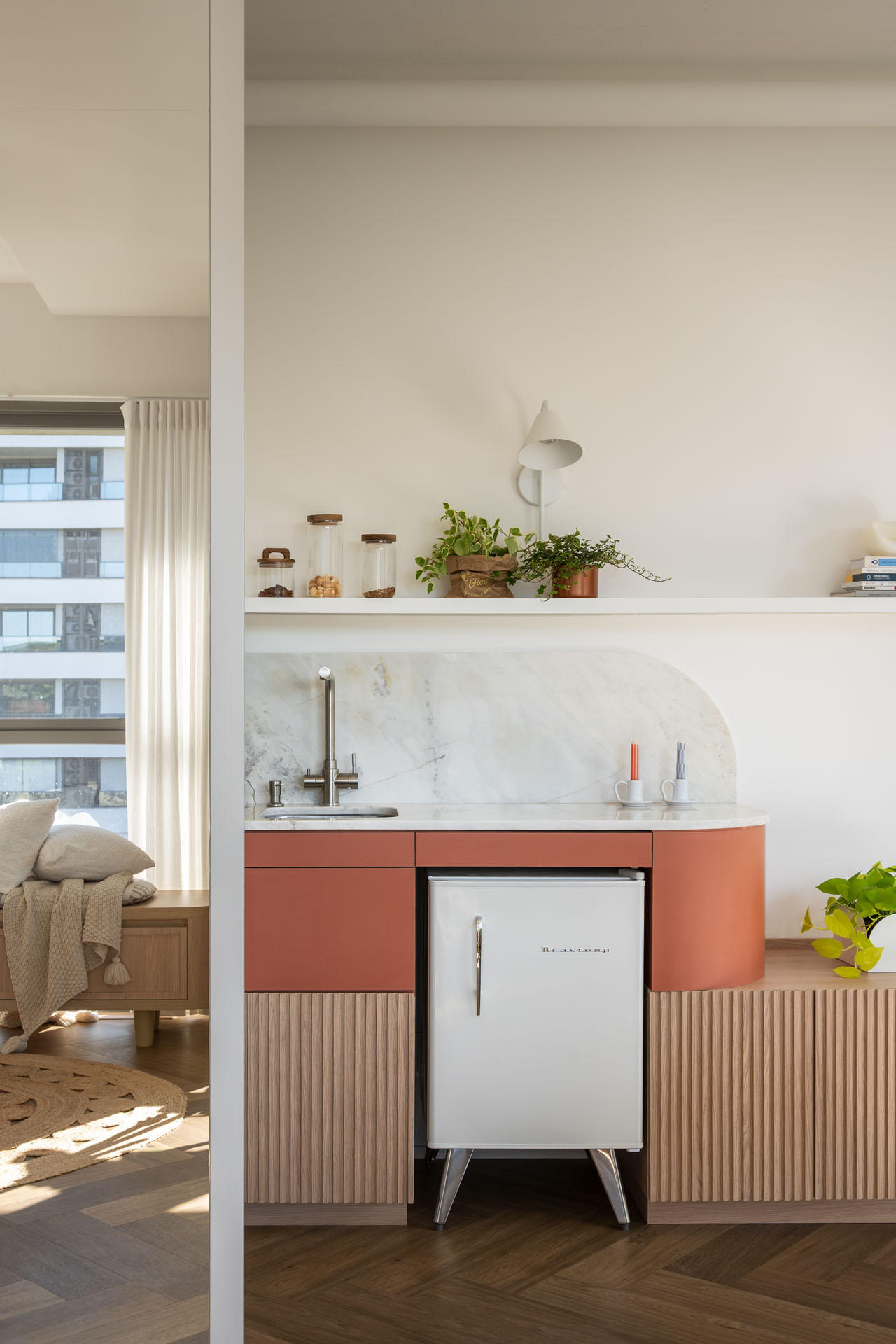
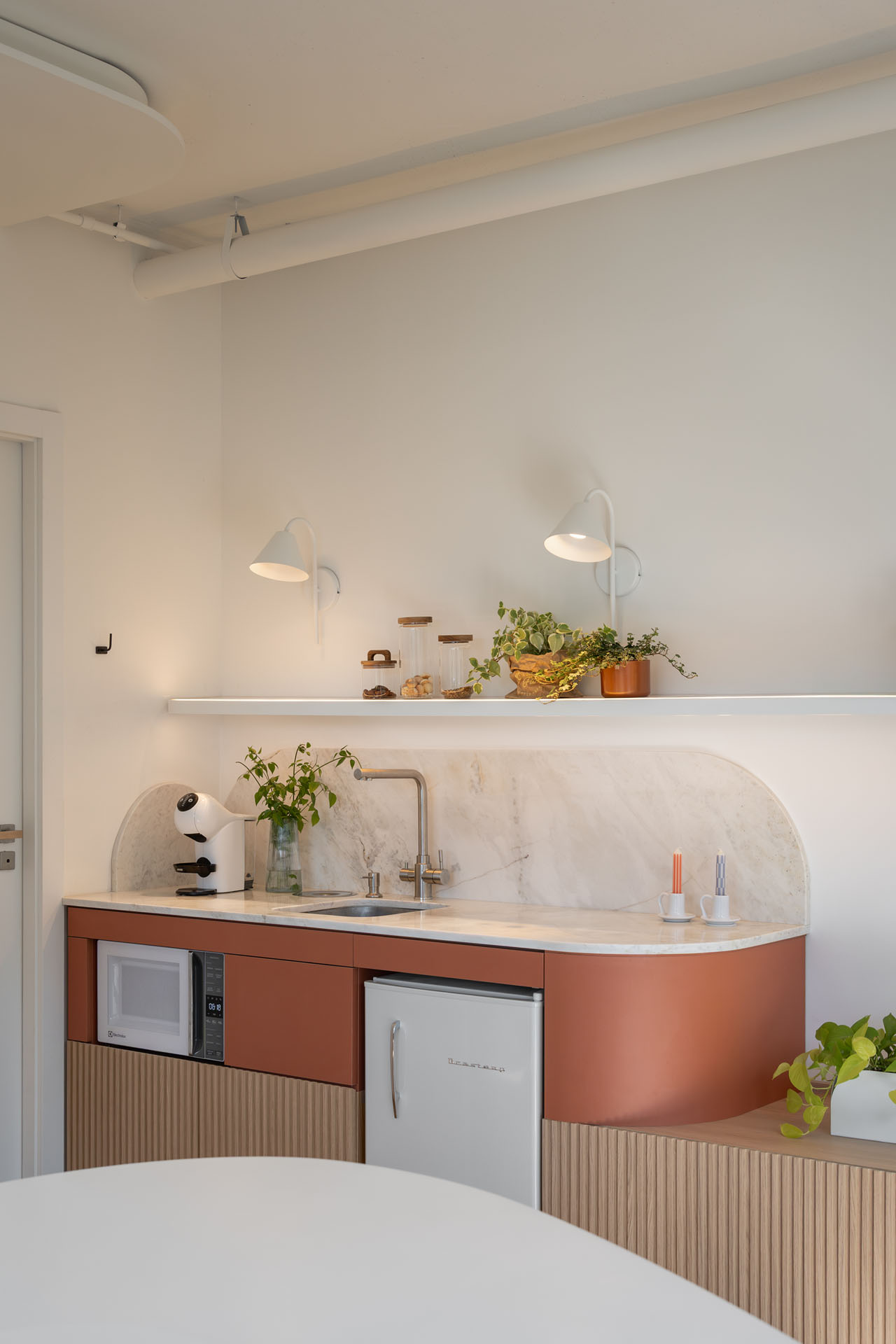
Support areas receive equal consideration. In the pantry, terracotta defines the counter, introducing warmth and hierarchy while maintaining coherence with the overall palette. Curved junctions between the counter and cabinetry soften functional edges, reinforcing the project’s commitment to fluidity even in utilitarian zones. The pantry remains visually integrated into the studio, reflecting a culture of transparency and shared routine rather than concealment.
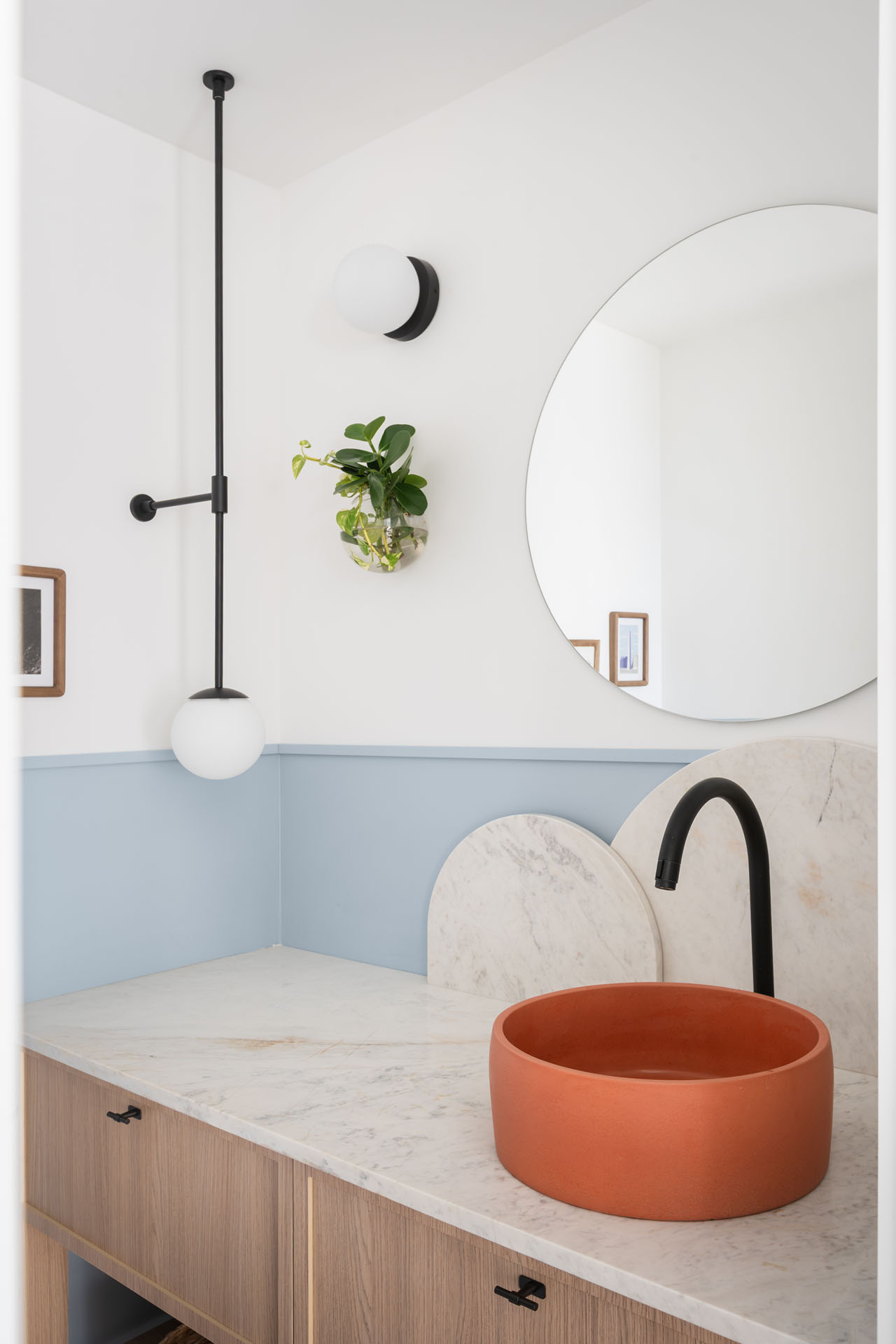
The bathroom adopts a light blue field complemented by lacquered boiserie, creating a distinct yet harmonious identity. Herringbone wood-look vinyl flooring flows uninterrupted from the main workspace into this private zone, a strategic move that enhances spatial continuity. In compact interiors, such consistency is critical: uninterrupted surfaces elongate perception and stabilise composition. Throughout the project, continuity is not incidental but instrumental in achieving generosity within constraint.
The Vivian Zanotto Arquitetura Office reveals how small-scale commercial interiors can transcend physical limitations through clarity of intent and disciplined execution. Light, texture and proportion replace excess form, while collaboration emerges as the spatial protagonist. The result is a workplace that welcomes both team and visitor with equal warmth—an environment where creative rigour and intimacy coexist seamlessly, and where architecture becomes the most authentic expression of practice.