Rigor and Play – Nume Agency by Faust Arquitetos
Published
"A workspace where rigor meets play, shaping an environment that balances precision and imagination through subtle gestures, material honesty and a clear architectural narrative rooted in identity."
There is something inherently poetic about a space that takes humor seriously. Within a restrained footprint, this project unfolds as a delicate interplay between discipline and spontaneity, where every gesture feels intentional and every detail quietly contributes to a larger narrative of creation.
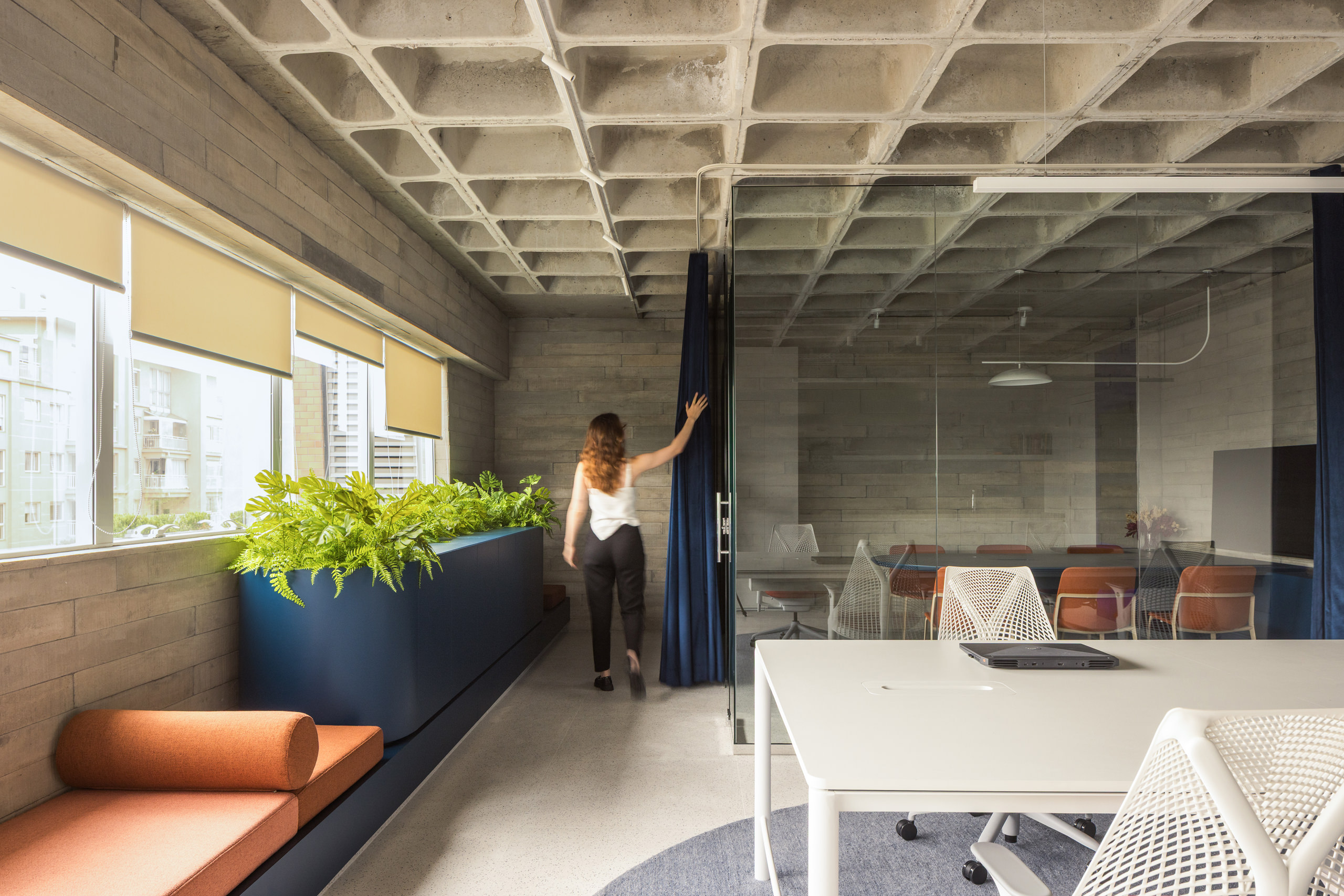
Set within a compact 55-square-metre room in Curitiba, the new space for Nume reimagines the possibilities of a creative workplace. As a production agency dedicated to comedians, its universe is shaped by timing, nuance and duality—qualities that Faust Arquitetos translates into an environment that is both efficient and expressive. From the outset, the challenge was to transpose a consolidated visual identity into a physical setting without losing clarity or impact. Nume’s strong blue palette and synthetic graphic language offered a clear direction. Rather than applying these elements superficially, the design integrates them into the spatial logic, allowing brand and architecture to operate as a unified whole.
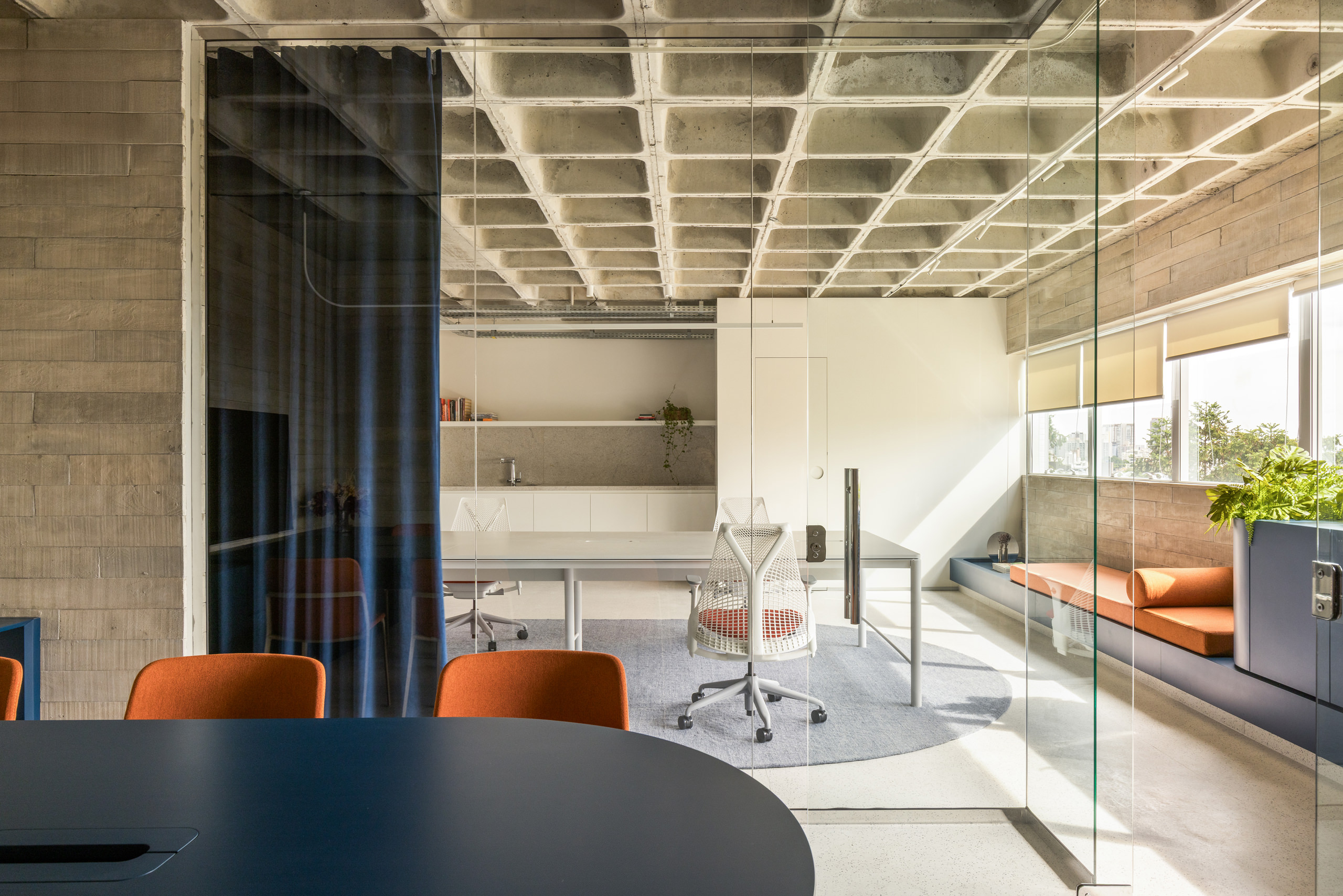
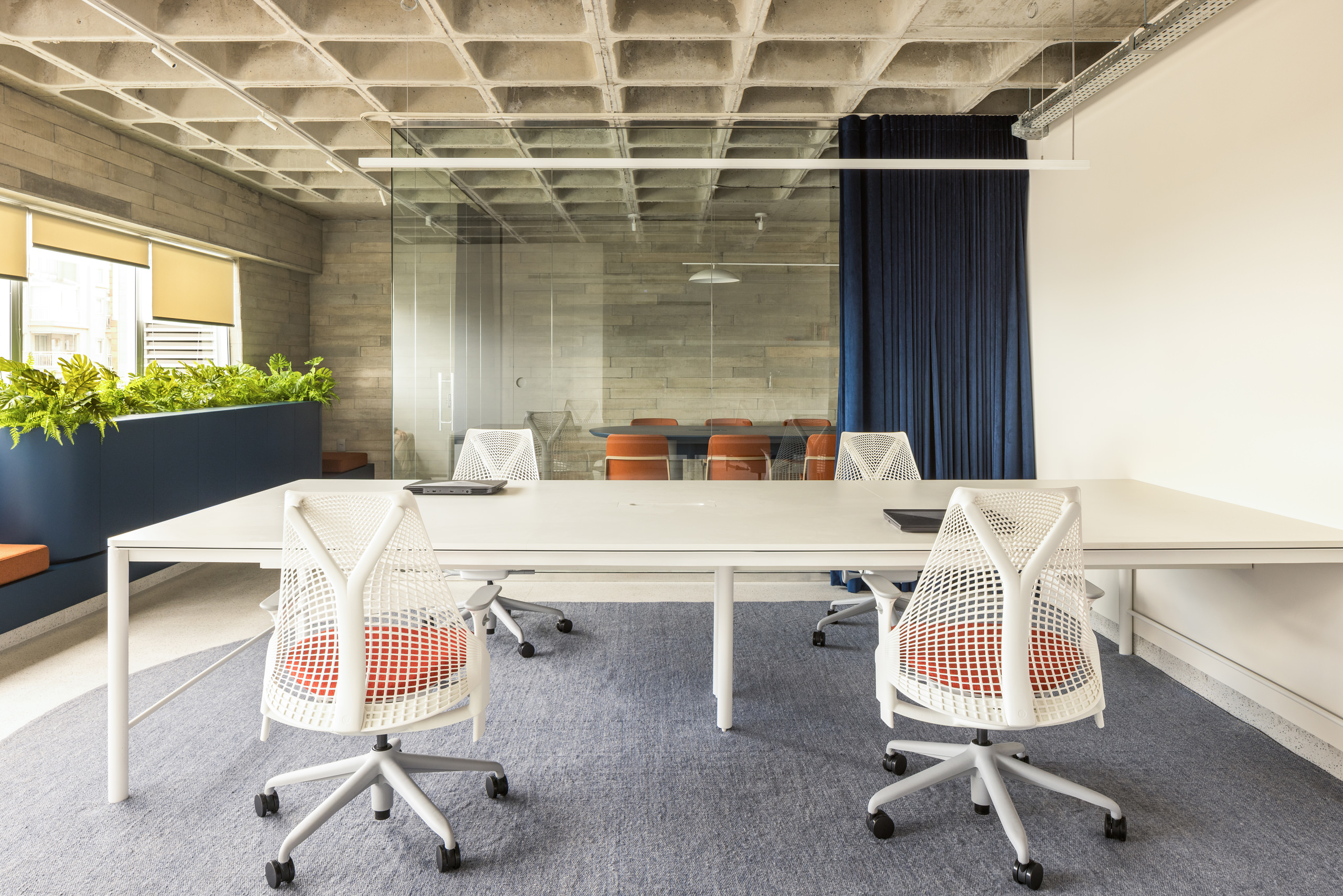
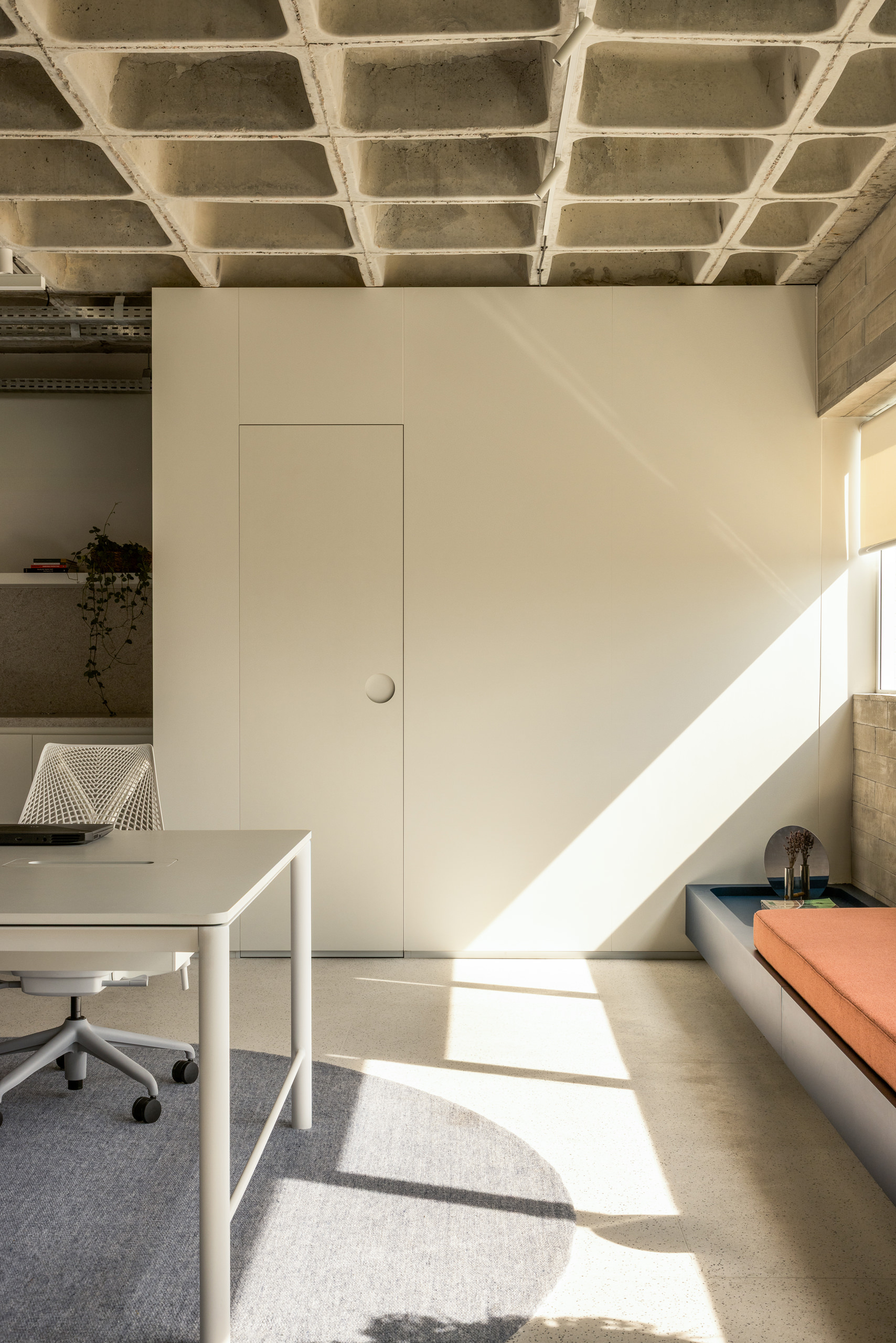
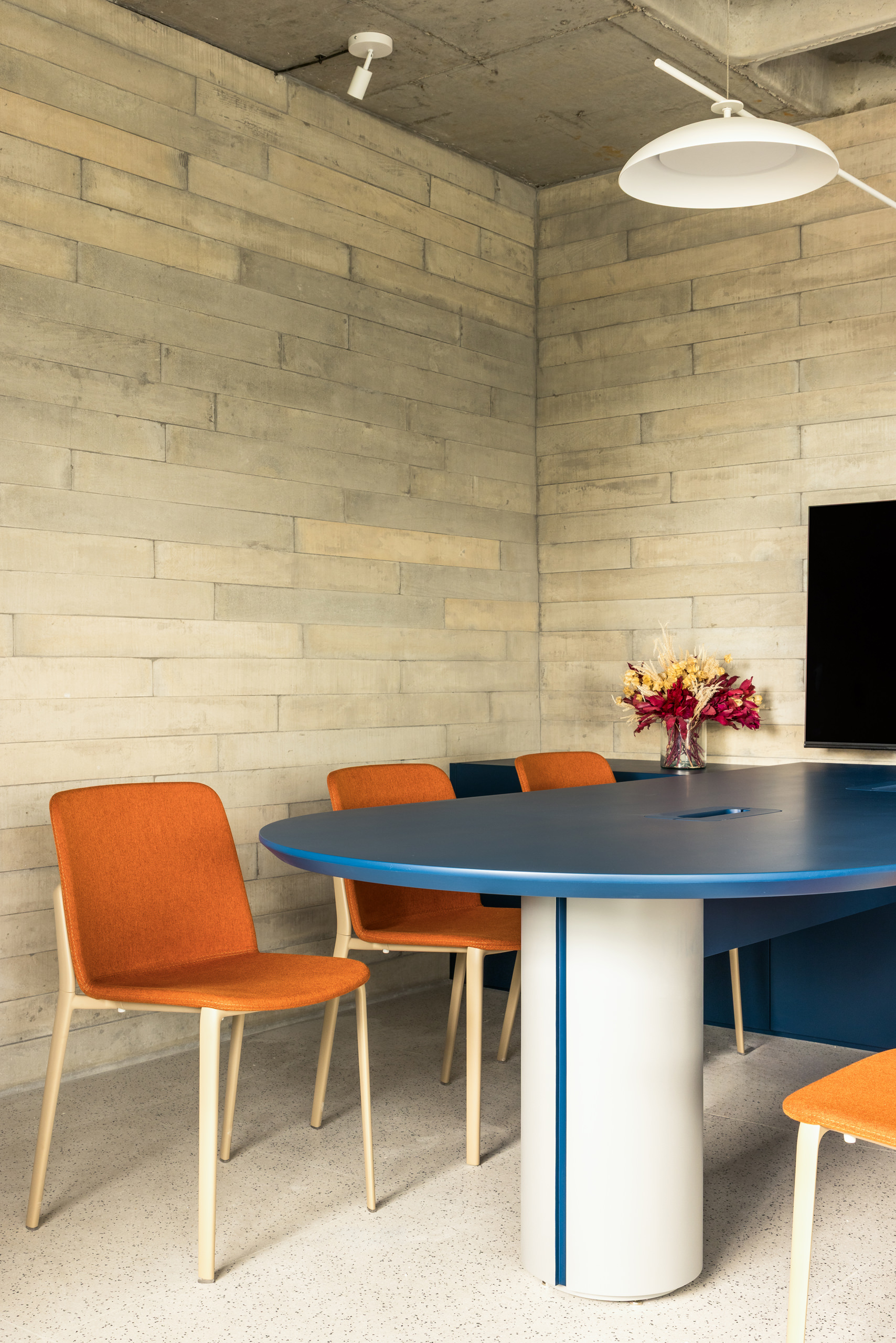
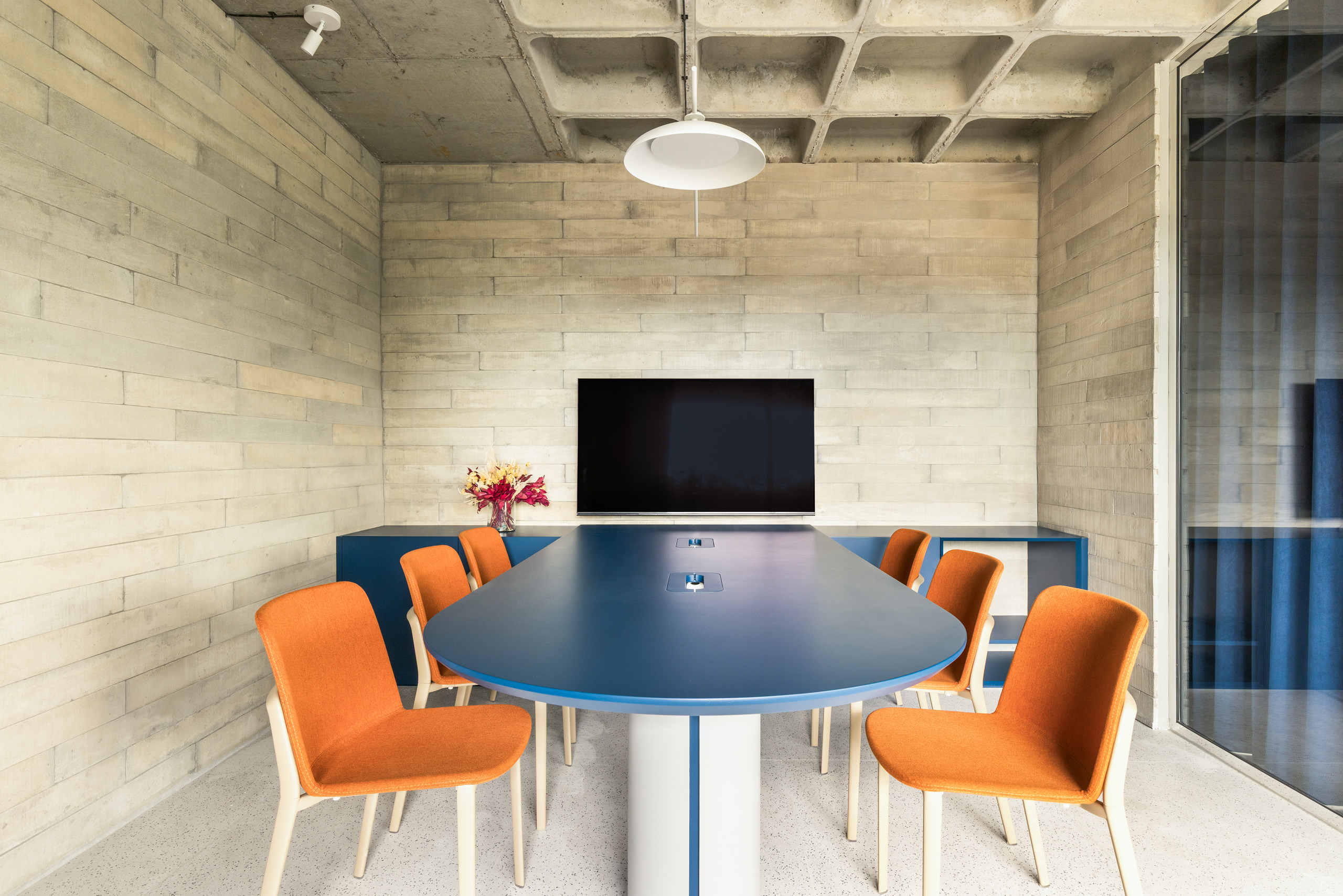
A defining gesture lies in the preservation of the existing ribbed concrete slab, revealed after demolition. Left exposed, it introduces a raw and tactile presence that anchors the space in authenticity and constructive memory. This material honesty is balanced by the precision of custom millwork, where refined joints, soft curves and carefully measured volumes bring a sense of order and refinement.
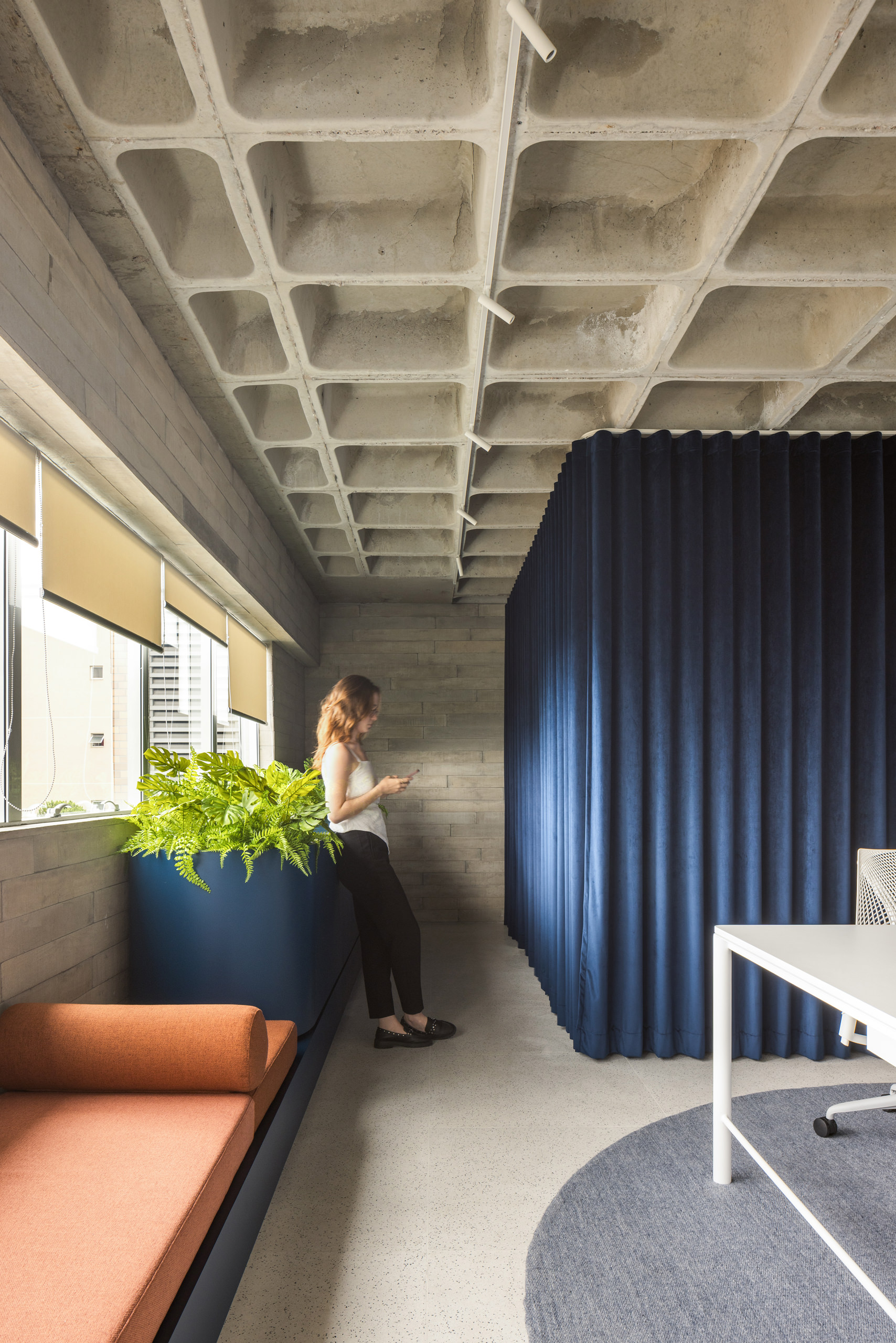
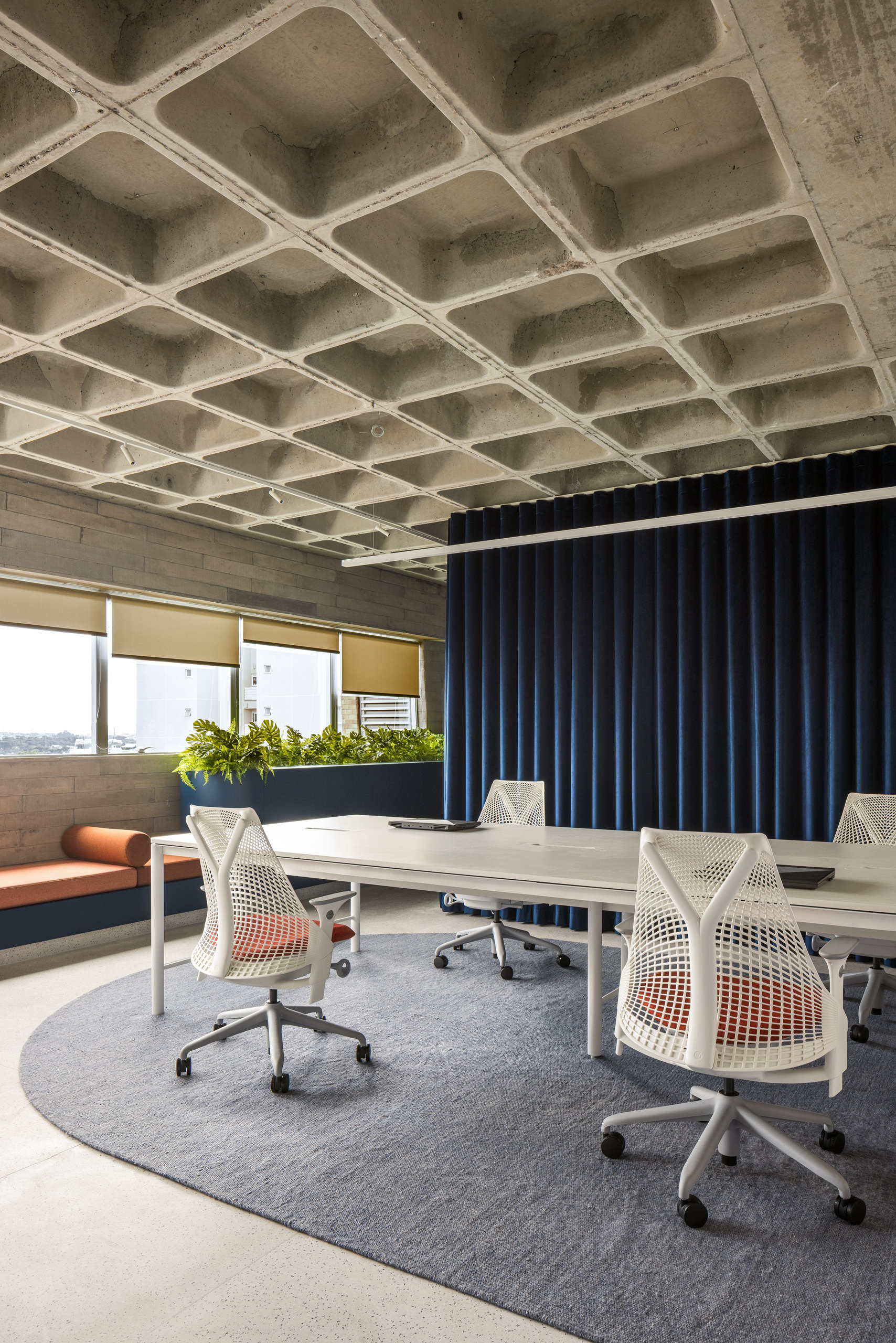
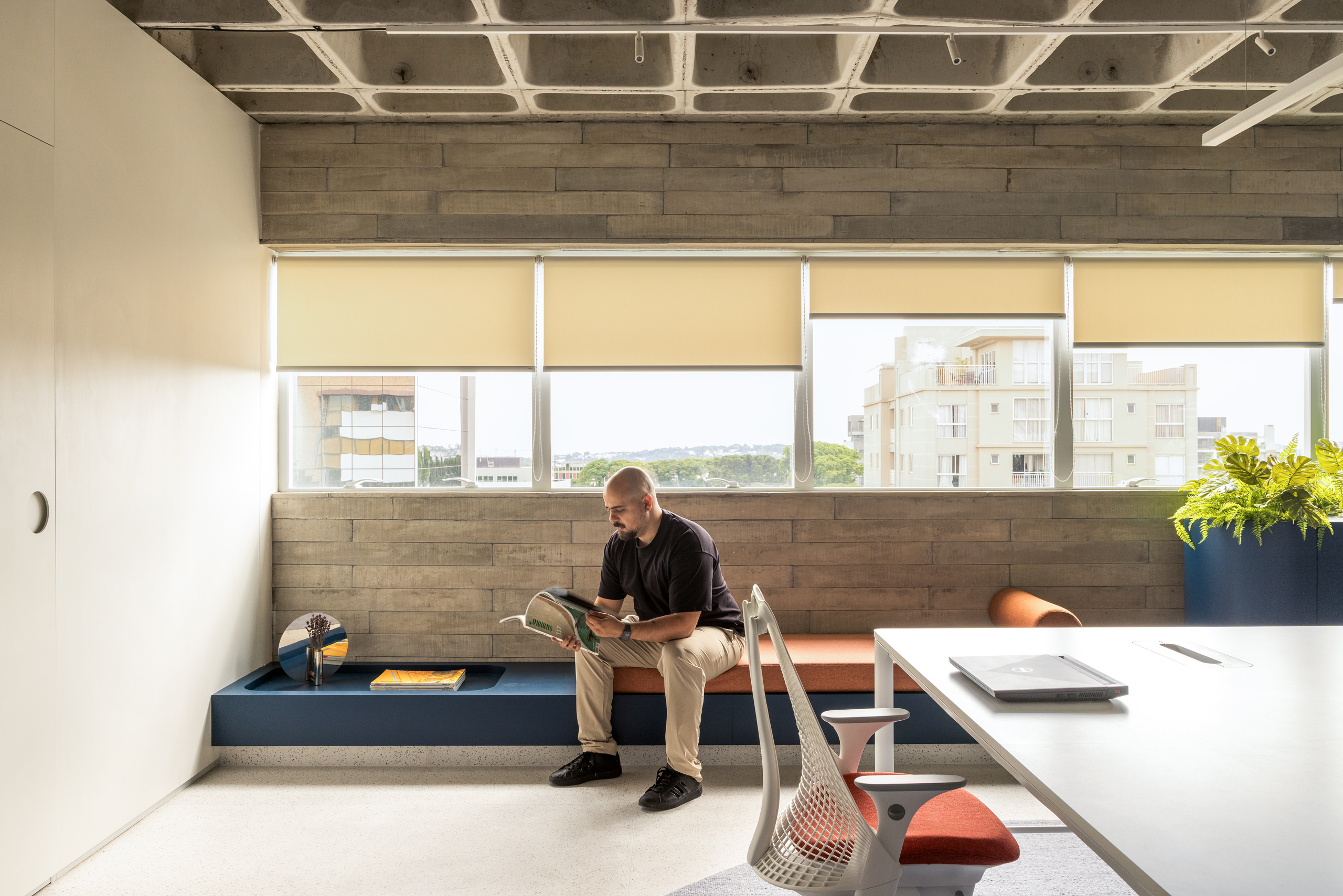
The millwork structures the interior and establishes a clear rhythm across the space. Beneath the ribbon window, a continuous bench-cabinet unfolds as a place for pause—an area for informal meetings and spontaneous exchanges. Subtle blue accents reinforce the brand identity while maintaining a composed and visually light atmosphere.
"Within a compact footprint, the project transforms everyday routines into moments of creativity, crafting a refined yet expressive setting where design supports both focus and spontaneity."
Towards the opposite end, the spatial tone becomes more introspective. Here, the furniture responds to the need for focus and privacy, creating a quieter environment suited to concentrated work. Between these two conditions, an integrated planter introduces greenery into the interior, reinforcing biophilic principles and enhancing well-being in the absence of a balcony.
The former kitchenette, once isolated and directly facing the restroom, has been carefully reinterpreted. The removal of a wall and the repositioning of a door transform it into an integrated social area. This new configuration improves circulation and ensures privacy through a minimal yet effective gesture—the simple rotation of the door leaf.
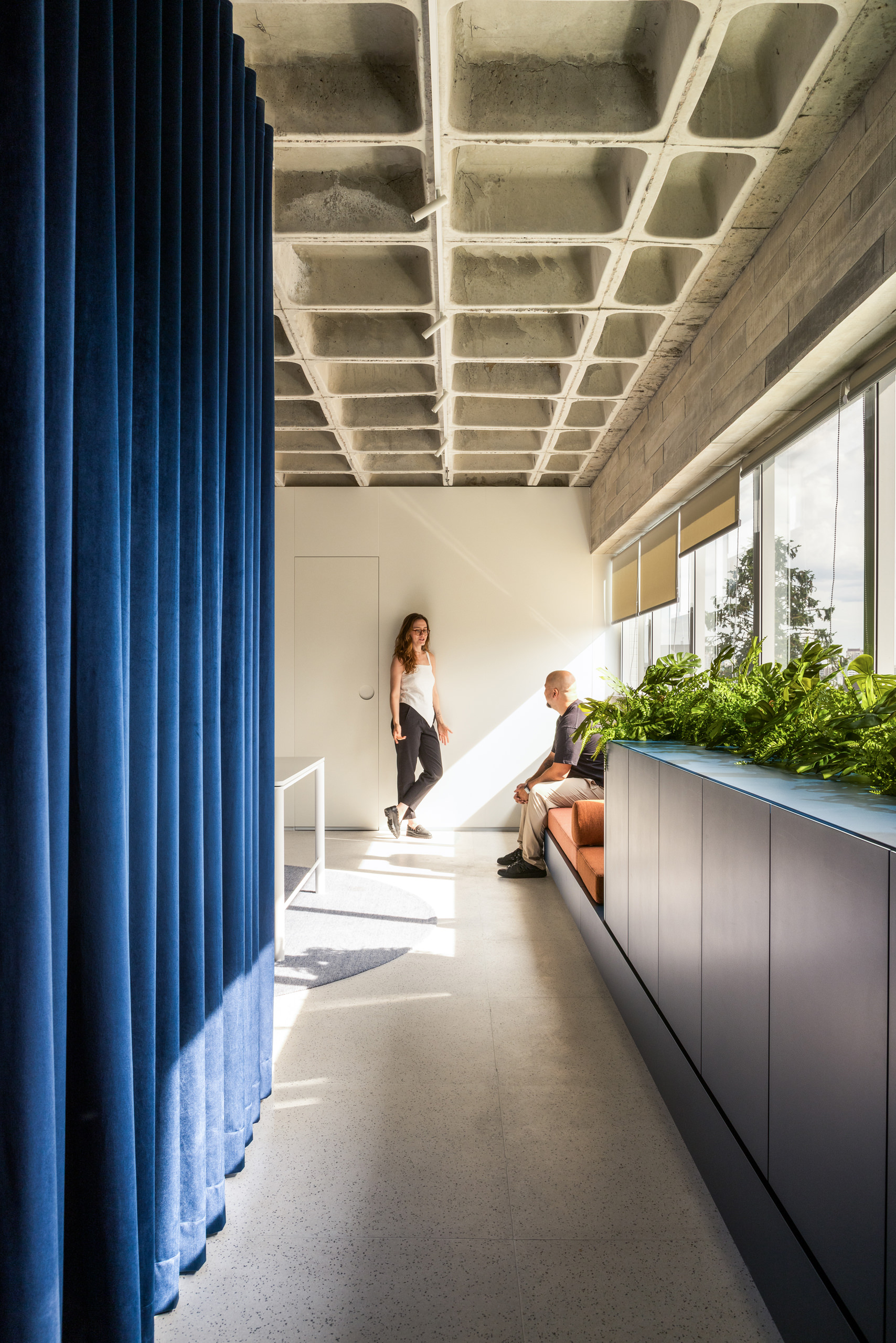
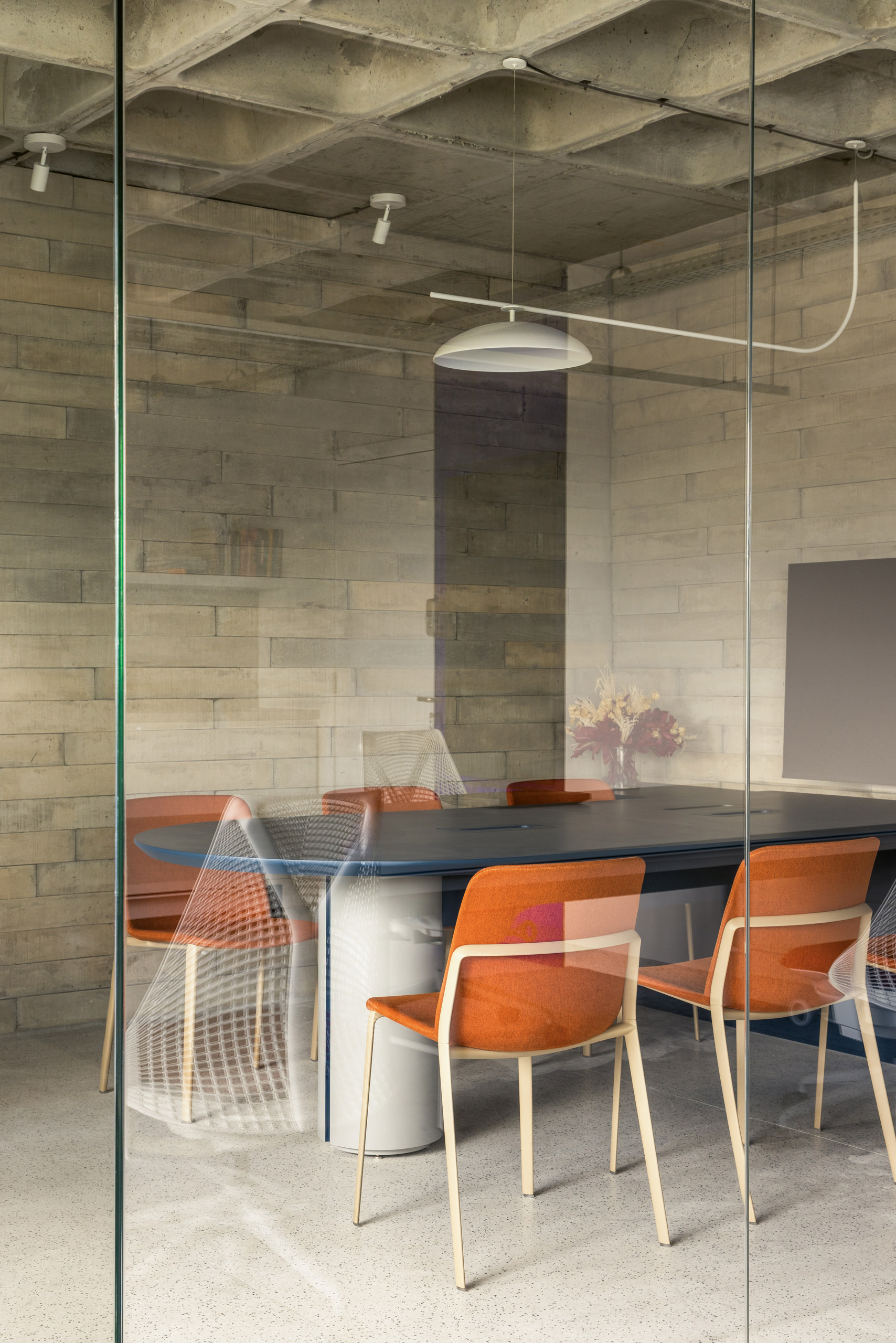
Material restraint defines the overall atmosphere. Appliances and accessories are discreetly built in, preserving visual continuity and calm. Within this quiet palette, blue emerges as a unifying element, most notably in the velvet curtain that envelops the meeting room—an intervention that introduces both softness and symbolic depth.
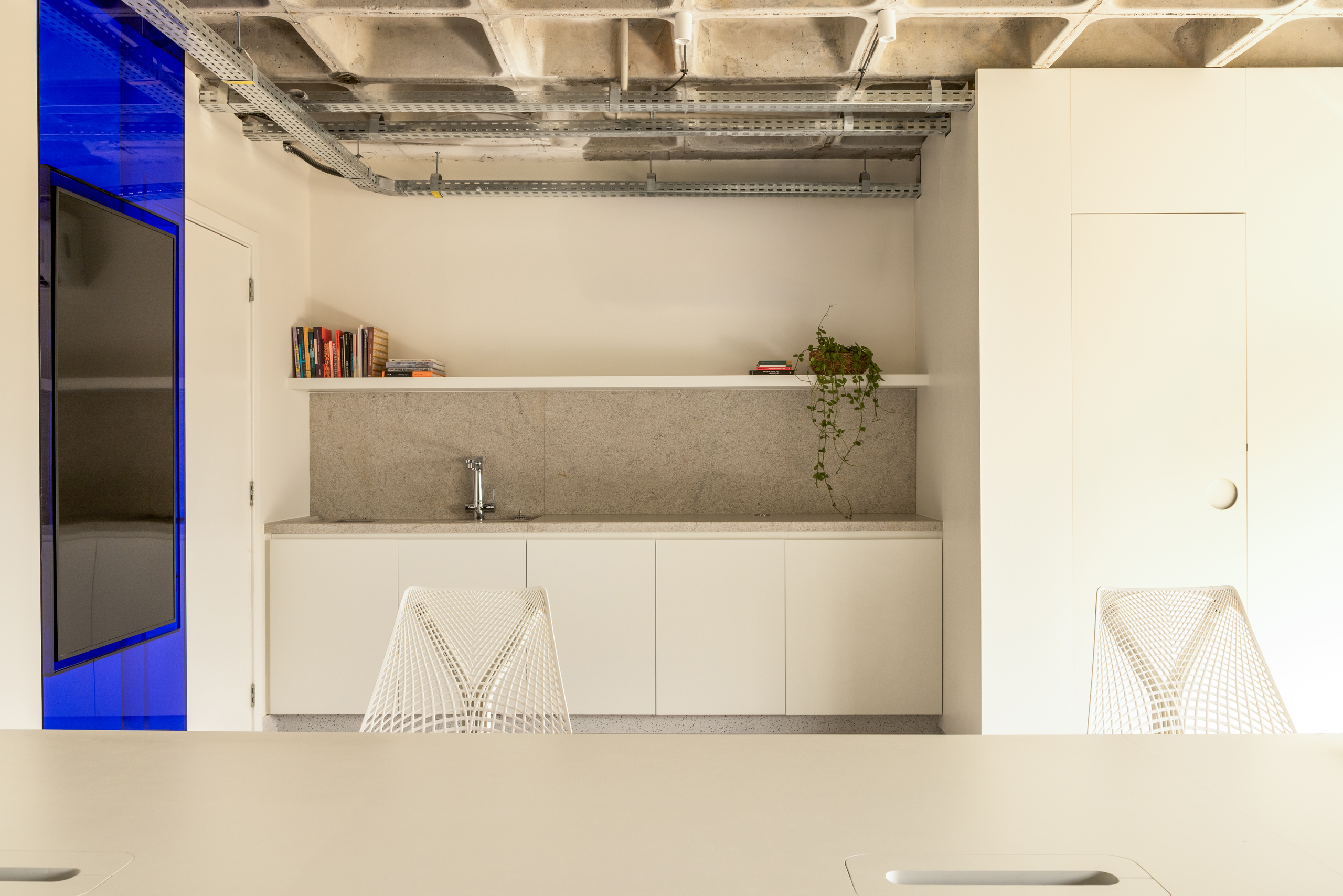
Positioned externally rather than within the room, the curtain subverts convention and reframes the meeting space as a backstage rather than a stage. Acting as a membrane, it enhances acoustic comfort and ensures privacy while embodying the coexistence of technique and imagination. Complemented by the recurring “U” motif embedded in furniture and finishes, and a blue acrylic totem displaying Nume’s roster of artists, the project ultimately becomes a spatial narrative—where identity, function and creativity converge with clarity and intention.