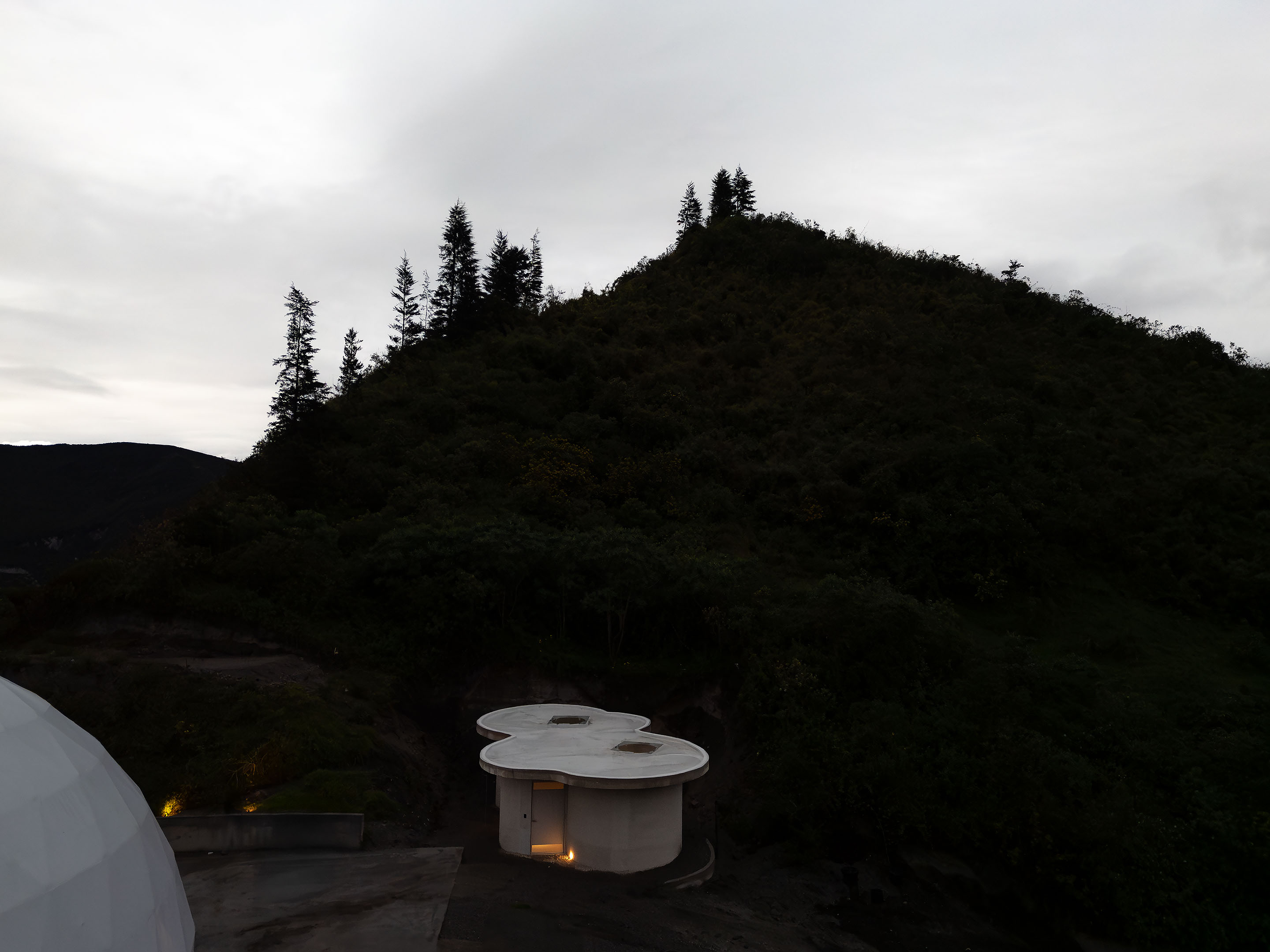
Geology of Light – BP by Micaela Portilla Estudio
"A quiet geometry of concrete and mist, where the mountain gathers light and turns utility into ritual"
Architecture is often asked to stand out, but BP finds its strength in withdrawing. Set on the edge of the Pululahua crater, this compact restroom facility by Micaela Portilla Estudio refuses the ornamental habits of service architecture and instead becomes a primitive, almost geological gesture. It is a project of modest function but considerable atmosphere, proving that even the smallest programs can carry architectural gravity.
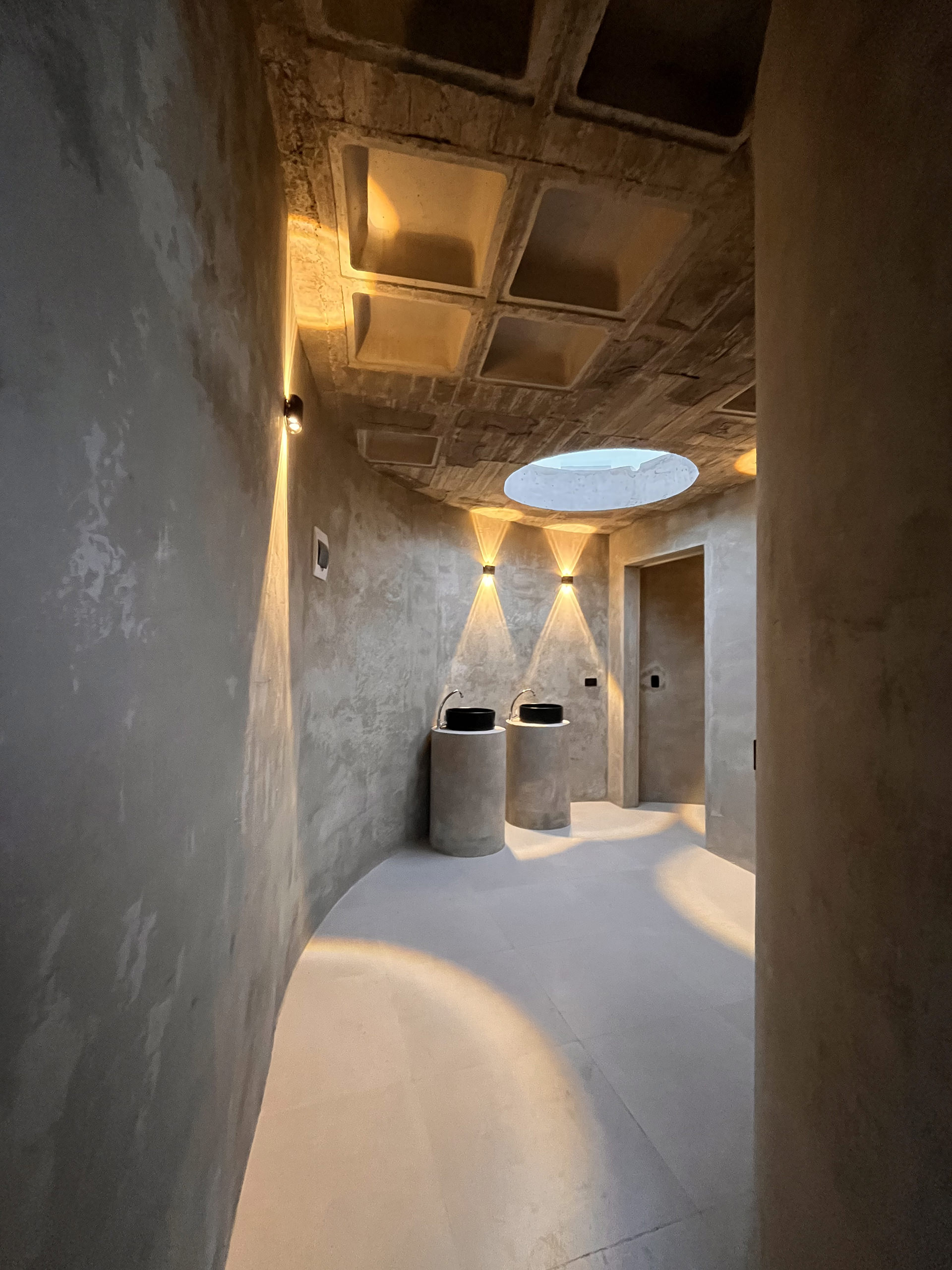
Located in Calacalí, Quito Canton, at an altitude of 3,356 meters above sea level, BP occupies a landscape defined by rugged Andean topography, dense cloud cover, afternoon cold, and sunsets that descend dramatically into the crater. Conceived for Diego Saa, a prominent Ecuadorian musician, the project forms part of a broader development planned for the future and currently supports events at the Dome, giving it a mixed-use role within a larger territorial vision. Yet the building does not announce itself as an amenity. The design language is elemental. Curved walls conceal the restroom program, soften circulation, and prevent direct views into private areas without relying on complex partitions. The plan appears organized through rounded volumes and overhead openings, with no harsh corners or decorative gestures interrupting the continuity of the form. From above, the roof suggests overlapping circles, almost like a figure-eight, a small observatory, or a piece of land art embedded in the terrain. This autonomy gives the building a sculptural identity, but its concrete tone keeps it visually tethered to the site. Materially, BP is radically restrained. Exposed concrete, cementitious surfaces, stone-like aggregate tones, white floors, black plumbing fixtures, and minimal metal detailing define the palette. There is no wood, no applied color, and no visible luxury finish. The submitted notes describe the project as a monochromatic work that aims to “blend into the mountain with its concrete tone,” and this intention is central to its power. Against the surrounding green of the Andean landscape, the grey surfaces become a quiet counterpoint, closer to mist, stone, and cloud than to conventional construction.
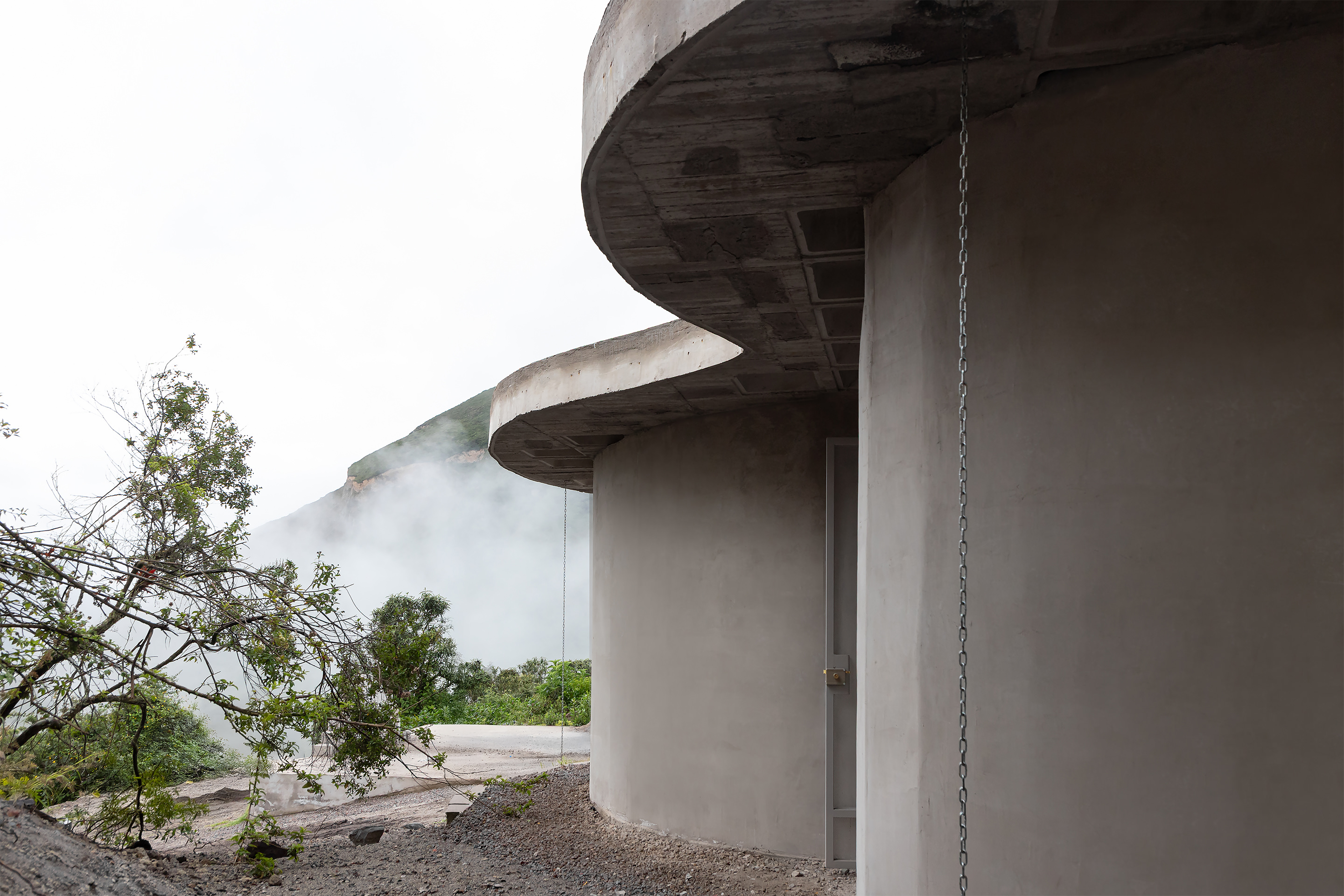
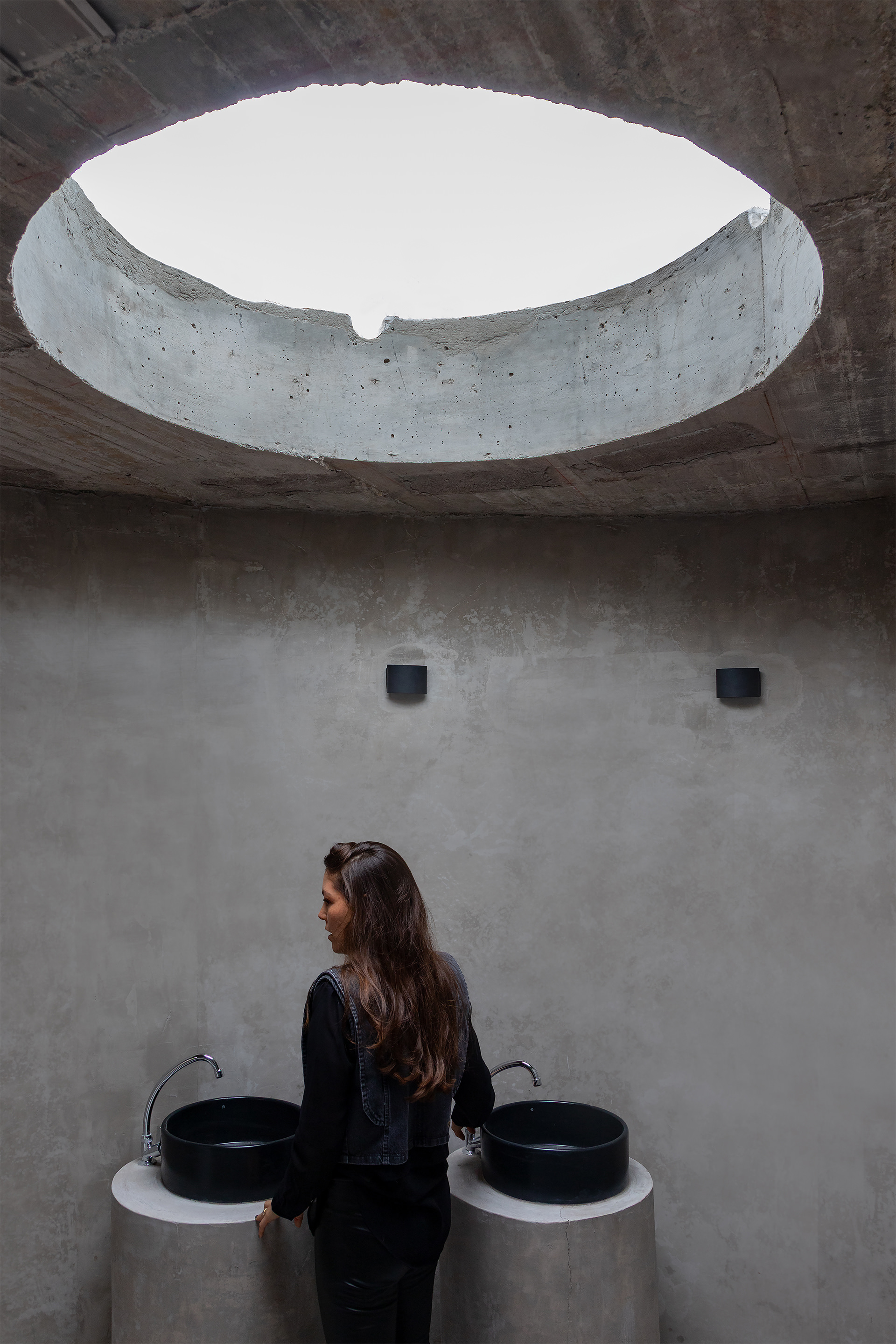
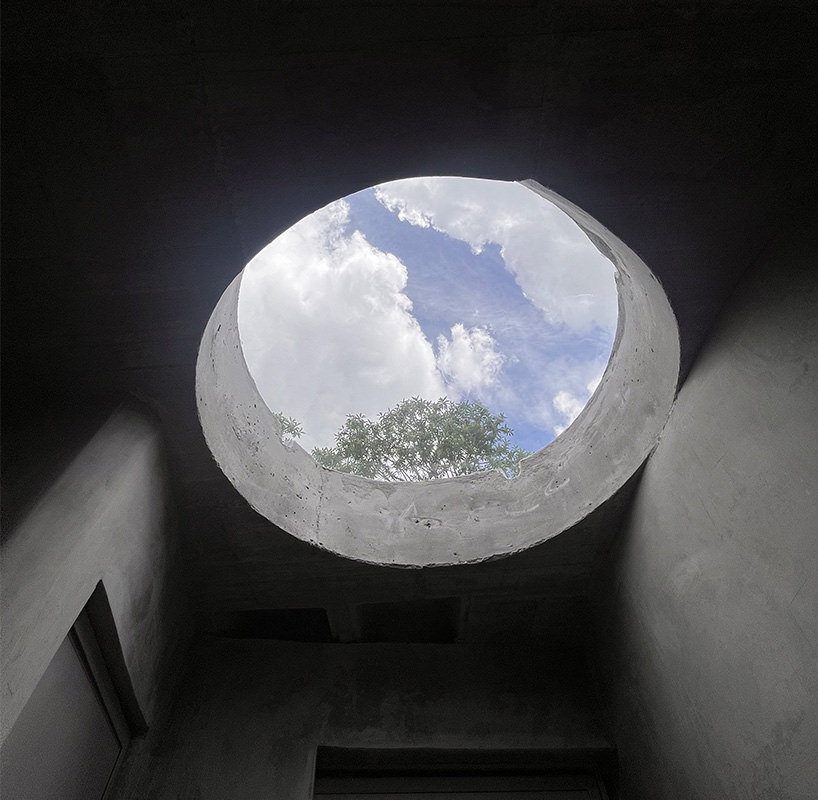
The most decisive architectural gesture is not the wall but the void. The bathrooms are lit exclusively from above, through circular roof openings that transform daylight into the project’s primary material. These oculi do more than illuminate; they orient the body, concentrate attention, and establish a vertical relationship with the sky. In a setting where fog, rain, cloud, and sudden brightness continually alter perception, the interior becomes a weather instrument, registering the atmosphere rather than resisting it. This choice gives BP a spiritual intensity unusual for a restroom facility. The circular apertures recall ancient precedents: Roman oculi, monastic courtyards, sacred chambers, and primitive observatories. Yet the project avoids nostalgia. Its force comes from directness: concrete, shadow, air, water, and light. The experience is inward and upward rather than outward, suggesting that the most profound view is not always the panorama but the changing sky directly above one’s head.
In this sense, BP belongs to a broader contemporary movement that questions architectural excess. Across many regions, especially in landscapes of ecological and cultural sensitivity, architects are increasingly seeking forms that absorb context rather than dominate it. BP contributes to this conversation through subtraction. It demonstrates that durability, privacy, atmosphere, and identity can be achieved without visual noise, and that infrastructure can be designed with the same care as a cultural pavilion or retreat. The project’s small scale is also part of its intelligence. At only 33 m², it could easily have been treated as a background necessity, a technical appendage to the main development. Instead, MICAELA PORTILLA ESTUDIO treats the restroom as a spatial threshold: a pause between event and landscape, body and climate, interior protection and exterior vastness. Its compactness intensifies the experience, allowing every curve, shadow, and opening to matter.
"Beneath the shifting Andean sky, curved walls hold silence, weather, and the ancient memory of the crater"
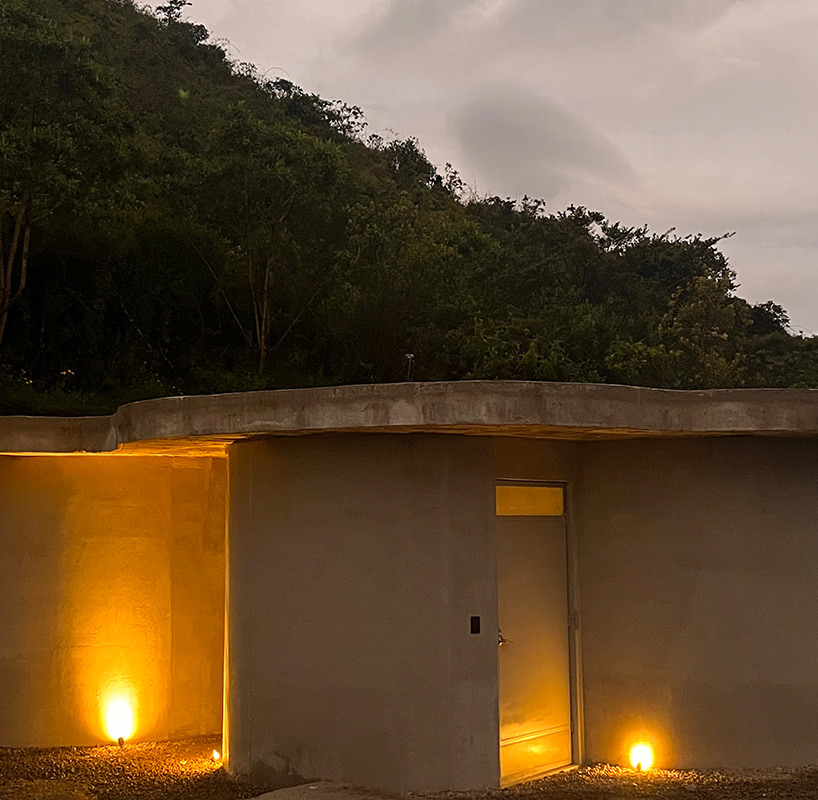
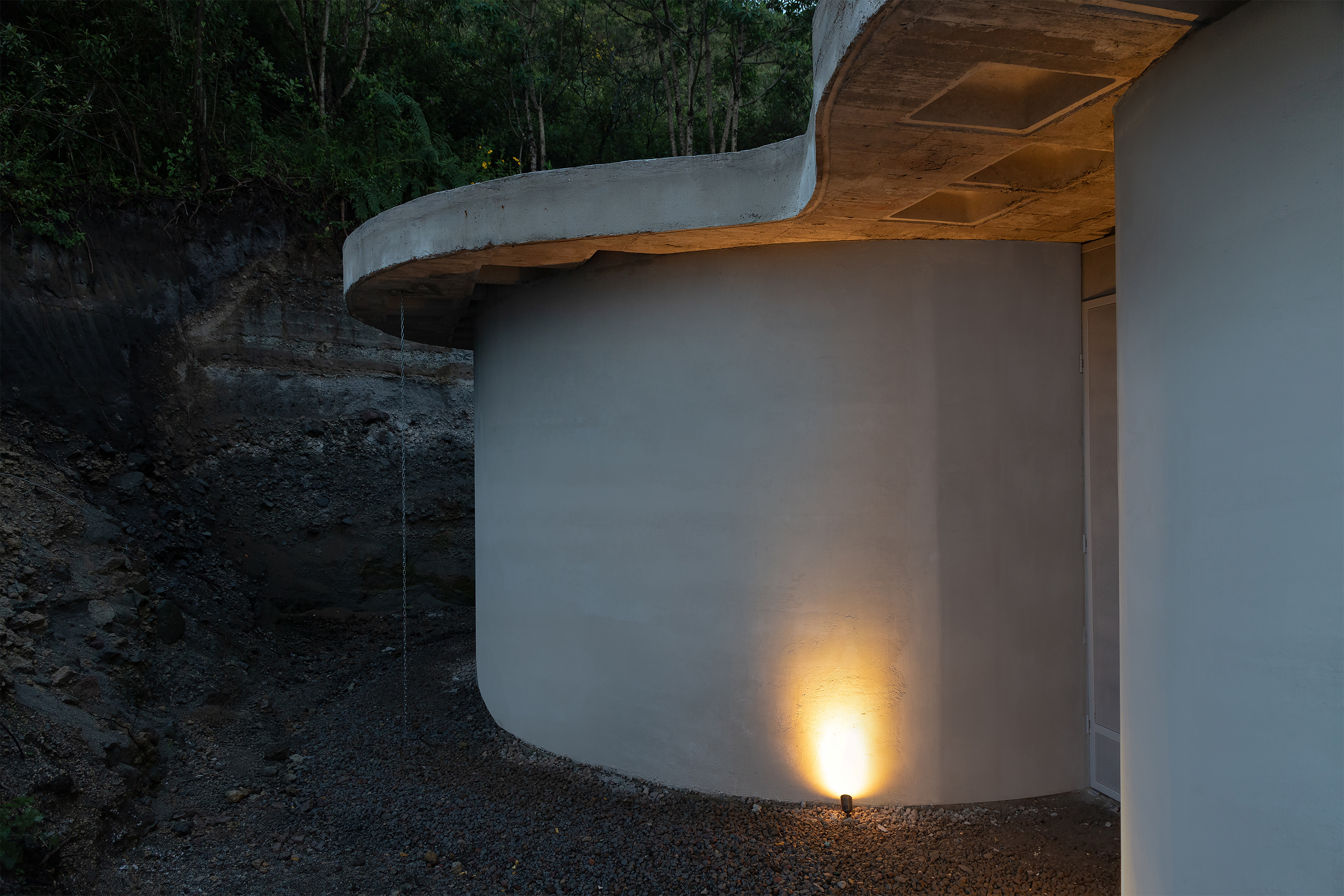
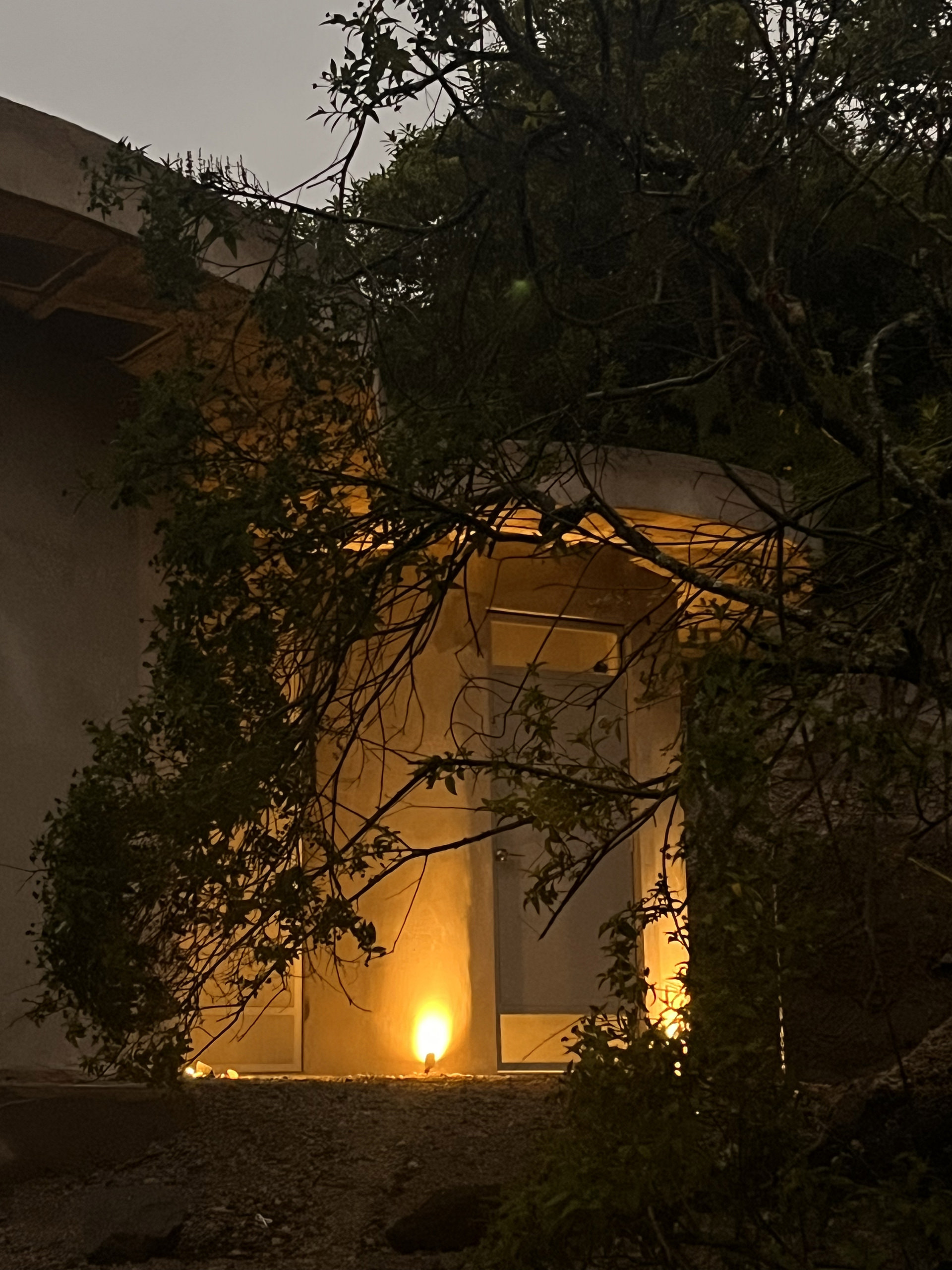
The interior has a cave-like quality, not in the sense of darkness, but of protection. The curved walls remove the usual cues of rectangular space, making the rooms feel softer and more ambiguous in scale. Movement unfolds through gentle turns, creating privacy through choreography rather than enclosure. Visitors do not immediately perceive the full layout; instead, the program is gradually revealed, lending the sequence a quiet ritual quality. Ventilation openings are strategically placed, while the doors include perforations calibrated to different levels of privacy. These details show that the project’s simplicity is not casual minimalism but careful reduction. Every opening is asked to perform, whether bringing in air, filtering light, concealing the body, or preserving the feeling of enclosure. The building’s environmental response is equally pragmatic: limited exposure, thick concrete surfaces, protected thresholds, and top lighting all suggest an architecture prepared to weather alongside the mountain. At night, BP takes on another identity. Rather than flooding the structure with light, the illumination grazes the walls, traces the curvature, and defines the entrances with restraint. The building glows rather than shines, preserving the darkness of the surrounding crater environment. This is an important distinction. The project does not use light as spectacle, but as a way of revealing mass, texture, and presence.
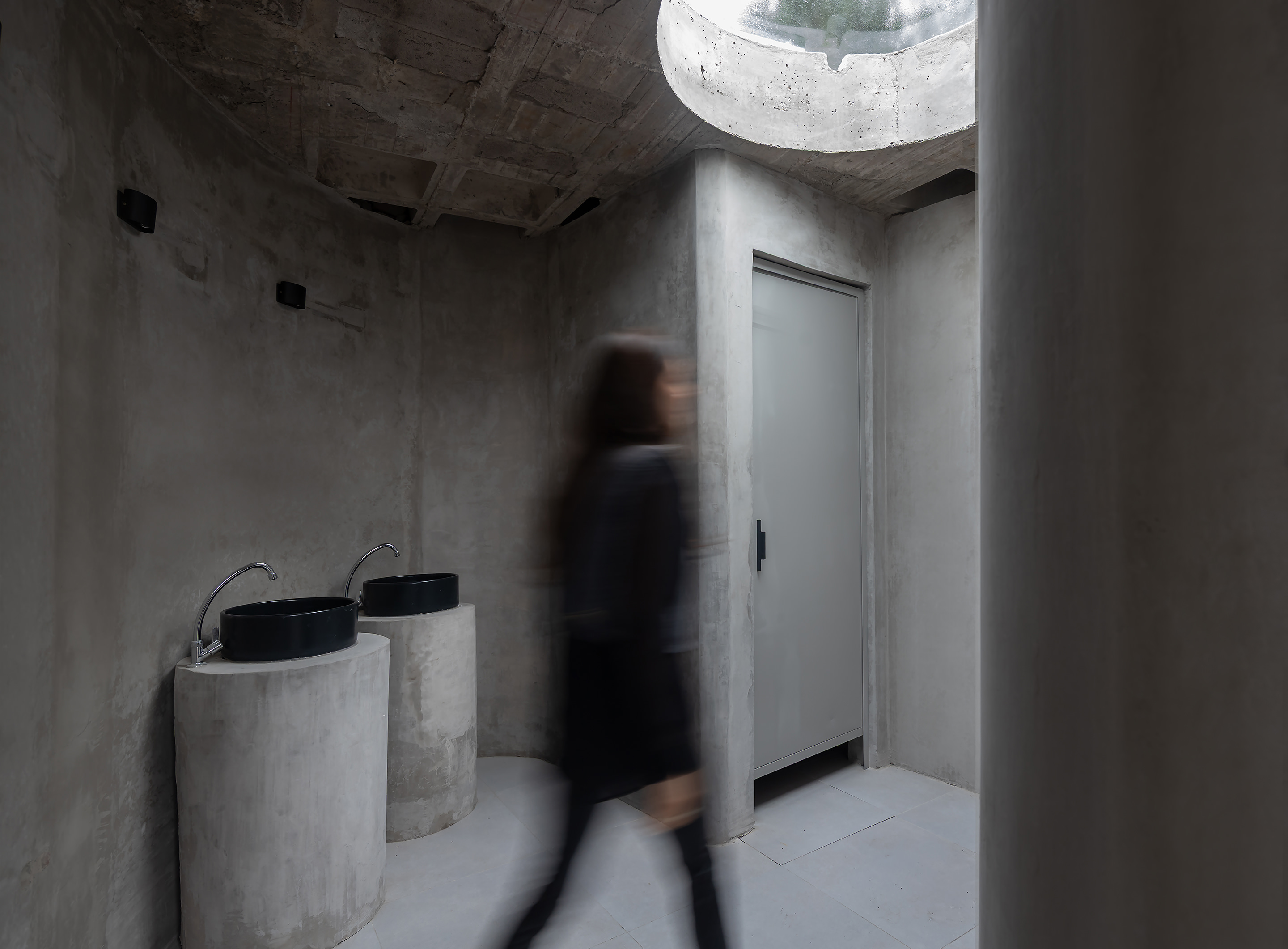
The concrete itself embraces imperfection. Formwork traces, tonal variations, and surface irregularities give the building a tactile, almost handcrafted character. These marks are not concealed behind finishes; they become part of the architecture’s memory. In a landscape shaped by geological time, such imperfections feel appropriate. They allow the building to age convincingly, gathering weather, moisture, and shadow as part of its evolving expression. BP was designed by Micaela Portilla Estudio, constructed by Argu Projects, and photographed by JAG Studio and Micaela Portilla Estudio. Together, the collaborators have produced a work that feels larger than its program, not because it is monumental in size, but because it understands where it stands. On the edge of a crater, near the equatorial line, in a climate of cloud and descending light, this small concrete structure becomes a meditation on service, silence, and place. What makes BP memorable is not luxury, technology, or formal spectacle. It is memorable because it treats light, weather, topography, concrete, and privacy as architectural materials. Visitors may arrive expecting a restroom, but the project offers something more enduring: a moment of stillness within the mountain, where utility becomes atmosphere and architecture becomes almost indistinguishable from the land that holds it.