A Territory of Discovery – Mini Universo by estudio254
"Architecture becomes most meaningful when it transforms everyday experiences into opportunities for growth, allowing children to associate healthcare with curiosity, confidence and lasting emotional well-being."
More than a pediatric clinic, Mini Universo is a landscape of imagination where every architectural gesture is designed to inspire confidence and curiosity. Here, healthcare extends beyond treatment, becoming an experience that encourages exploration, emotional security and meaningful connections from the very first encounter.
The conceptual foundation of the project draws inspiration from Joyful: The Surprising Power of Ordinary Things to Create Extraordinary Happiness by Ingrid Fetell Lee, while integrating principles of neuroscience applied to architecture. This approach recognizes that spaces have the power to influence emotions, shape behaviors and even affect physiological responses. Architecture therefore becomes more than a physical setting; it evolves into an active participant in the process of care, supporting emotional regulation and encouraging healthy childhood development through thoughtful spatial experiences.
Conceived as a miniature universe waiting to be explored, the clinic unfolds as an intuitive journey tailored to the scale and perspective of children. Every transition respects the pace at which young visitors engage with their surroundings, allowing curiosity to guide movement rather than imposing rigid circulation. Instead of overwhelming the senses, the design gently invites children to interact with the environment, transforming routine visits into moments of exploration and confidence-building.
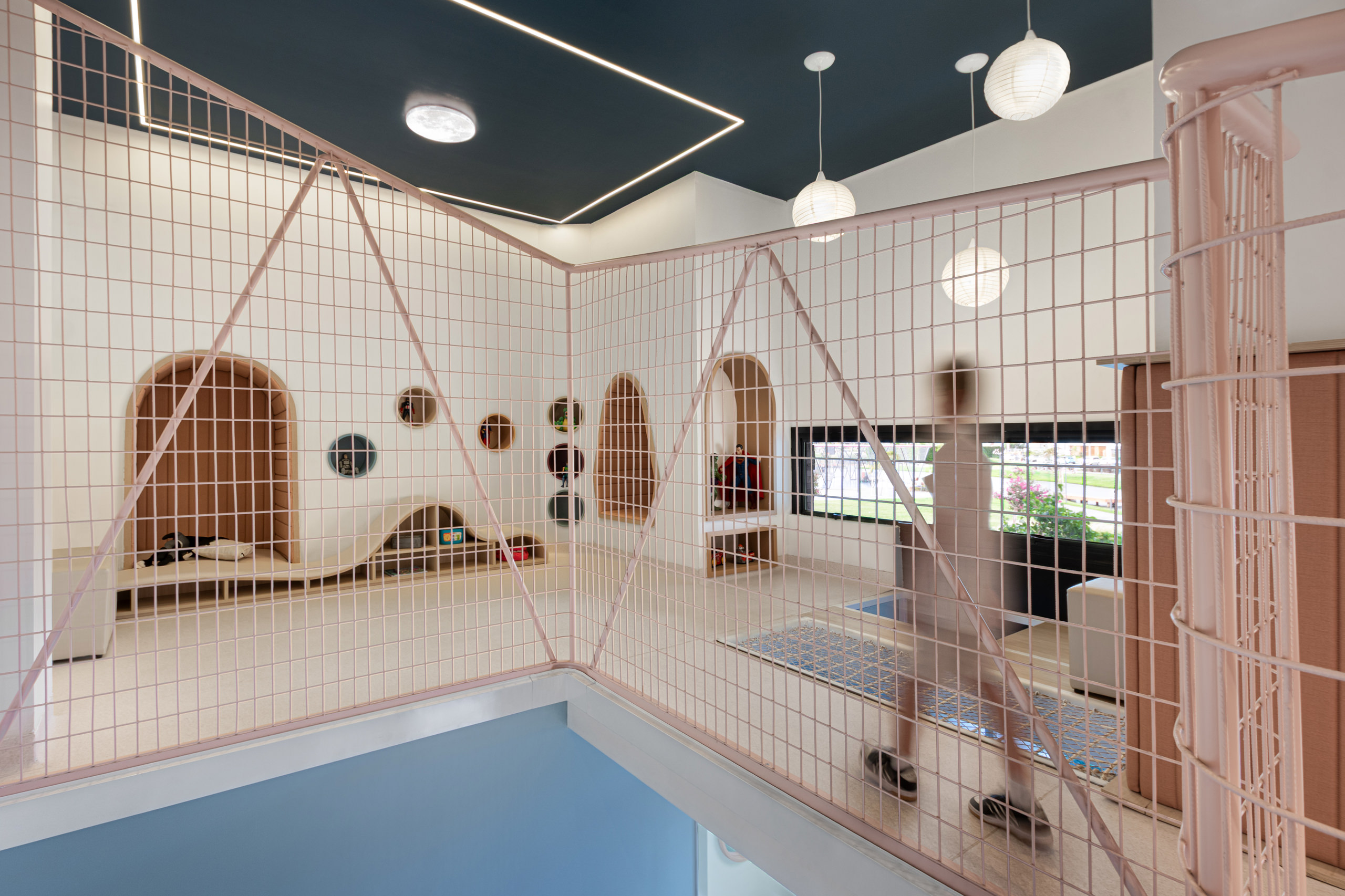
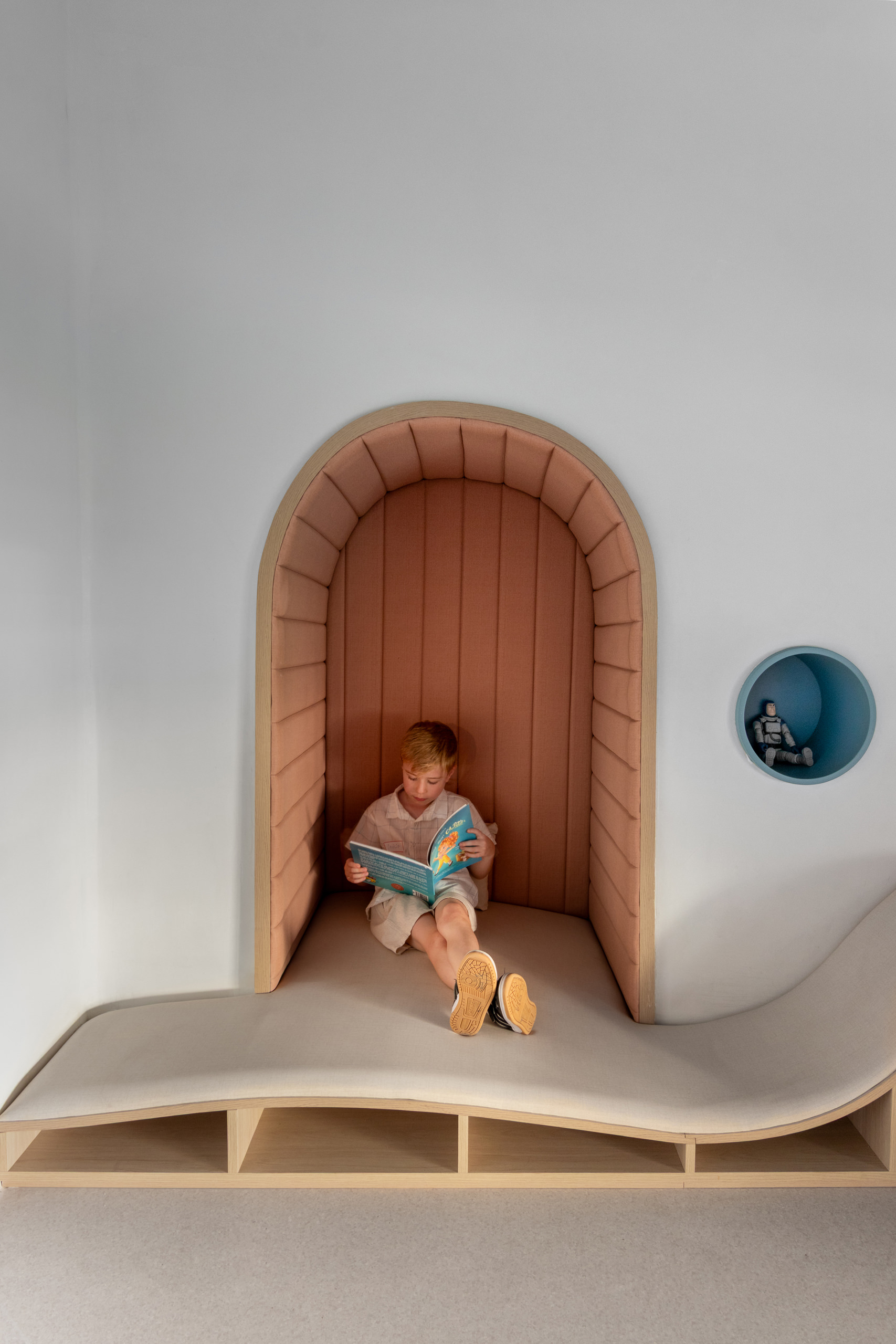
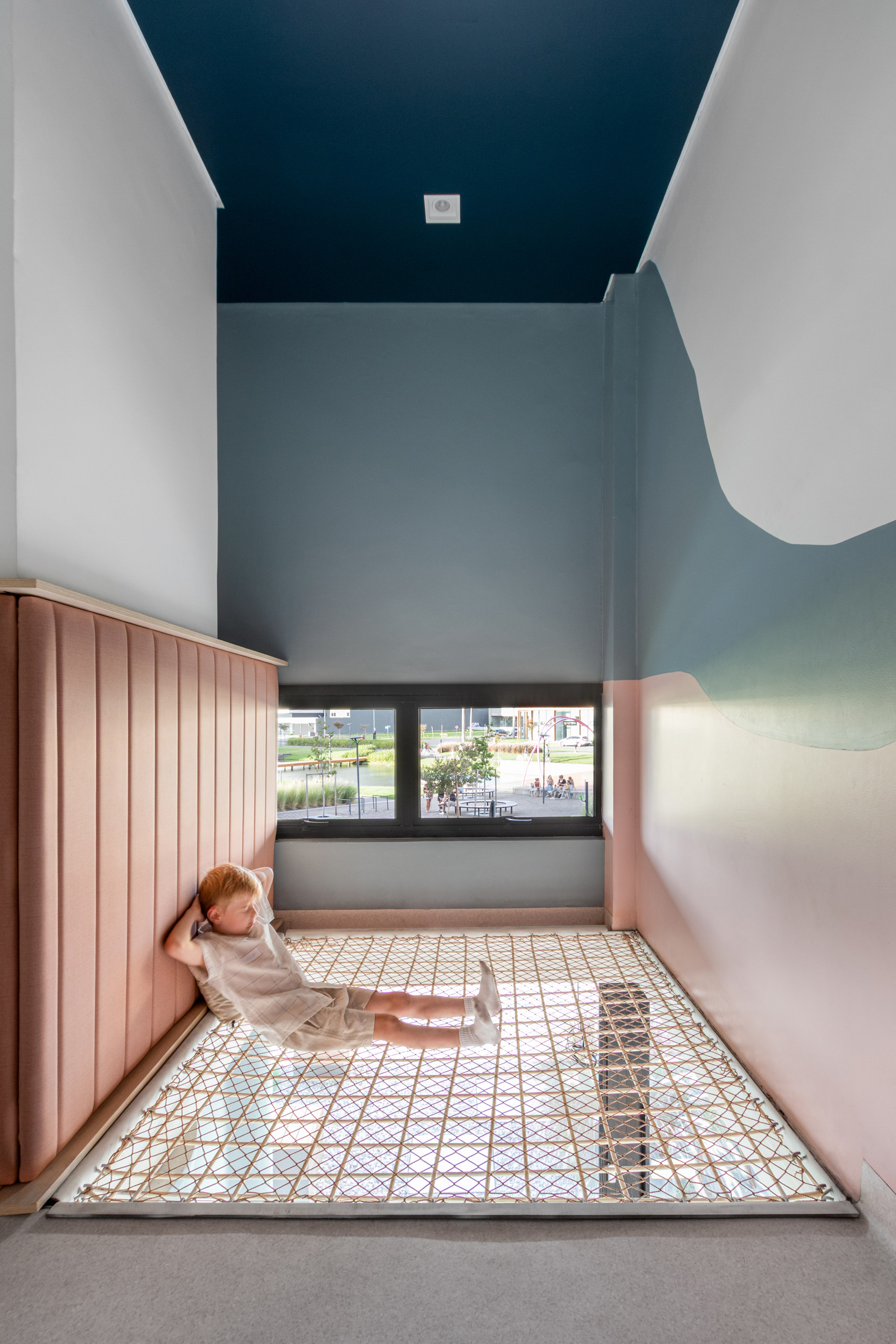
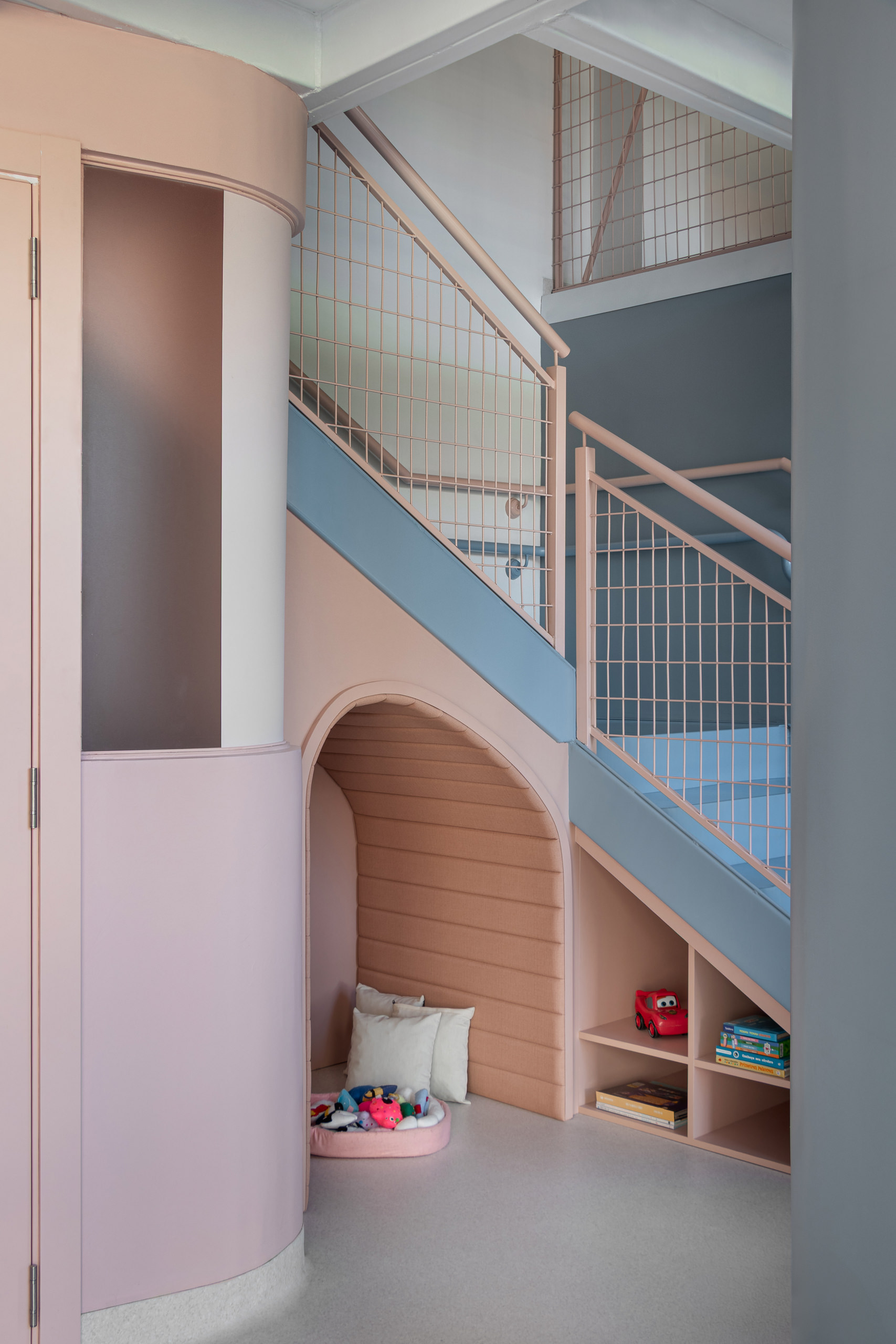
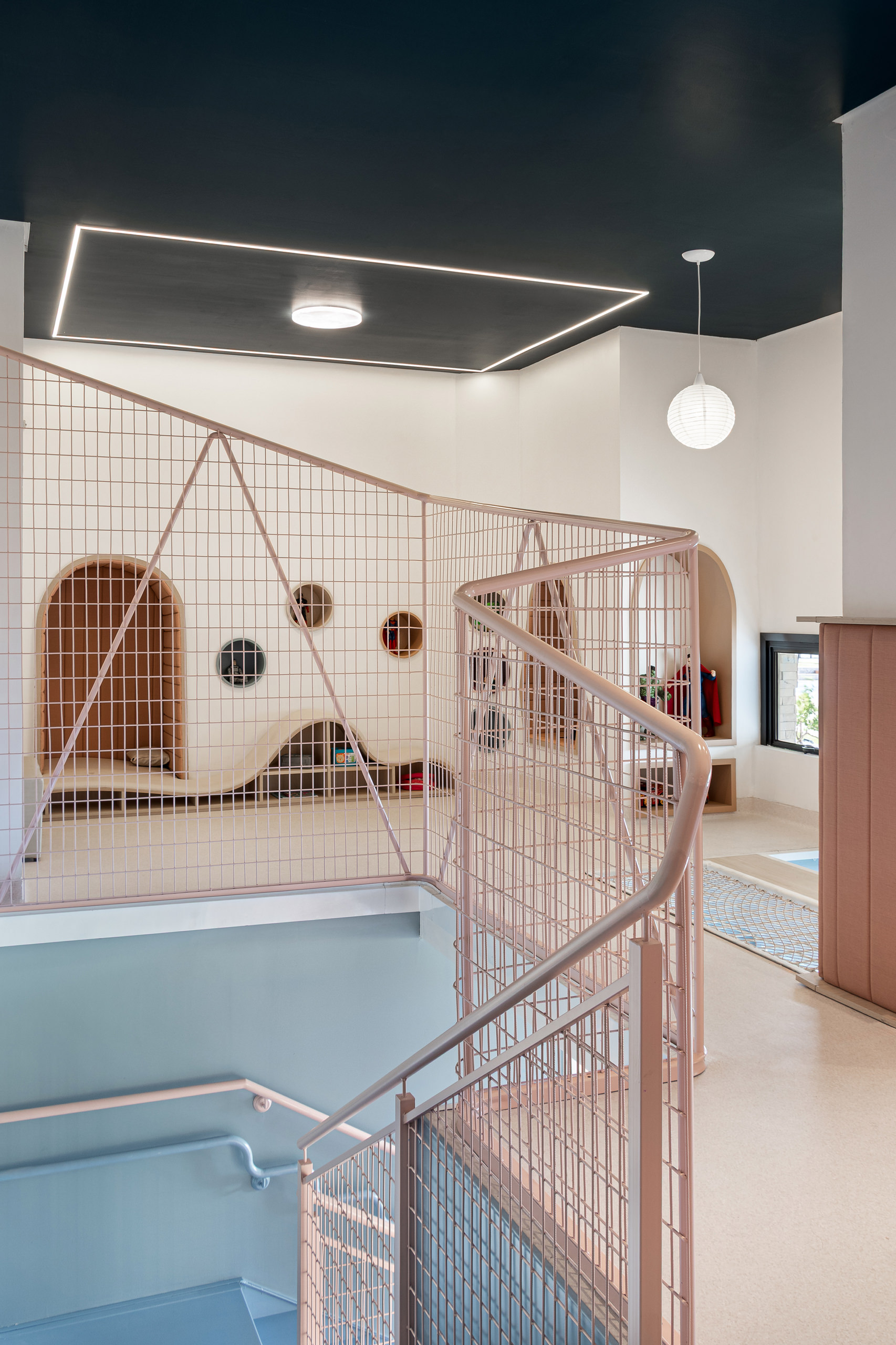
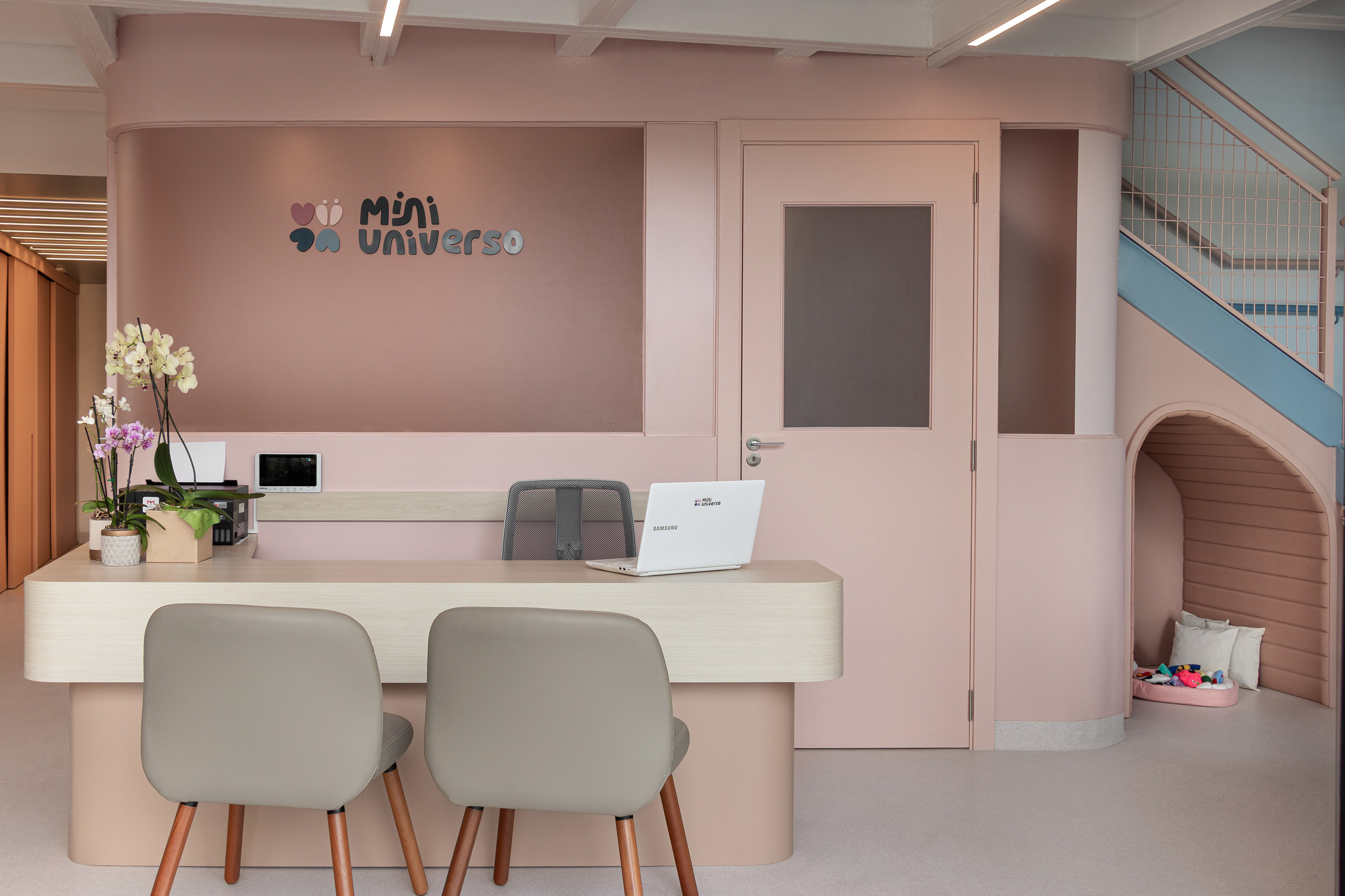
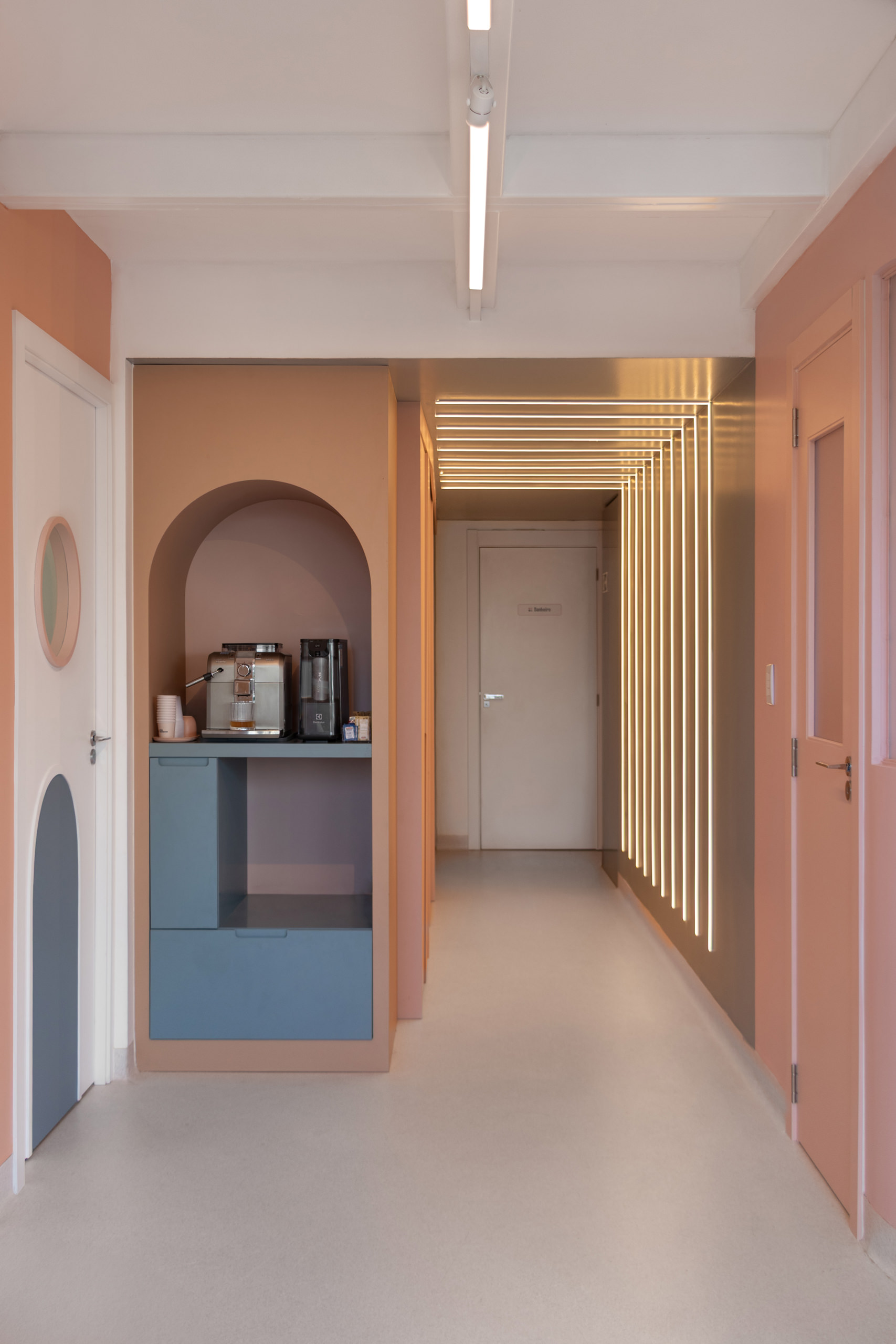
This philosophy becomes tangible through carefully designed architectural elements that encourage participation and independence. Small doors empower children to navigate spaces on their own terms, while climbing structures introduce movement as a natural way of understanding the environment. Elevated nets create opportunities for playful adventure, and intimate reading alcoves provide moments of calm and self-regulation. Each feature performs a practical function while simultaneously contributing to children's cognitive, emotional and physical development.
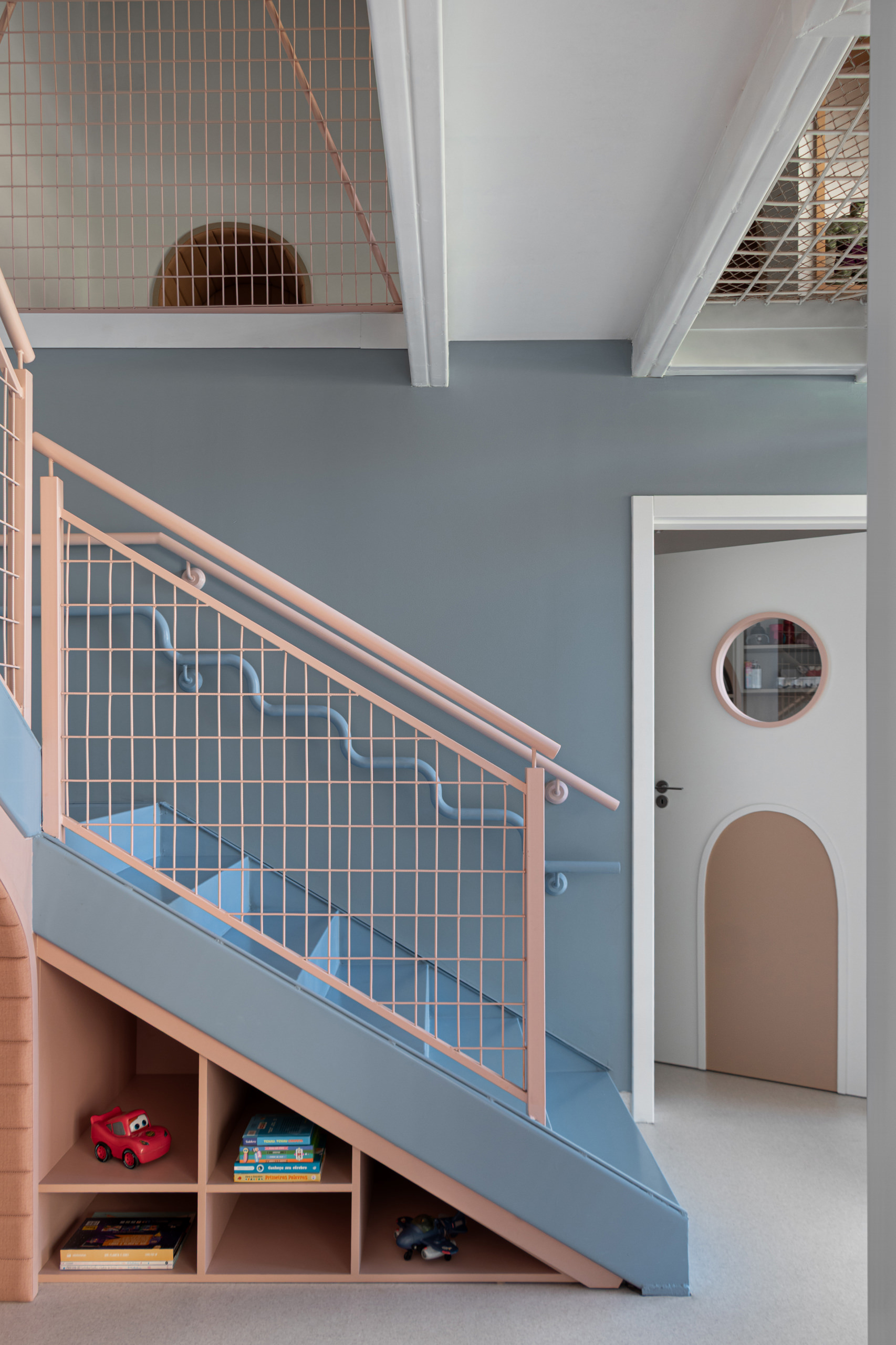
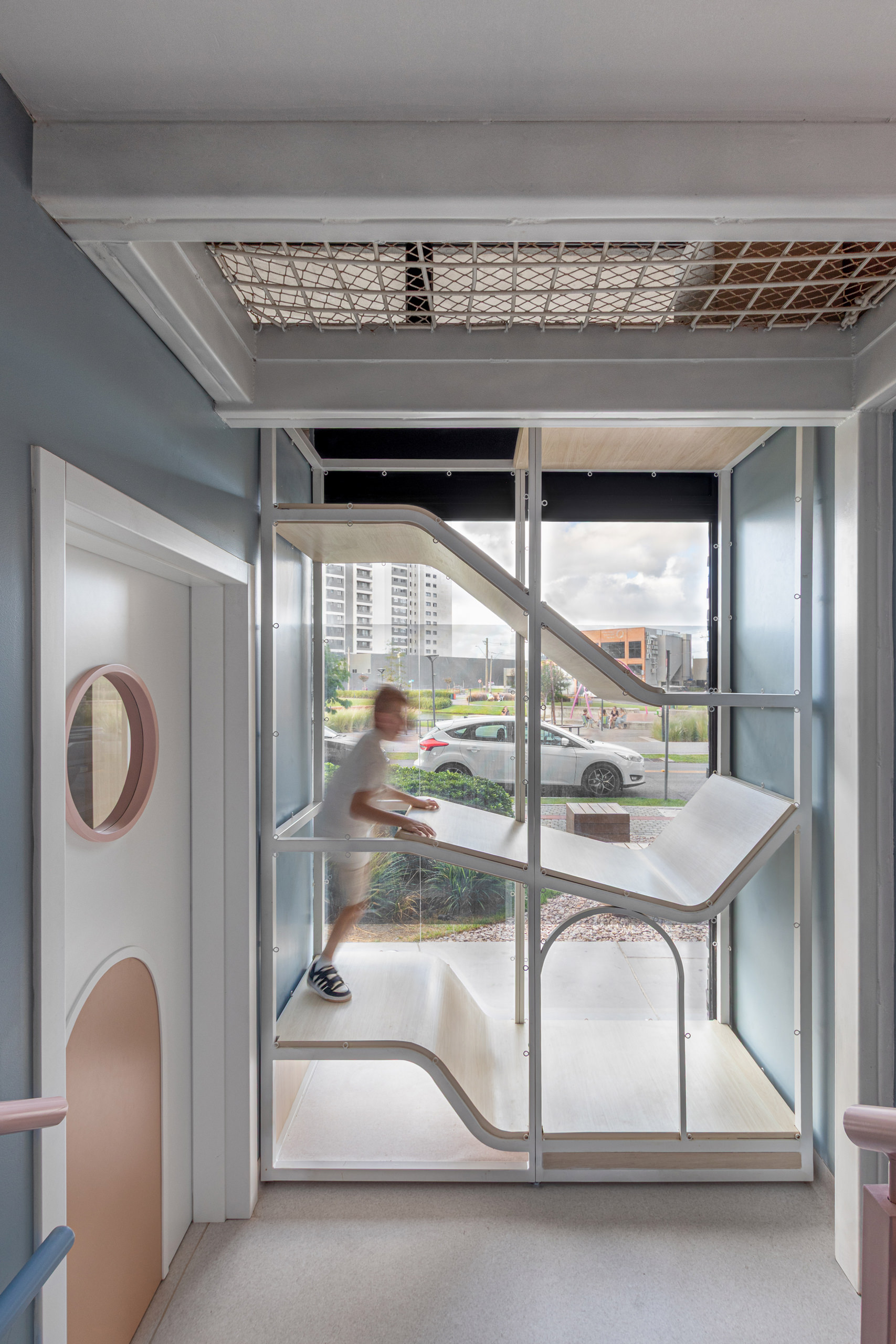
"Mini Universo demonstrates that thoughtful design can nurture both body and mind, creating environments where care begins through space itself and joy becomes an essential part of healing."
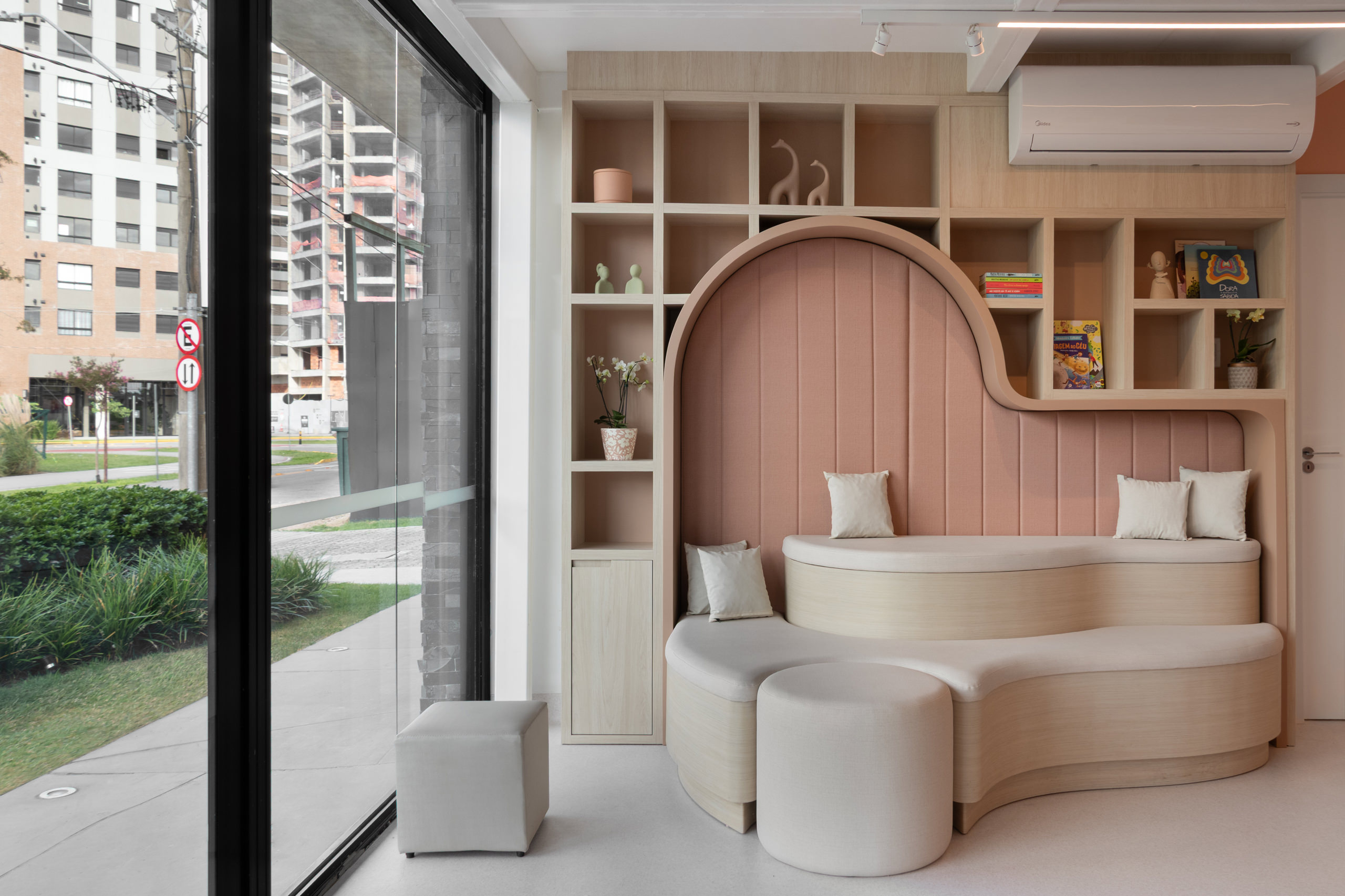
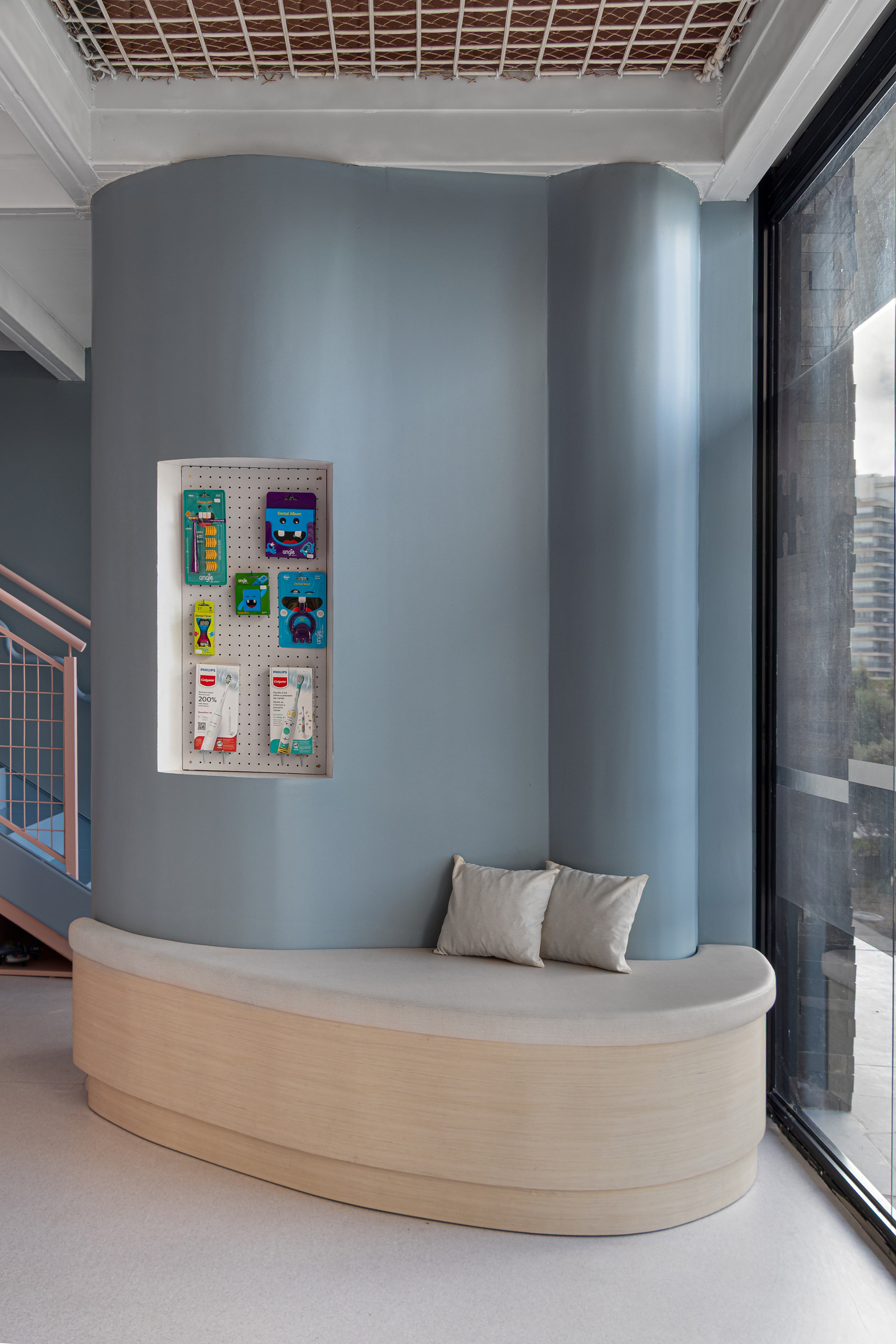
Rather than embracing the silence and formality commonly associated with healthcare facilities, Mini Universo cultivates a vibrant atmosphere where play and care become inseparable. Waiting areas are reimagined as active social spaces instead of passive transitional zones. Grandstands, hidden refuges and communal gathering areas encourage spontaneous interaction between children and families, fostering a sense of belonging that softens the anxiety often associated with medical appointments.
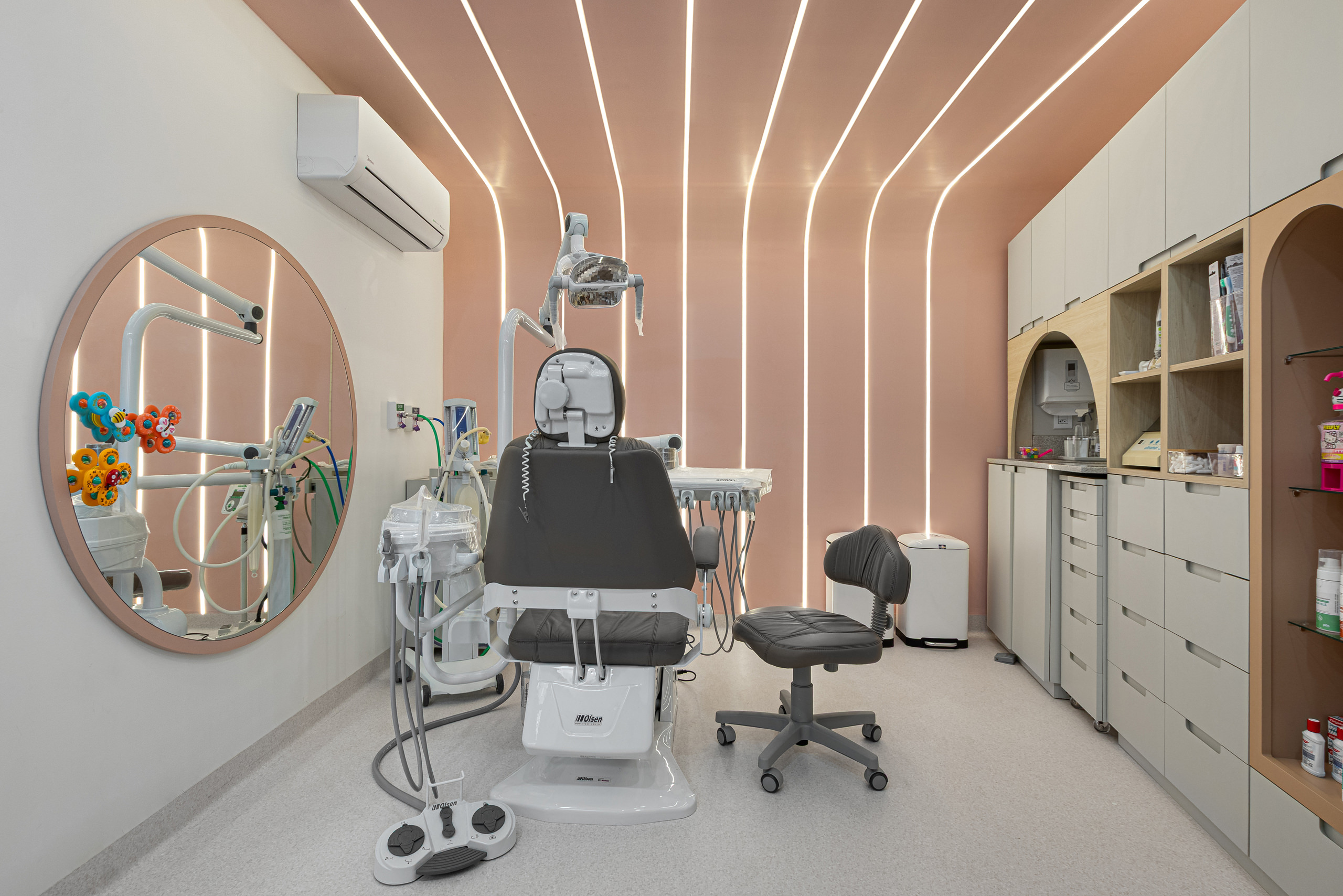
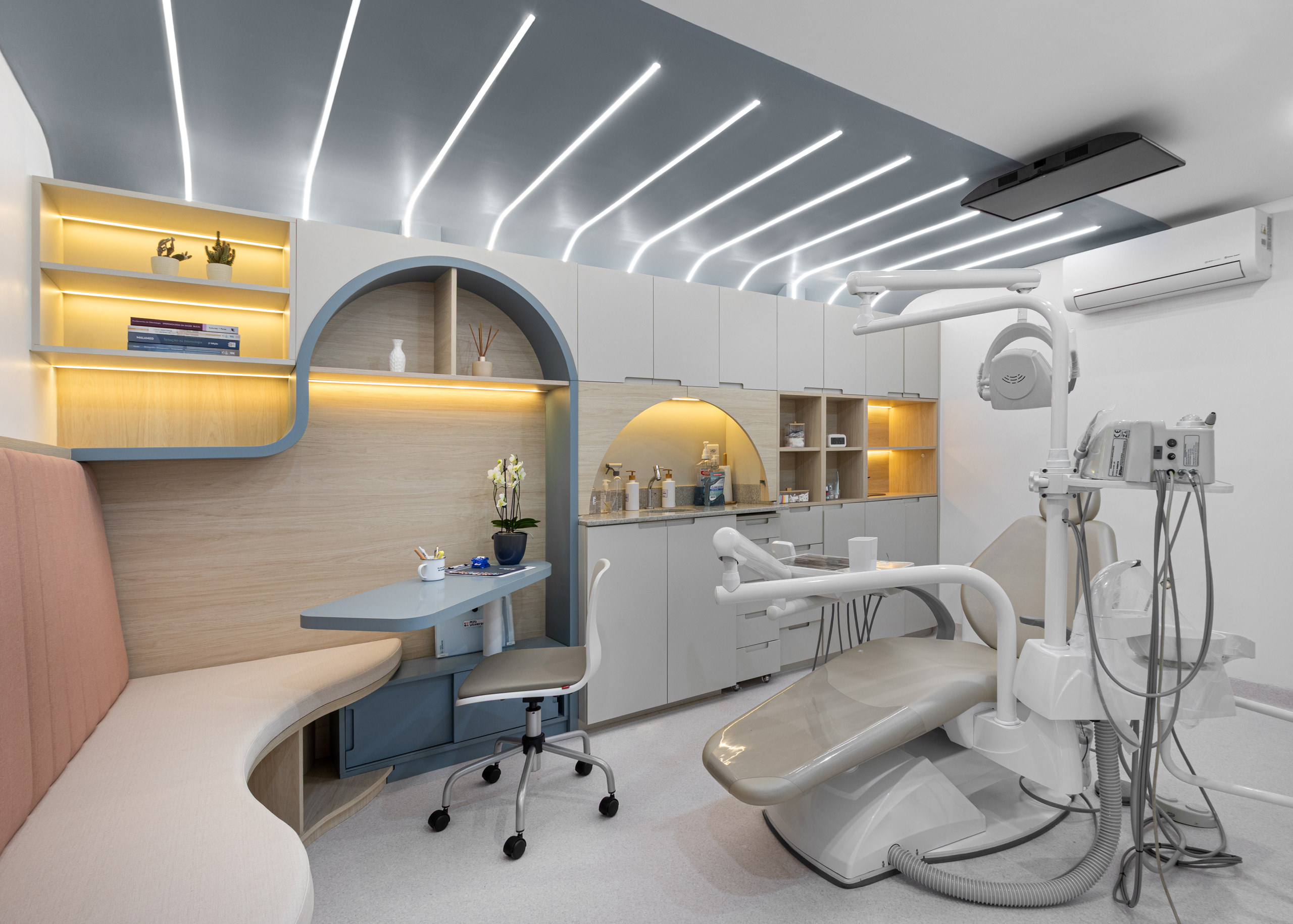
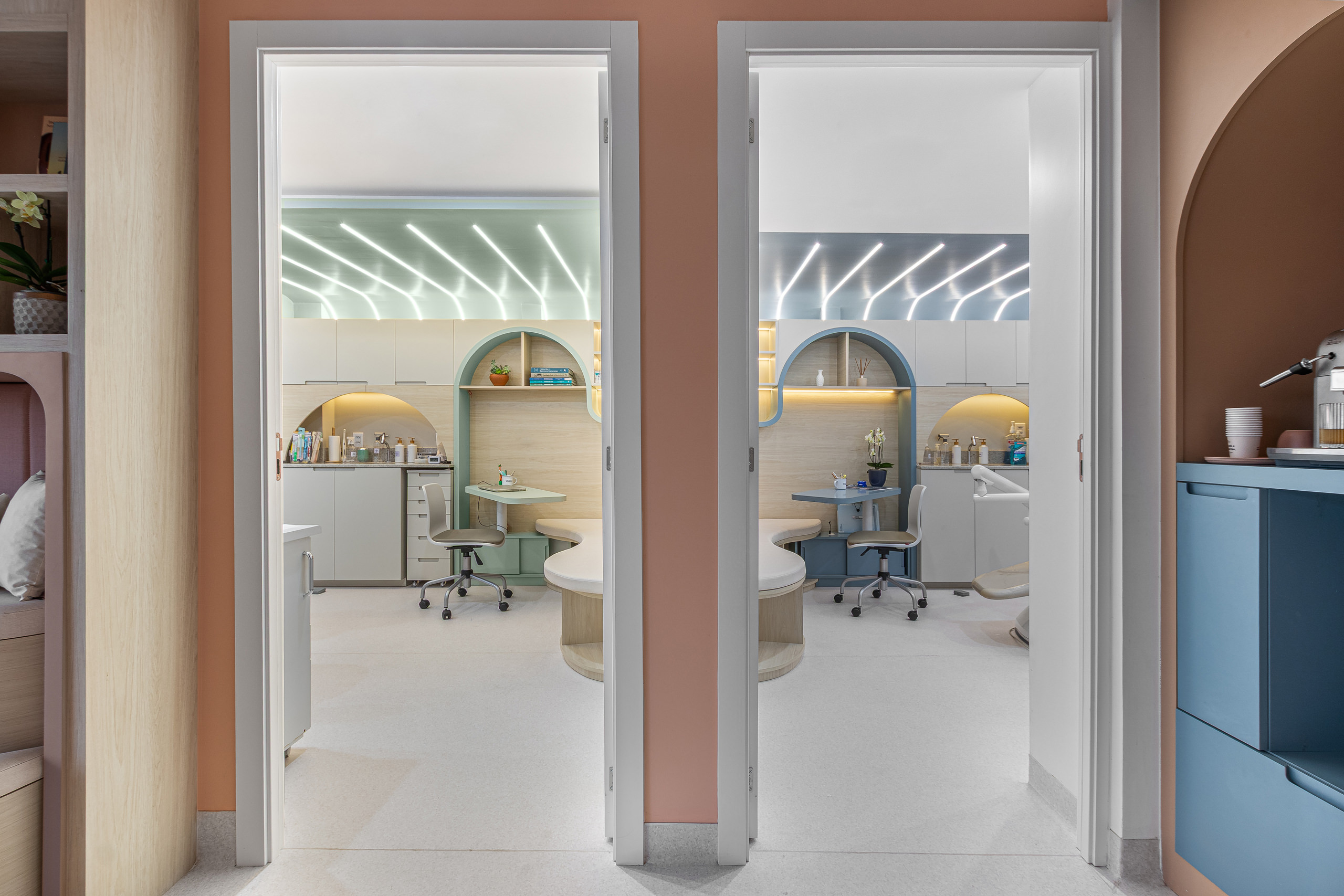
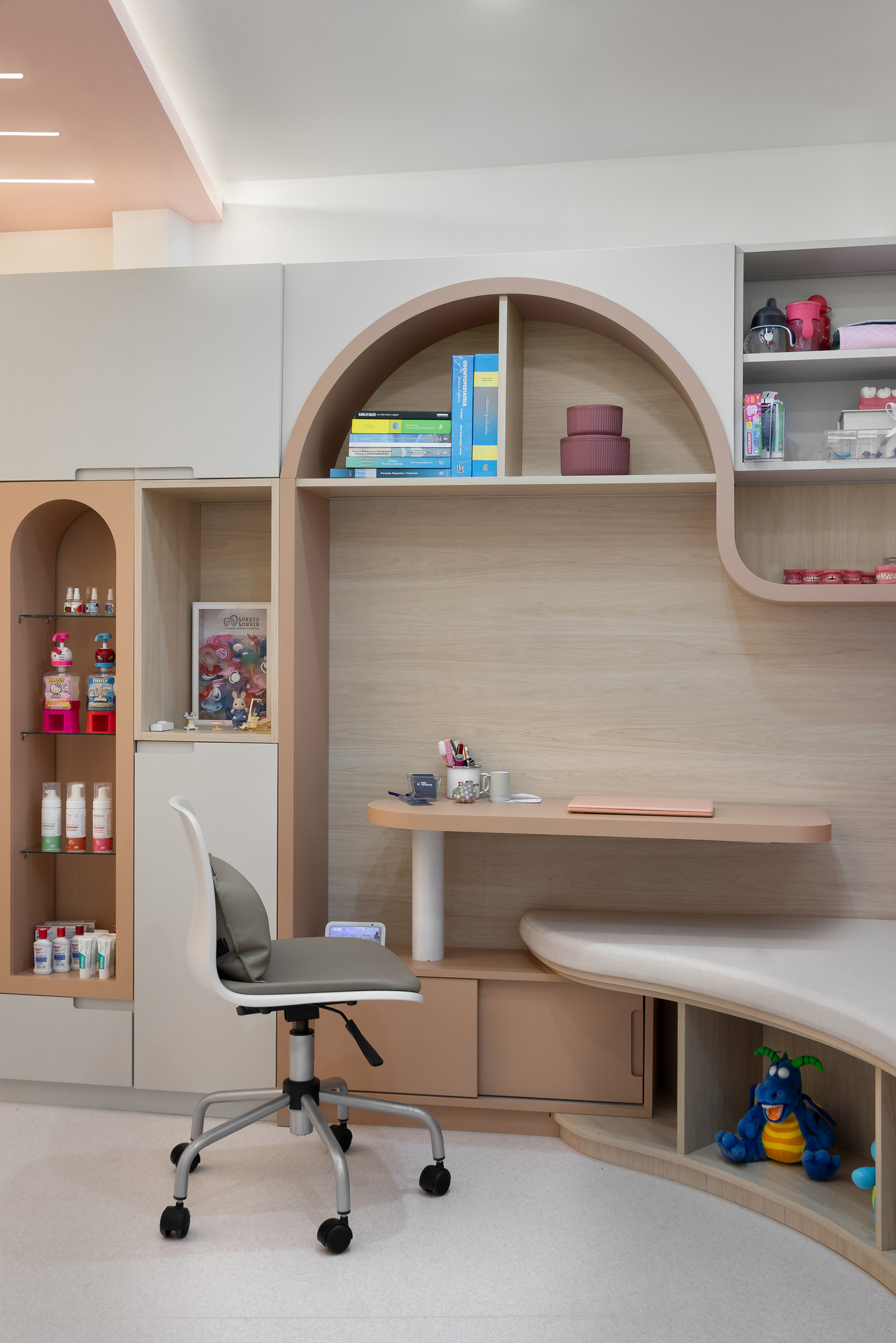
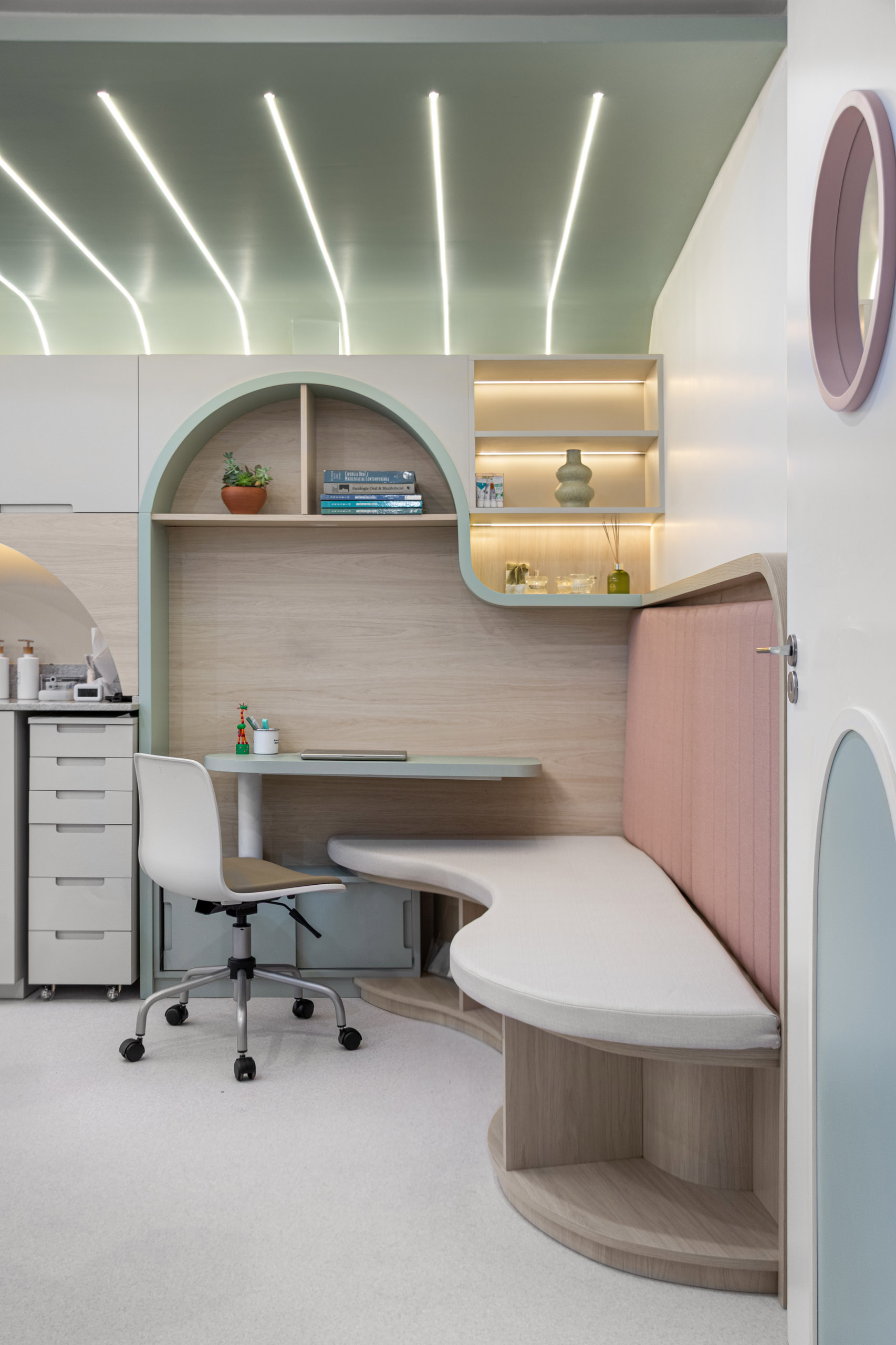
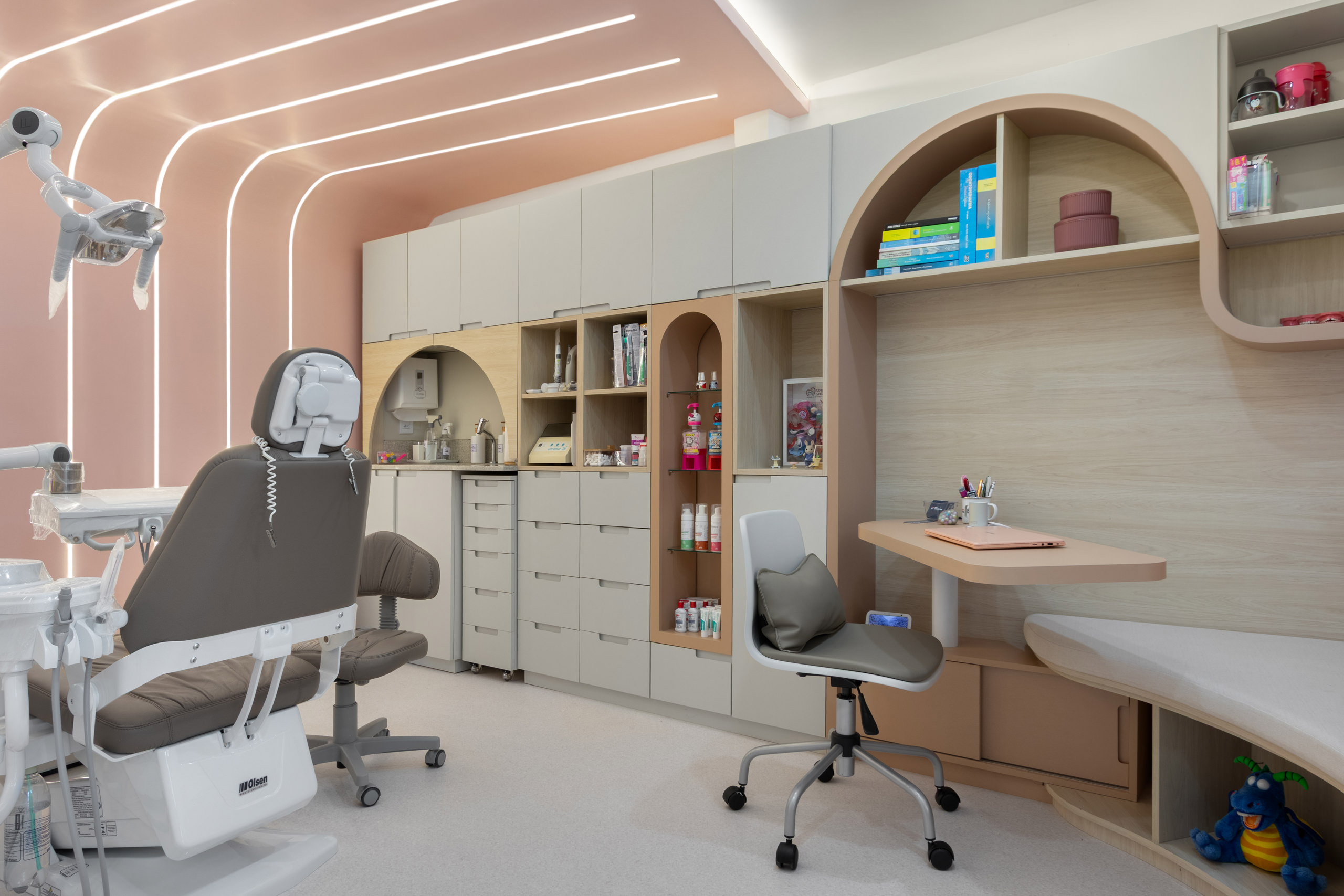
The project's architectural language reinforces this emotional narrative through continuity and softness. Gentle curves define furniture, circulation paths and custom millwork, replacing sharp geometries with forms that communicate protection and ease. These flowing lines create an intuitive spatial rhythm that encourages movement while reducing visual tension, allowing children to feel naturally welcomed throughout the clinic.
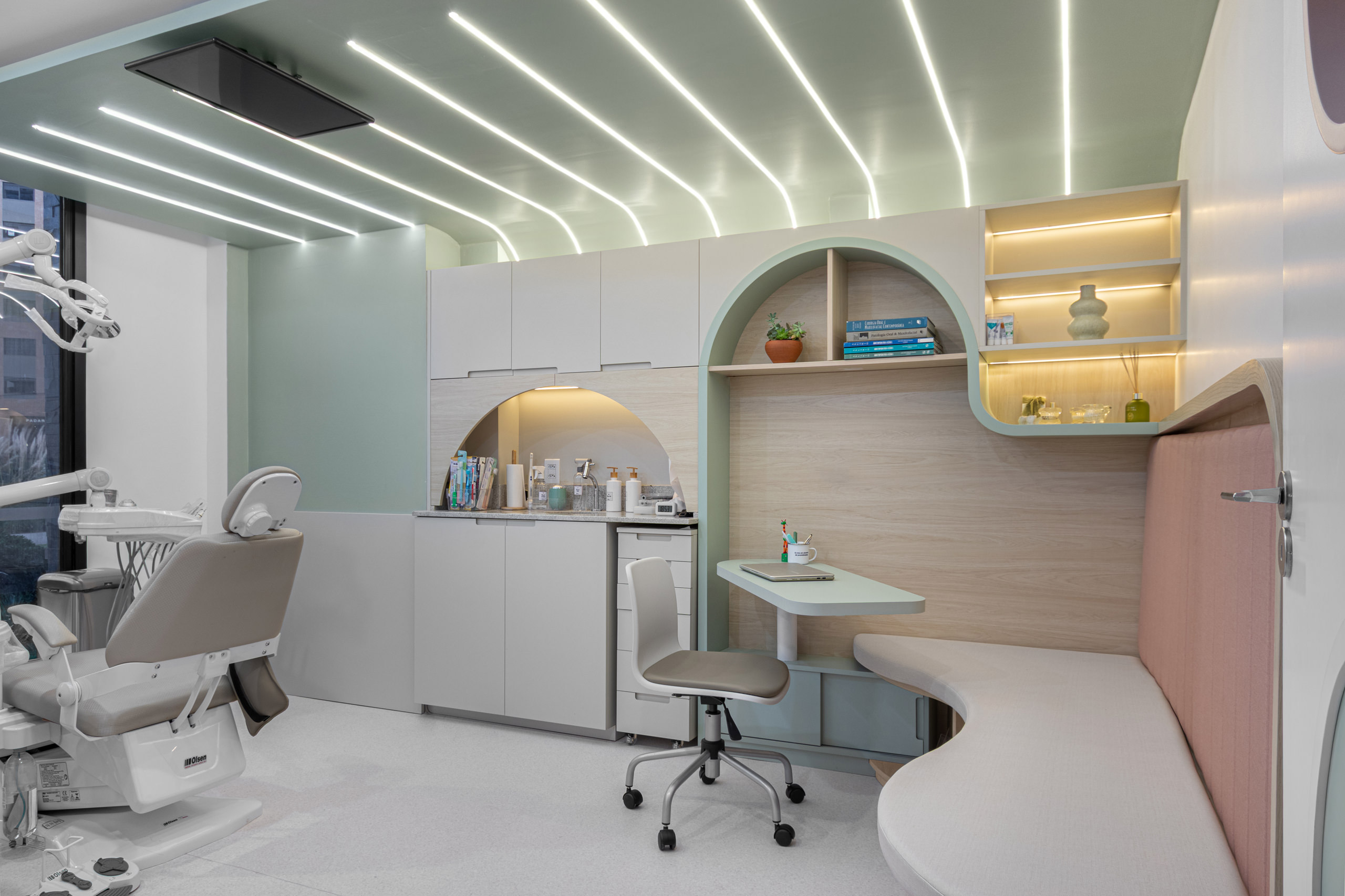
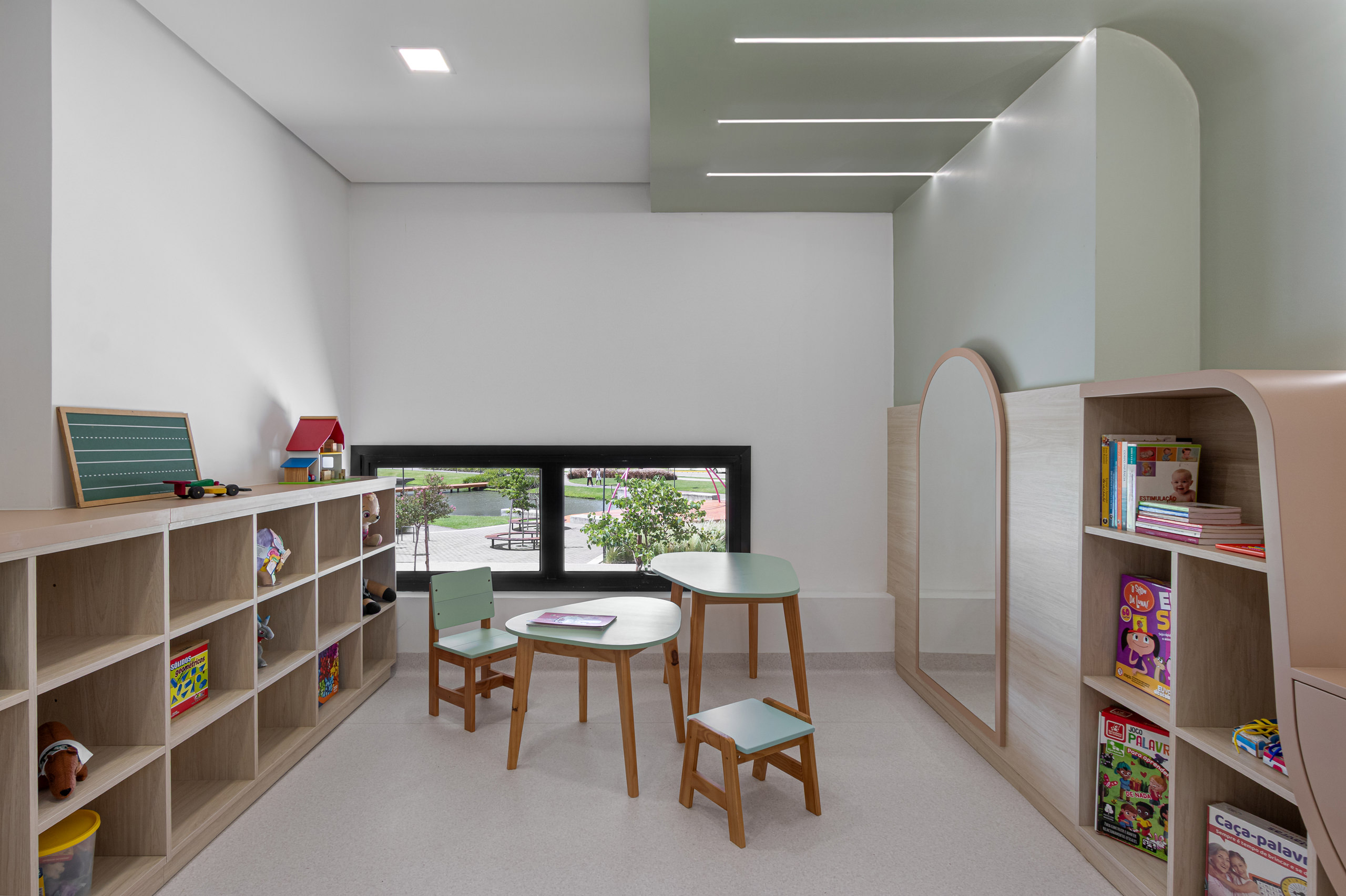
Materiality and color further enrich the sensory experience. Carefully selected natural finishes introduce warmth and authenticity, encouraging tactile exploration while maintaining an atmosphere of calm. Colors are used not as decorative accents but as behavioral cues, organizing different environments and subtly influencing mood and activity. Importantly, playfulness is expressed through abstraction rather than literal imagery, leaving room for imagination to flourish instead of prescribing a single narrative.
Mini Universo reimagines the relationship between children and healthcare through architecture. By replacing fear with curiosity, passivity with autonomy and clinical detachment with emotional connection, the project establishes a new model for pediatric environments. It reminds us that meaningful care begins long before treatment itself, emerging through spaces that welcome, inspire and empower. More than a clinic, estudio254 has designed an environment where architecture actively contributes to healthier, happier generations.